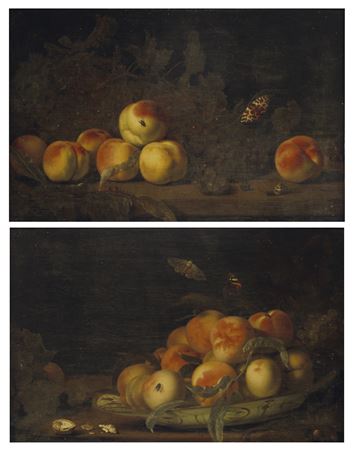
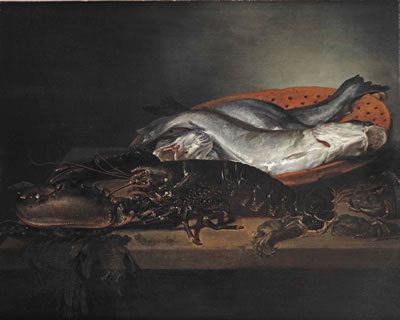
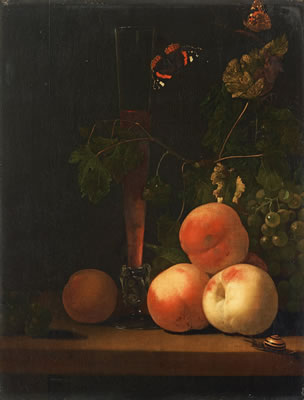
1642 Dordrecht, Holland - 1722 Amsterdam, Holland. Known for: Painting of fish, floral and fruit still life, figures in landscape, farm animals.
Calraet was a student of the two painters Samuel and Aemilius Hup, who also worked as sculptors in Dordrecht. It is believed that he was a pupil of Aelbert Cuyp (1620-1691). Due to the similarity...
Read full biography Calraet was a student of the two painters Samuel and Aemilius Hup, who also worked as sculptors in Dordrecht. It is believed that he was a pupil of Aelbert Cuyp (1620-1691). Due to the similarity with the monogram, Calraet's pictures were often assigned to Cuyp, which the art historian Abraham...
Read full biography Calraet was a student of the two painters Samuel and Aemilius Hup, who also worked as sculptors in Dordrecht. It is believed that he was a pupil of Aelbert Cuyp (1620-1691). Due to the similarity with the monogram, Calraet's pictures were often assigned to Cuyp, which the art historian Abraham Bredius was able to correct for the first time.
Calraet was a student of the two painters Samuel and Aemilius Hup, who also worked as sculptors in Dordrecht. It is believed that he was a pupil of Aelbert Cuyp (1620-1691). Due to the similarity with the monogram, Calraet's pictures were often assigned to Cuyp, which the art historian Abraham Bredius was able to correct for the first time.
Calraet was a student of the two painters Samuel and Aemilius Hup, who also worked as sculptors in Dordrecht. It is believed that he was a pupil of Aelbert Cuyp (1620-1691). Due to the similarity with the monogram, Calraet's pictures were often assigned to Cuyp, which the art historian Abraham Bredius was able to correct for the first time.