1945 - 2011. Known for: Naive art, painting.
Fatima Hassan El Farouj was a Moroccan painter known for her naïve art style. She was self-taught and had no academic or artistic training, using painting as a means of expression and a hobby....
Read full biography Fatima Hassan El Farouj was a Moroccan painter known for her naïve art style. She was self-taught and had no academic or artistic training, using painting as a means of expression and a hobby. Growing up in a traditional setting in the north of Morocco, she was inspired by the cultural practices of...
Read full biography Fatima Hassan El Farouj was a Moroccan painter known for her naïve art style. She was self-taught and had no academic or artistic training, using painting as a means of expression and a hobby. Growing up in a traditional setting in the north of Morocco, she was inspired by the cultural practices of embroidery, weaving, sewing, and henna tattooing that were common among girls and women in her community. Her paintings reflect the celebrations and rituals of women's lives in the 1950s,...
Read full biography Fatima Hassan El Farouj was a Moroccan painter known for her naïve art style. She was self-taught and had no academic or artistic training, using painting as a means of expression and a hobby. Growing up in a traditional setting in the north of Morocco, she was inspired by the cultural practices of embroidery, weaving, sewing, and henna tattooing that were common among girls and women in her community. Her paintings reflect the celebrations and rituals of women's lives in the 1950s, characterized by fresh, infantile, and simple expressions with no adherence to logic in dimensions, forms, and perspectives.
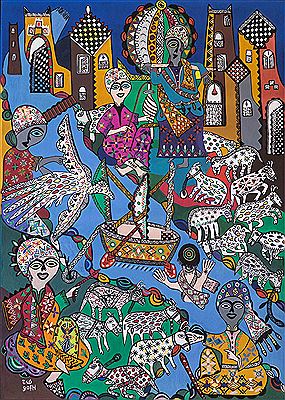
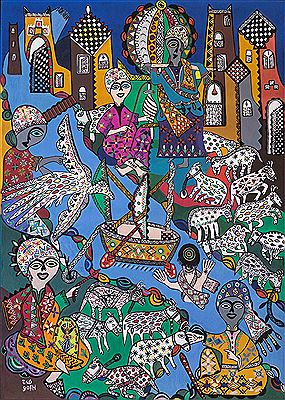
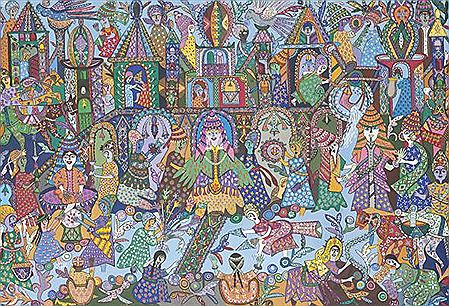
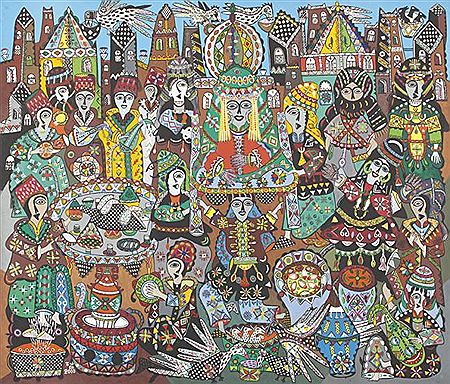
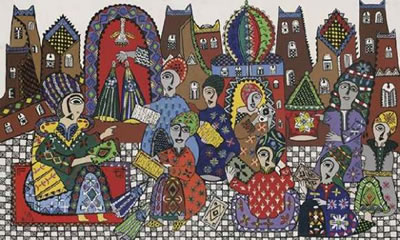
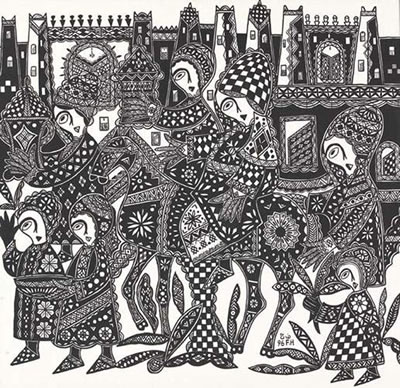
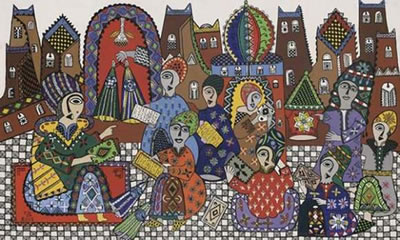
Fatima Hassan El Farouj was a Moroccan painter known for her naïve art style. She was self-taught and had no academic or artistic training, using painting as a means of expression and a hobby. Growing up in a traditional setting in the north of Morocco, she was inspired by the cultural practices of embroidery, weaving, sewing, and henna tattooing that were common among girls and women in her community. Her paintings reflect the celebrations and rituals of women's lives in the 1950s, characterized by fresh, infantile, and simple expressions with no adherence to logic in dimensions, forms, and perspectives.