1899 Malaga - 1992 Torremolinos. Known for: Naïf painting and antique dealing.
Manuel Blasco Alarcón was an artist and antique dealer from Malaga, Spain. He was known for his work in Naïf painting, a style he adopted later in his career after working in surrealism and cubism....
Read full biography Manuel Blasco Alarcón was an artist and antique dealer from Malaga, Spain. He was known for his work in Naïf painting, a style he adopted later in his career after working in surrealism and cubism. He settled in Torremolinos in 1960 and also devoted himself to writing. His work is mainly preserved...
Read full biography Manuel Blasco Alarcón was an artist and antique dealer from Malaga, Spain. He was known for his work in Naïf painting, a style he adopted later in his career after working in surrealism and cubism. He settled in Torremolinos in 1960 and also devoted himself to writing. His work is mainly preserved in private Spanish collections. His colorful landscapes idealize folk imagery and expressively schematize characters and landscapes, depicting scenes of farming and strolling in small Andalusian...
Read full biography Manuel Blasco Alarcón was an artist and antique dealer from Malaga, Spain. He was known for his work in Naïf painting, a style he adopted later in his career after working in surrealism and cubism. He settled in Torremolinos in 1960 and also devoted himself to writing. His work is mainly preserved in private Spanish collections. His colorful landscapes idealize folk imagery and expressively schematize characters and landscapes, depicting scenes of farming and strolling in small Andalusian communities. The tonalities and simplification of figures and vegetation lend a dreamlike air to his work, which also shows its relationship with certain approaches and ideas contributed by the pictorial avant-gardes of the 20th century.
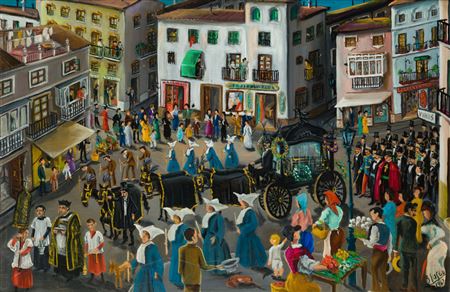
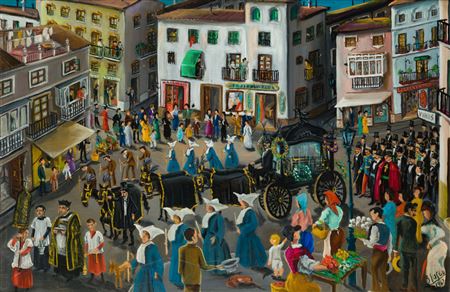
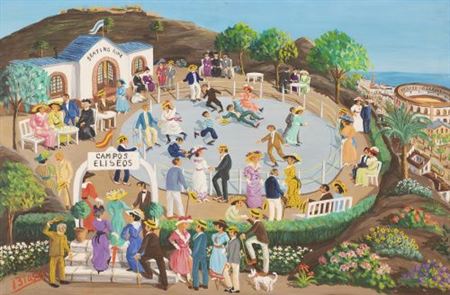
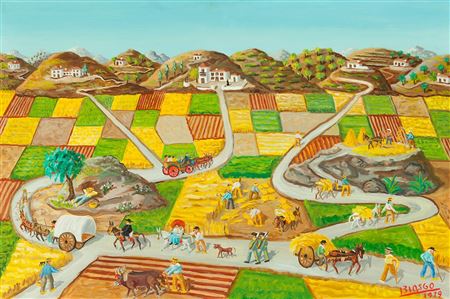
Manuel Blasco Alarcón was an artist and antique dealer from Malaga, Spain. He was known for his work in Naïf painting, a style he adopted later in his career after working in surrealism and cubism. He settled in Torremolinos in 1960 and also devoted himself to writing. His work is mainly preserved in private Spanish collections. His colorful landscapes idealize folk imagery and expressively schematize characters and landscapes, depicting scenes of farming and strolling in small Andalusian communities. The tonalities and simplification of figures and vegetation lend a dreamlike air to his work, which also shows its relationship with certain approaches and ideas contributed by the pictorial avant-gardes of the 20th century.