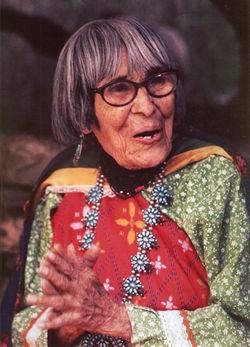
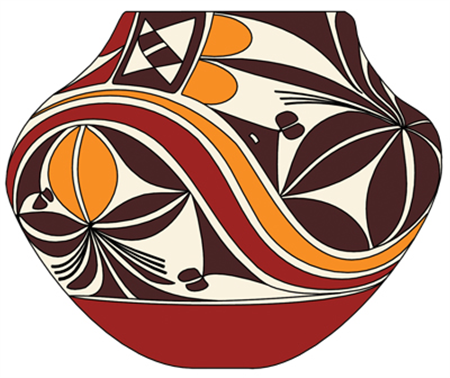
Of Tewa heritage of the San Ildefonso Pueblo in the Rio Grande Valley of New Mexico, Maria Martinez became world renowned for her black on black pottery. "This process involved burying the unfinished... Read full biography
Of Tewa heritage of the San Ildefonso Pueblo in the Rio Grande Valley of New Mexico, Maria Martinez became world renowned for her black on black pottery. "This process involved burying the unfinished pot in a fire in the ground, covered tightly with sheep or cow dung for fuel. The amount of air... Read full biography
Of Tewa heritage of the San Ildefonso Pueblo in the Rio Grande Valley of New Mexico, Maria Martinez became world renowned for her black on black pottery. "This process involved burying the unfinished pot in a fire in the ground, covered tightly with sheep or cow dung for fuel. The amount of air reaching the pottery determined whether the clay remained red or instead turned completely black." (Gibson/Michnovicz, 91) . Her pottery was first exhibited beyond her pueblo at the St. Louis World's... Read full biography
Of Tewa heritage of the San Ildefonso Pueblo in the Rio Grande Valley of New Mexico, Maria Martinez became world renowned for her black on black pottery. "This process involved burying the unfinished pot in a fire in the ground, covered tightly with sheep or cow dung for fuel. The amount of air reaching the pottery determined whether the clay remained red or instead turned completely black." (Gibson/Michnovicz, 91) . Her pottery was first exhibited beyond her pueblo at the St. Louis World's Fair in 1904, and many decades later at the Smithsonian Museum in Washington DC, the Millicent Rogers Museum in Taos, and the Heard Museum in Phoenix. She learned to make pots as a child from her aunt, Tia Nicolasa, and began with clay dishes she made... Read full biography
Of Tewa heritage of the San Ildefonso Pueblo in the Rio Grande Valley of New Mexico, Maria Martinez became world renowned for her black on black pottery. "This process involved burying the unfinished pot in a fire in the ground, covered tightly with sheep or cow dung for fuel. The amount of air reaching the pottery determined whether the clay remained red or instead turned completely black." (Gibson/Michnovicz, 91) . Her pottery was first exhibited beyond her pueblo at the St. Louis World's Fair in 1904, and many decades later at the Smithsonian Museum in Washington DC, the Millicent Rogers Museum in Taos, and the Heard Museum in Phoenix. She learned to make pots as a child from her aunt, Tia Nicolasa, and began with clay dishes she made for her playhouse. In 1908, New Mexico archaeologist Dr. Edgar Hewett asked her to put some shards toge... Read full biography
Maria Montoya Poveka Martinez - Affiliates (4 Galleries and Auction Houses)
Verified Art Dealers & Galleries Listings
Verified Art Dealers & Galleries
This section contains a grid of 4 verified art dealers and galleries specializing in this artist. Each card includes the dealer's name, contact information, address, and specialty focus. Browse authentic dealer listings from askART's network.