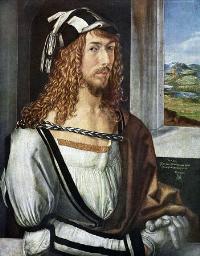
Albrecht Durer was born in Nuremberg, Germany on May 21, 1471, the second of eighteen children in the family of a master goldsmith of some repute. Fifteen of the children of this family died at an... Read full biography
Albrecht Durer was born in Nuremberg, Germany on May 21, 1471, the second of eighteen children in the family of a master goldsmith of some repute. Fifteen of the children of this family died at an early age and Durer's mother was often sickly, especially in the last years of her life. Although his... Read full biography
Albrecht Durer was born in Nuremberg, Germany on May 21, 1471, the second of eighteen children in the family of a master goldsmith of some repute. Fifteen of the children of this family died at an early age and Durer's mother was often sickly, especially in the last years of her life. Although his father was not pleased with his artistic ambitions, at the age of fifteen, Durer was apprenticed to a painter. Durer was probably the greatest artist in German history. By adopting the new forms of... Read full biography
Albrecht Durer was born in Nuremberg, Germany on May 21, 1471, the second of eighteen children in the family of a master goldsmith of some repute. Fifteen of the children of this family died at an early age and Durer's mother was often sickly, especially in the last years of her life. Although his father was not pleased with his artistic ambitions, at the age of fifteen, Durer was apprenticed to a painter. Durer was probably the greatest artist in German history. By adopting the new forms of the Italian quattrocento and connecting them to the already robust tradition of the German print, he almost single-handedly provoked the Northern Renaissance. For all-around inquisitiveness, he was surpassed only by his older contemporary, Leonardo da... Read full biography
Albrecht Durer was born in Nuremberg, Germany on May 21, 1471, the second of eighteen children in the family of a master goldsmith of some repute. Fifteen of the children of this family died at an early age and Durer's mother was often sickly, especially in the last years of her life. Although his father was not pleased with his artistic ambitions, at the age of fifteen, Durer was apprenticed to a painter. Durer was probably the greatest artist in German history. By adopting the new forms of the Italian quattrocento and connecting them to the already robust tradition of the German print, he almost single-handedly provoked the Northern Renaissance. For all-around inquisitiveness, he was surpassed only by his older contemporary, Leonardo da Vinci. Durer was interested in everything, from the nap of rabbit's fur to the theory of human proportion. His graphic work was a sustained pa... Read full biography