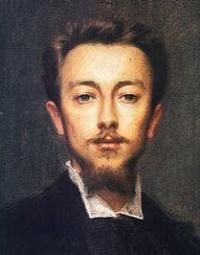
Edouard Joseph Dantan was a French painter in the classical*tradition. He was widely recognized in his day, although he was subsequently eclipsed by painters with more modern styles. He was born on... Read full biography
Edouard Joseph Dantan was a French painter in the classical*tradition. He was widely recognized in his day, although he was subsequently eclipsed by painters with more modern styles. He was born on 26 August 1848 in Paris. His grandfather, who had fought in the Napoleonic Wars, was a wood sculptor.... Read full biography
Edouard Joseph Dantan was a French painter in the classical*tradition. He was widely recognized in his day, although he was subsequently eclipsed by painters with more modern styles. He was born on 26 August 1848 in Paris. His grandfather, who had fought in the Napoleonic Wars, was a wood sculptor. His father, Antoine Laurent Dantan, and uncle, Jean-Pierre Dantan, were both well-known sculptors. Dantan was a pupil of Isidore Pils and Henri Lehmann at the École nationale supérieure des... Read full biography
Edouard Joseph Dantan was a French painter in the classical*tradition. He was widely recognized in his day, although he was subsequently eclipsed by painters with more modern styles. He was born on 26 August 1848 in Paris. His grandfather, who had fought in the Napoleonic Wars, was a wood sculptor. His father, Antoine Laurent Dantan, and uncle, Jean-Pierre Dantan, were both well-known sculptors. Dantan was a pupil of Isidore Pils and Henri Lehmann at the École nationale supérieure des Beaux-Arts* in Paris. At the age of nineteen he won a commission for a large mural painting of The Holy Trinity for the Hospice Brezin at Marne (Seine-et-Oise). Dantan's first exhibit at the Paris Salon* was An Episode in the Destruction of Pompeii in 1869.... Read full biography
Edouard Joseph Dantan was a French painter in the classical*tradition. He was widely recognized in his day, although he was subsequently eclipsed by painters with more modern styles. He was born on 26 August 1848 in Paris. His grandfather, who had fought in the Napoleonic Wars, was a wood sculptor. His father, Antoine Laurent Dantan, and uncle, Jean-Pierre Dantan, were both well-known sculptors. Dantan was a pupil of Isidore Pils and Henri Lehmann at the École nationale supérieure des Beaux-Arts* in Paris. At the age of nineteen he won a commission for a large mural painting of The Holy Trinity for the Hospice Brezin at Marne (Seine-et-Oise). Dantan's first exhibit at the Paris Salon* was An Episode in the Destruction of Pompeii in 1869. In 1870 the Franco-Prussian War interrupted his work, and he enlisted in the defense force. He was given the rank o... Read full biography