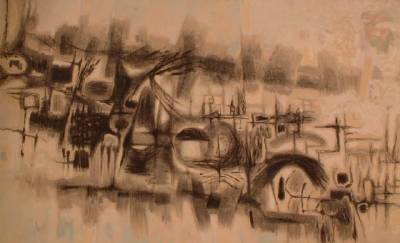
Edward Chavez (1917-1995) is definitely an important part of American art history, working through the depression as one of the more successful WPA muralists, then for the U.S. Army painting murals... Read full biography
Edward Chavez (1917-1995) is definitely an important part of American art history, working through the depression as one of the more successful WPA muralists, then for the U.S. Army painting murals in mess halls during off duty hours, finally becoming one of many artists to call Woodstock home in... Read full biography
Edward Chavez (1917-1995) is definitely an important part of American art history, working through the depression as one of the more successful WPA muralists, then for the U.S. Army painting murals in mess halls during off duty hours, finally becoming one of many artists to call Woodstock home in the years after World War II. In 1951 Chavez won a Fulbright Grant allowing him and his wife, artist Jenne Magafan, to paint in Italy for the year. Through the fifties and sixties Chavez remained on... Read full biography
Edward Chavez (1917-1995) is definitely an important part of American art history, working through the depression as one of the more successful WPA muralists, then for the U.S. Army painting murals in mess halls during off duty hours, finally becoming one of many artists to call Woodstock home in the years after World War II. In 1951 Chavez won a Fulbright Grant allowing him and his wife, artist Jenne Magafan, to paint in Italy for the year. Through the fifties and sixties Chavez remained on the cutting edge of the art scene until the op-art movement redirected popular opinion. Chavez's work is in the permanent collections of the Library of Congress Print Collection, Museum of Modern Art, Hirshorn Collection, and Detroit Museum of Art to... Read full biography
Edward Chavez (1917-1995) is definitely an important part of American art history, working through the depression as one of the more successful WPA muralists, then for the U.S. Army painting murals in mess halls during off duty hours, finally becoming one of many artists to call Woodstock home in the years after World War II. In 1951 Chavez won a Fulbright Grant allowing him and his wife, artist Jenne Magafan, to paint in Italy for the year. Through the fifties and sixties Chavez remained on the cutting edge of the art scene until the op-art movement redirected popular opinion. Chavez's work is in the permanent collections of the Library of Congress Print Collection, Museum of Modern Art, Hirshorn Collection, and Detroit Museum of Art to name a few. The colors and shapes of his art are planted firmly in his native New Mexico, creating h... Read full biography
Edward Arcenio (Eduardo) Chavez - Art Wanted (2 Collectors Seeking Artworks)
Found 2 art wanted listings for Edward Arcenio (Eduardo) Chavez
Art Wanted Advertisements
Grid of art wanted advertisements showing 2 listings from collectors and dealers. Use arrow keys to navigate between cards, Enter or Space to interact with elements.