Page loaded successfully. Showing biography for Mary Anna Hallock Foote.
Mary Anna Hallock Foote BIOGRAPHY
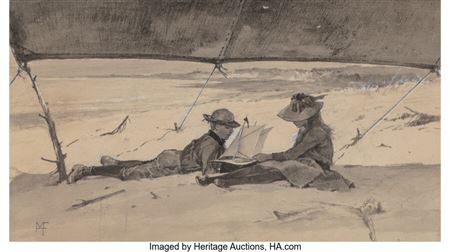
1847 Milton-on-the-Hudson, New York - 1938 Hingham, Massachusetts. Known for: Western scene illustration, portrait, landscape.
Born into a Quaker family at Milton-on-the-Hudson, New York, Mary Foote came from a family that fostered female accomplishment as well as male, and she became one of the foremost female illustrators... Read full biography
Born into a Quaker family at Milton-on-the-Hudson, New York, Mary Foote came from a family that fostered female accomplishment as well as male, and she became one of the foremost female illustrators of the American West in the late 19th and early 20th centuries. She was also a successful writer. At... Read full biography
Born into a Quaker family at Milton-on-the-Hudson, New York, Mary Foote came from a family that fostered female accomplishment as well as male, and she became one of the foremost female illustrators of the American West in the late 19th and early 20th centuries. She was also a successful writer. At age 17, she entered a three-year program at the Cooper Union Institute of Design for Women, and she became a noted wood engraver and illustrated books for Fields, Osgood and Co. Her first commission... Read full biography
Born into a Quaker family at Milton-on-the-Hudson, New York, Mary Foote came from a family that fostered female accomplishment as well as male, and she became one of the foremost female illustrators of the American West in the late 19th and early 20th centuries. She was also a successful writer. At age 17, she entered a three-year program at the Cooper Union Institute of Design for Women, and she became a noted wood engraver and illustrated books for Fields, Osgood and Co. Her first commission was illustrating Beyond the Mississippi, a book by Albert Richardson that stirred her interest in the West. She also illustrated for Harper's Monthly, Hearth and Home, the novel Hanging of the Crane, by Henry Longfellow and The Scarlet Letter by... Read full biography
Born into a Quaker family at Milton-on-the-Hudson, New York, Mary Foote came from a family that fostered female accomplishment as well as male, and she became one of the foremost female illustrators of the American West in the late 19th and early 20th centuries. She was also a successful writer. At age 17, she entered a three-year program at the Cooper Union Institute of Design for Women, and she became a noted wood engraver and illustrated books for Fields, Osgood and Co. Her first commission was illustrating Beyond the Mississippi, a book by Albert Richardson that stirred her interest in the West. She also illustrated for Harper's Monthly, Hearth and Home, the novel Hanging of the Crane, by Henry Longfellow and The Scarlet Letter by Nathaniel Hawthorne. She married Arthur Foote, a mining engineer, and spent many years in the West with him, li... Read full biography
Artist Biography
Biography page for Mary Anna Hallock Foote ((1847 - 1938)), known for Western scene illustration, portrait, landscape. Showing 2 biographical entries and 0 sample artworks.
Mary Anna Hallock Foote - Artist Info
About Mary Anna Hallock Foote
Name variants
Molly (Mary) Anna Hallock Foote, Mary Anna Hallock
Biography from the Archives of askART
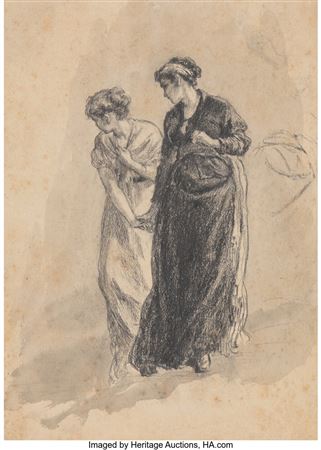 Born into a Quaker family at Milton-on-the-Hudson, New York, Mary Foote came from a family that fostered female accomplishment as well as male, and she became one of the foremost female illustrators of the American West in the late 19th and early 20th centuries.
She was also a successful writer. At age 17, she entered a three-year program at the Cooper Union Institute of Design for Women, and she became a noted wood engraver and illustrated books for Fields, Osgood and Co. Her first commission was illustrating Beyond the Mississippi, a book by Albert Richardson that stirred her interest in the West. She also illustrated for Harper's Monthly, Hearth and Home, the novel Hanging of the Crane, by Henry Longfellow and The Scarlet Letter by Nathaniel Hawthorne.
She married Arthur Foote, a mining engineer, and spent many years in the West with him, living in Idaho, California and Colorado. In 1895, they settled in Grass Valley, California. Because of her skill combined with her close friendship with Richard Watson Gilder, editor of Century magazine, she had her illustrations and extensive writings of western travels published in a national magazine. Her most notable works are eleven full-page wood engravings, Pictures of the Far West.
After her husband retired, they returned to Boston to live, but her final wish was to be buried in Grass Valley. It was obvious that this woman who at first was so reluctant to leave the East had come to love and feel at home in the West.
Source:
Charlotte Streifer Rubinstein, American Women ArtistsBiography from the Archives of askART
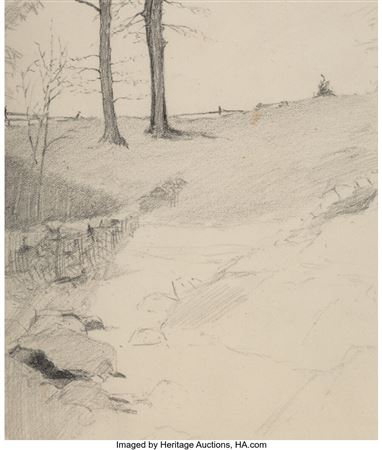 Born in Milton, NY on Nov. 19, 1847, Mary Hallock at age 16 Mary attended Cooper Union in NYC. She further studied with W. J. Linton and Wm Rimmer, and then began an art career following the Civil War.
After marrying mining engineer Arthur Foote, she accompanied her husband to the West in 1876. Leading an itinerant existence, they lived in Santa Cruz, CA (1870s); Leadville, CO; Boise, ID; and other places in the West before settling in Grass Valley, CA in 1895.
She wrote and illustrated for magazines, notably Scribner's and Century. During her life she wrote 16 novels about western life and became nationally famous. Highly regarded in her day, she was one of three California artists who exhibited at the 1913 Armory Show in NYC.
Mrs. Foote lived in Grass Valley for 30 years before moving to Boston where she died on June 25, 1938.
Member: Nat'l Ass'n of Women Painters & Sculptors.
In: Art Institute of Chicago; Worcester Art Museum; Cooper Union; Library of Congress.