Born 1953. Known for: Non-objective, abstract painting.
Antonio Ortiz (Antonio Griton) was born in 1853. Antonio Ortiz, better known as "El Gritón", has been awarded several awards such as the Mexico-Québec Award for Excellence in Artistic Merit and the...
Read full biography Antonio Ortiz (Antonio Griton) was born in 1853. Antonio Ortiz, better known as "El Gritón", has been awarded several awards such as the Mexico-Québec Award for Excellence in Artistic Merit and the First Monterrey Biennial, among others. His work is in collections such as the Museo Carrillo Gil,...
Read full biography Antonio Ortiz (Antonio Griton) was born in 1853. Antonio Ortiz, better known as "El Gritón", has been awarded several awards such as the Mexico-Québec Award for Excellence in Artistic Merit and the First Monterrey Biennial, among others. His work is in collections such as the Museo Carrillo Gil, Museum of Graphic Arts in Oaxaca, Green Collection of San Francisco, to mention a few. Naked Women on Niagara Street belongs to a group of paintings made in the presence of a natural model and can be...
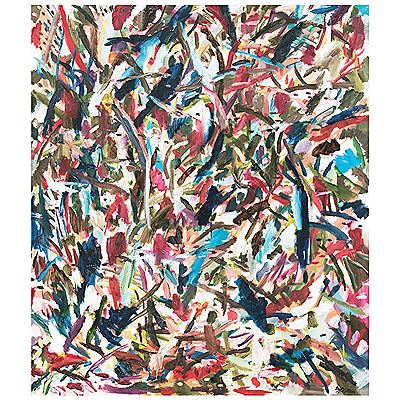
Read full biography Antonio Ortiz (Antonio Griton) was born in 1853. Antonio Ortiz, better known as "El Gritón", has been awarded several awards such as the Mexico-Québec Award for Excellence in Artistic Merit and the First Monterrey Biennial, among others. His work is in collections such as the Museo Carrillo Gil, Museum of Graphic Arts in Oaxaca, Green Collection of San Francisco, to mention a few. Naked Women on Niagara Street belongs to a group of paintings made in the presence of a natural model and can be understood as deconstructed nudes or as organic landscapes created from the female body.Source consulted: ARGÜELLO GRUNSTEIN, Alberto. Thought and art in the 90's. Debates, versions, ruptures. Mexico. CENIDIAP, 2003, p.
Antonio Ortiz (Antonio Griton) was born in 1853. Antonio Ortiz, better known as "El Gritón", has been awarded several awards such as the Mexico-Québec Award for Excellence in Artistic Merit and the First Monterrey Biennial, among others. His work is in collections such as the Museo Carrillo Gil, Museum of Graphic Arts in Oaxaca, Green Collection of San Francisco, to mention a few. Naked Women on Niagara Street belongs to a group of paintings made in the presence of a natural model and can be understood as deconstructed nudes or as organic landscapes created from the female body.Source consulted: ARGÜELLO GRUNSTEIN, Alberto. Thought and art in the 90's. Debates, versions, ruptures. Mexico. CENIDIAP, 2003, p.