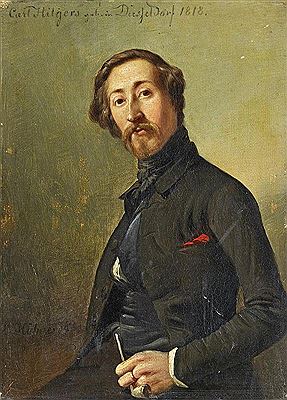
Carl Wilhelm Hübner started his artistic training at the Art Academy in Düsseldorf and attended the classes of Carl Ferdinand Sohn (1805-1867) and Wilhelm von Schadow (1788-1862). He experienced his... Read full biography
Carl Wilhelm Hübner started his artistic training at the Art Academy in Düsseldorf and attended the classes of Carl Ferdinand Sohn (1805-1867) and Wilhelm von Schadow (1788-1862). He experienced his artistic breakthrough in 1844, when he finished a genre painting depicting Silesian weavers. The... Read full biography
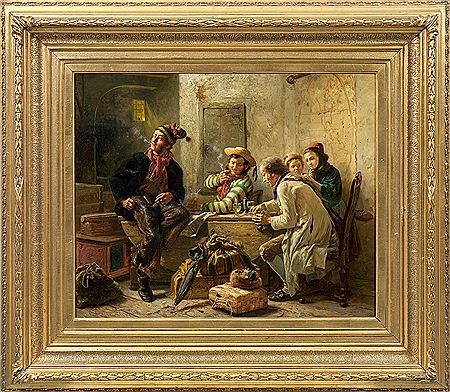
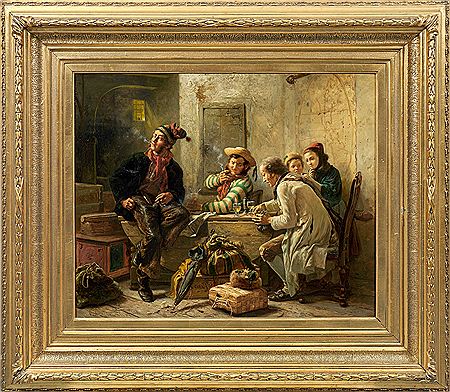
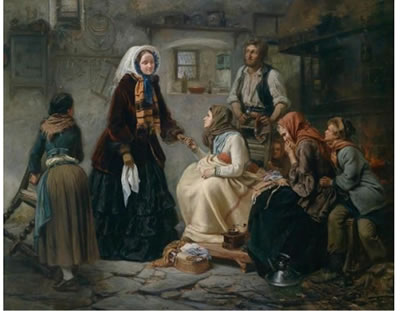
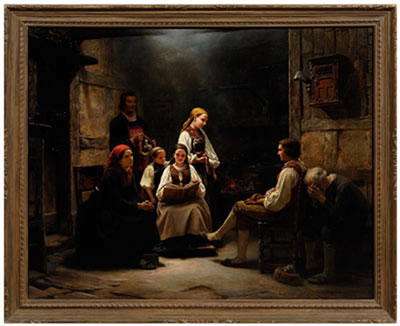
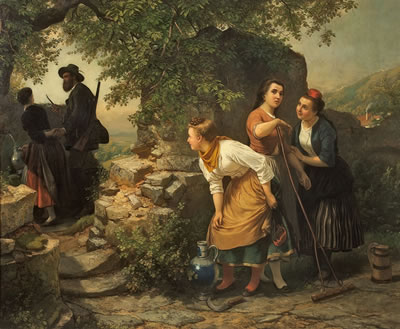
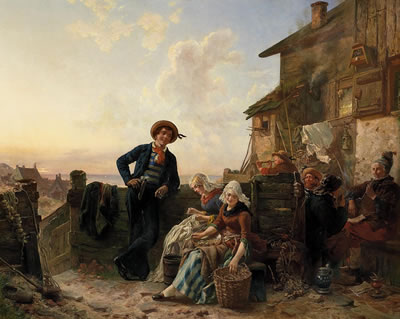
Carl Wilhelm Hübner started his artistic training at the Art Academy in Düsseldorf and attended the classes of Carl Ferdinand Sohn (1805-1867) and Wilhelm von Schadow (1788-1862). He experienced his artistic breakthrough in 1844, when he finished a genre painting depicting Silesian weavers. The majority of his works reveal rural and rather Biedermeier-like themes, but also include social aspects such as poverty and beneficence. His paintings are deeply related to the late Romantic tradition,... Read full biography
Carl Wilhelm Hübner started his artistic training at the Art Academy in Düsseldorf and attended the classes of Carl Ferdinand Sohn (1805-1867) and Wilhelm von Schadow (1788-1862). He experienced his artistic breakthrough in 1844, when he finished a genre painting depicting Silesian weavers. The majority of his works reveal rural and rather Biedermeier-like themes, but also include social aspects such as poverty and beneficence. His paintings are deeply related to the late Romantic tradition, but his unusual and often delicate subjects belong to the most sensational works of the Düsseldorf School. Hübner was also active in the USA and effectively presented himself during his trip through the North in 1874/75. The artist's social approach... Read full biography
Carl Wilhelm Hübner started his artistic training at the Art Academy in Düsseldorf and attended the classes of Carl Ferdinand Sohn (1805-1867) and Wilhelm von Schadow (1788-1862). He experienced his artistic breakthrough in 1844, when he finished a genre painting depicting Silesian weavers. The majority of his works reveal rural and rather Biedermeier-like themes, but also include social aspects such as poverty and beneficence. His paintings are deeply related to the late Romantic tradition, but his unusual and often delicate subjects belong to the most sensational works of the Düsseldorf School. Hübner was also active in the USA and effectively presented himself during his trip through the North in 1874/75. The artist's social approach rates as a pioneering achievement in German genre painting in the 19th century. (cbo)... Read full biography
Carl Wilhelm Hubner - Art Prices in Auction LotsAuction Lots