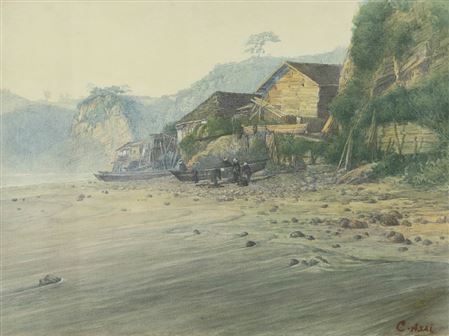
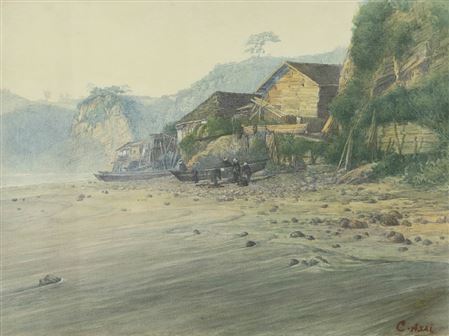
Asai Chû was one of the pioneers of Western-style painting in Japan. From the age of twenty, Asai studied Western oil painting, absorbing the Barbizon palette and style from Antonio Fontanesi, his... Read full biography
Asai Chû was one of the pioneers of Western-style painting in Japan. From the age of twenty, Asai studied Western oil painting, absorbing the Barbizon palette and style from Antonio Fontanesi, his teacher at the Technical Art School in Tokyo. When in his mid-forties, Asai was sent to France on a... Read full biography
Asai Chû was one of the pioneers of Western-style painting in Japan. From the age of twenty, Asai studied Western oil painting, absorbing the Barbizon palette and style from Antonio Fontanesi, his teacher at the Technical Art School in Tokyo. When in his mid-forties, Asai was sent to France on a government-sponsored trip to further his study of European artistic techniques. He spent much of those two years outside of Paris, in Grez, painting en plein air in an impressionistic manner. In 1902,... Read full biography
Asai Chû was one of the pioneers of Western-style painting in Japan. From the age of twenty, Asai studied Western oil painting, absorbing the Barbizon palette and style from Antonio Fontanesi, his teacher at the Technical Art School in Tokyo. When in his mid-forties, Asai was sent to France on a government-sponsored trip to further his study of European artistic techniques. He spent much of those two years outside of Paris, in Grez, painting en plein air in an impressionistic manner. In 1902, he returned to Japan, this time settling in Kyoto where he began a new career teaching at the Kyoto School of Arts and Crafts. Asai had an enormous impact on the next generation of artists, including Ishii Hakutei. In Kyoto, Asai expanded his... Read full biography
Asai Chû was one of the pioneers of Western-style painting in Japan. From the age of twenty, Asai studied Western oil painting, absorbing the Barbizon palette and style from Antonio Fontanesi, his teacher at the Technical Art School in Tokyo. When in his mid-forties, Asai was sent to France on a government-sponsored trip to further his study of European artistic techniques. He spent much of those two years outside of Paris, in Grez, painting en plein air in an impressionistic manner. In 1902, he returned to Japan, this time settling in Kyoto where he began a new career teaching at the Kyoto School of Arts and Crafts. Asai had an enormous impact on the next generation of artists, including Ishii Hakutei. In Kyoto, Asai expanded his repertoire beyond oil painting to include watercolor paintings and designs for decorative arts and prints. His figure style in these humorous sketches o... Read full biography