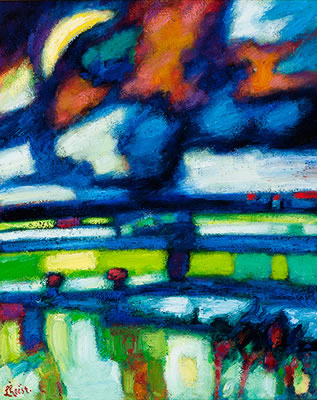
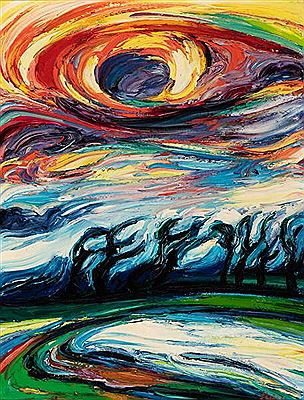
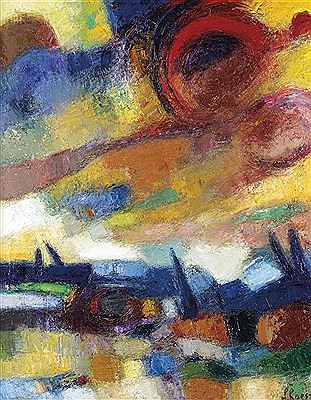
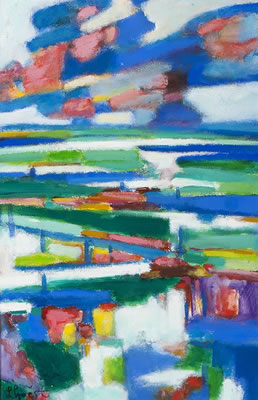
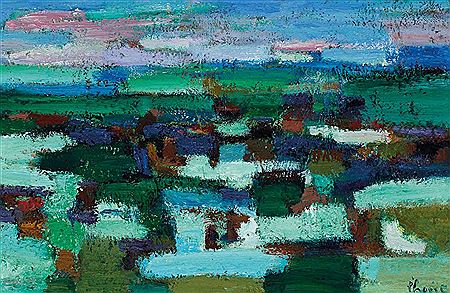
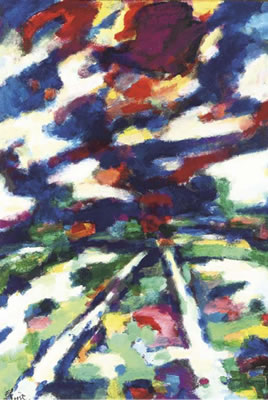
Under the influence of modern painting, in particular the CoBrA movement, L’Hoëst produced colourful and expressive paintings after the war. Together with painters such as Gerard Grassère, Jan... Read full biography
Under the influence of modern painting, in particular the CoBrA movement, L’Hoëst produced colourful and expressive paintings after the war. Together with painters such as Gerard Grassère, Jan Stekelenburg and Douwe van der Zweep, he exhibited under the name 'Progressives' in 1954 in the Centraal... Read full biography
Under the influence of modern painting, in particular the CoBrA movement, L’Hoëst produced colourful and expressive paintings after the war. Together with painters such as Gerard Grassère, Jan Stekelenburg and Douwe van der Zweep, he exhibited under the name 'Progressives' in 1954 in the Centraal Museum in Utrecht. He later exhibited at the Salon in Paris. Most of the years after World War II, L’Hoëst lived and worked in countries such as France, Spain and Portugal. In addition to his long... Read full biography
Under the influence of modern painting, in particular the CoBrA movement, L’Hoëst produced colourful and expressive paintings after the war. Together with painters such as Gerard Grassère, Jan Stekelenburg and Douwe van der Zweep, he exhibited under the name 'Progressives' in 1954 in the Centraal Museum in Utrecht. He later exhibited at the Salon in Paris. Most of the years after World War II, L’Hoëst lived and worked in countries such as France, Spain and Portugal. In addition to his long sojourn abroad, his reclusive lifestyle and his introverted nature are the most important explanations for his relative unfamiliarity in the Netherlands. Many of his earlier works ended up with collectors all over the world, notably in Germany, America... Read full biography
Under the influence of modern painting, in particular the CoBrA movement, L’Hoëst produced colourful and expressive paintings after the war. Together with painters such as Gerard Grassère, Jan Stekelenburg and Douwe van der Zweep, he exhibited under the name 'Progressives' in 1954 in the Centraal Museum in Utrecht. He later exhibited at the Salon in Paris. Most of the years after World War II, L’Hoëst lived and worked in countries such as France, Spain and Portugal. In addition to his long sojourn abroad, his reclusive lifestyle and his introverted nature are the most important explanations for his relative unfamiliarity in the Netherlands. Many of his earlier works ended up with collectors all over the world, notably in Germany, America and China. After various exhibitions were held in the Netherlands, including a retrospective exhibition in 1989 at Singer Museum in Lare... Read full biography
Engelbert L'hoest - Art Prices in Auction LotsAuction Lots