Manuel Cabral y Aguado Bejarano trained first with his father, the painter Antonio Cabral Bejarano, and later at the Academy of Fine Arts of Santa Isabel de Hungría in his native city, where he... Read full biography
Manuel Cabral y Aguado Bejarano trained first with his father, the painter Antonio Cabral Bejarano, and later at the Academy of Fine Arts of Santa Isabel de Hungría in his native city, where he eventually became a professor and academician. Throughout his career he took part in numerous official... Read full biography
Manuel Cabral y Aguado Bejarano trained first with his father, the painter Antonio Cabral Bejarano, and later at the Academy of Fine Arts of Santa Isabel de Hungría in his native city, where he eventually became a professor and academician. Throughout his career he took part in numerous official exhibitions, including the National Fine Arts Exhibitions in Madrid in 1858, 1860 and 1867, in which he received honourable mentions. He was even appointed honorary painter to Queen Isabella II.... Read full biography
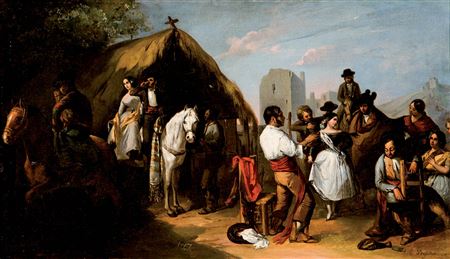
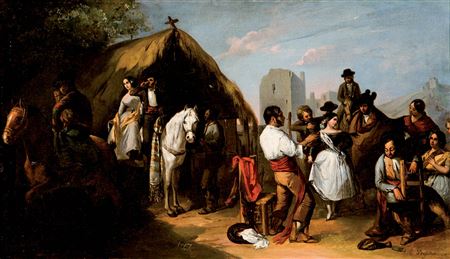
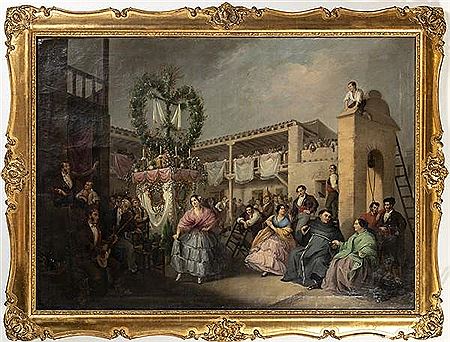
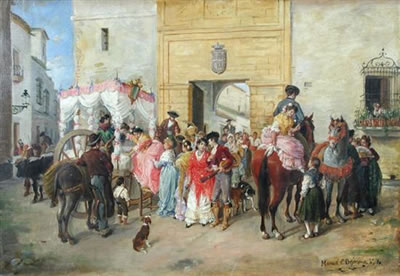
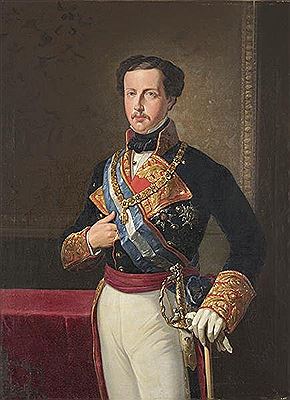
Manuel Cabral y Aguado Bejarano trained first with his father, the painter Antonio Cabral Bejarano, and later at the Academy of Fine Arts of Santa Isabel de Hungría in his native city, where he eventually became a professor and academician. Throughout his career he took part in numerous official exhibitions, including the National Fine Arts Exhibitions in Madrid in 1858, 1860 and 1867, in which he received honourable mentions. He was even appointed honorary painter to Queen Isabella II. Although he is chiefly known for his Andalusian costumbrista works, and in fact one of the best representatives of Andalusian costumbrismo within Spanish Romanticism, Cabral also produced history, religious and portrait paintings. His scenes of processions... Read full biography
Manuel Cabral y Aguado Bejarano trained first with his father, the painter Antonio Cabral Bejarano, and later at the Academy of Fine Arts of Santa Isabel de Hungría in his native city, where he eventually became a professor and academician. Throughout his career he took part in numerous official exhibitions, including the National Fine Arts Exhibitions in Madrid in 1858, 1860 and 1867, in which he received honourable mentions. He was even appointed honorary painter to Queen Isabella II. Although he is chiefly known for his Andalusian costumbrista works, and in fact one of the best representatives of Andalusian costumbrismo within Spanish Romanticism, Cabral also produced history, religious and portrait paintings. His scenes of processions and pilgrimages, always of a costumbrista nature, achieved great success both in the Andalusian capital and in Madrid. Cabral... Read full biography
Manuel Cabral Y Aguado Bejarano - Art Prices in Auction LotsAuction Lots