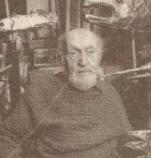
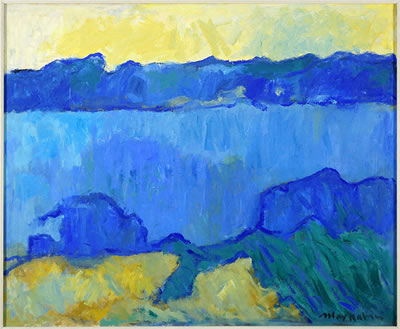
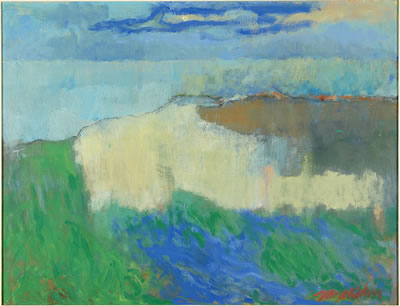
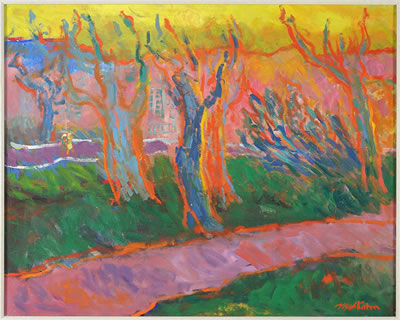
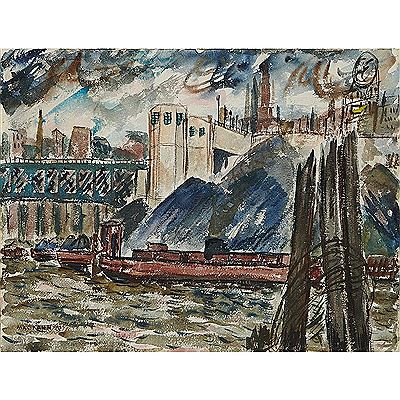
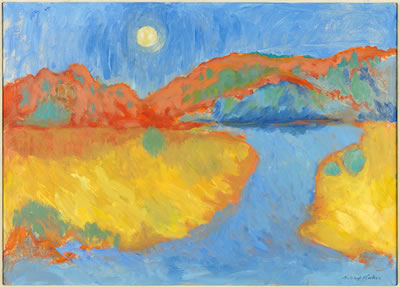
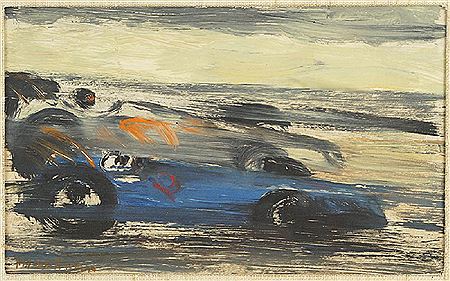
Max Kahn (1902-2005). In the middle of the twentieth-century, Max Kahn and Eleanor Coen were not only well known in Chicago , they were celebrated modern American artists, respected, collected and... Read full biography
Max Kahn (1902-2005). In the middle of the twentieth-century, Max Kahn and Eleanor Coen were not only well known in Chicago , they were celebrated modern American artists, respected, collected and exhibited nation-wide. In his 1958 book Printmaking Today , Jules Heller wrote: "No presentation of... Read full biography
Max Kahn (1902-2005). In the middle of the twentieth-century, Max Kahn and Eleanor Coen were not only well known in Chicago , they were celebrated modern American artists, respected, collected and exhibited nation-wide. In his 1958 book Printmaking Today , Jules Heller wrote: "No presentation of contemporary lithographs would be complete without a print by Max Kahn," and he chose one Kahn's and one of Coen's lithographs as two of eight examples of the state of the art. These were not marginally... Read full biography
Max Kahn (1902-2005). In the middle of the twentieth-century, Max Kahn and Eleanor Coen were not only well known in Chicago , they were celebrated modern American artists, respected, collected and exhibited nation-wide. In his 1958 book Printmaking Today , Jules Heller wrote: "No presentation of contemporary lithographs would be complete without a print by Max Kahn," and he chose one Kahn's and one of Coen's lithographs as two of eight examples of the state of the art. These were not marginally successful artists. They were hot tickets, winning prizes left and right and breaking barriers that separated various media in visual arts - notably painting and printmaking and color and black-and-white lithography. In 1946, at the Weyhe Gallery in... Read full biography
Max Kahn (1902-2005). In the middle of the twentieth-century, Max Kahn and Eleanor Coen were not only well known in Chicago , they were celebrated modern American artists, respected, collected and exhibited nation-wide. In his 1958 book Printmaking Today , Jules Heller wrote: "No presentation of contemporary lithographs would be complete without a print by Max Kahn," and he chose one Kahn's and one of Coen's lithographs as two of eight examples of the state of the art. These were not marginally successful artists. They were hot tickets, winning prizes left and right and breaking barriers that separated various media in visual arts - notably painting and printmaking and color and black-and-white lithography. In 1946, at the Weyhe Gallery in New York , Kahn mounted the first proper exhibition of color lithography, thereby championing a medium that had previously been os... Read full biography