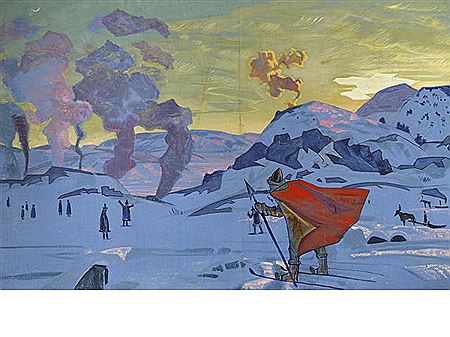
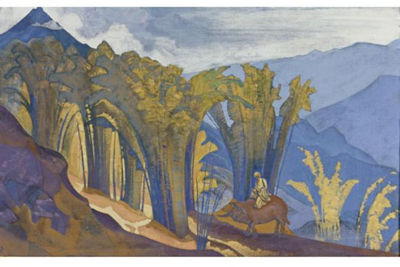
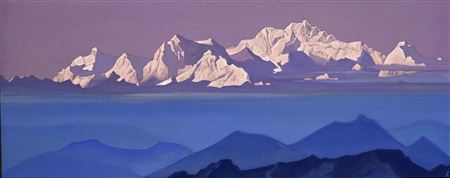
An easel painter and stage-set designer with a unique semi-abstract style, Nicholas Roerich depicted landscapes, symbolic figures, ballet, religious themes, mysticism, Russia's ancient past and... Read full biography
An easel painter and stage-set designer with a unique semi-abstract style, Nicholas Roerich depicted landscapes, symbolic figures, ballet, religious themes, mysticism, Russia's ancient past and architectural structures such as churches and monasteries. He spent much of his career trying to... Read full biography
An easel painter and stage-set designer with a unique semi-abstract style, Nicholas Roerich depicted landscapes, symbolic figures, ballet, religious themes, mysticism, Russia's ancient past and architectural structures such as churches and monasteries. He spent much of his career trying to influence his native country to form a cohesive policy towards art and architecture, and to protect its fine art treasures of the past, and to create circumstances of human equality. However, government... Read full biography
An easel painter and stage-set designer with a unique semi-abstract style, Nicholas Roerich depicted landscapes, symbolic figures, ballet, religious themes, mysticism, Russia's ancient past and architectural structures such as churches and monasteries. He spent much of his career trying to influence his native country to form a cohesive policy towards art and architecture, and to protect its fine art treasures of the past, and to create circumstances of human equality. However, government officials resisted all those efforts, and Roerich, who became strongly anti-Lenin, spent the last years of his life far from his homeland including in western Europe, England, the United States and Asia. In addition to his painting, he became a writer,... Read full biography
An easel painter and stage-set designer with a unique semi-abstract style, Nicholas Roerich depicted landscapes, symbolic figures, ballet, religious themes, mysticism, Russia's ancient past and architectural structures such as churches and monasteries. He spent much of his career trying to influence his native country to form a cohesive policy towards art and architecture, and to protect its fine art treasures of the past, and to create circumstances of human equality. However, government officials resisted all those efforts, and Roerich, who became strongly anti-Lenin, spent the last years of his life far from his homeland including in western Europe, England, the United States and Asia. In addition to his painting, he became a writer, theosophist, philosopher and sought-after public speaker who, asserting political and religious freedom, earned nominations for the No... Read full biography
Nicholas Konstantinovich Roerich - Art Prices in Auction LotsAuction Lots