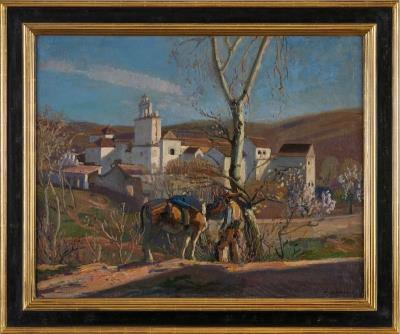
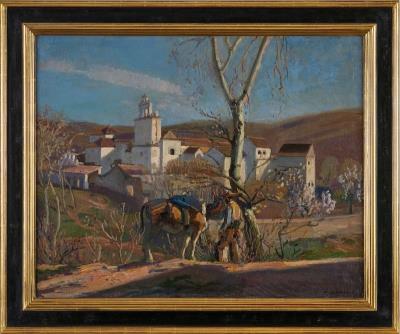
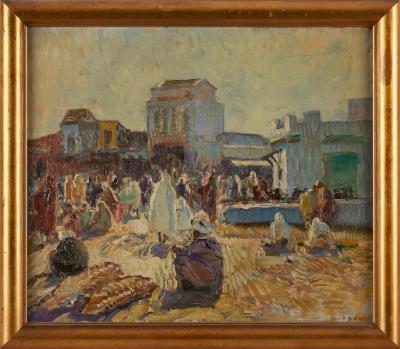
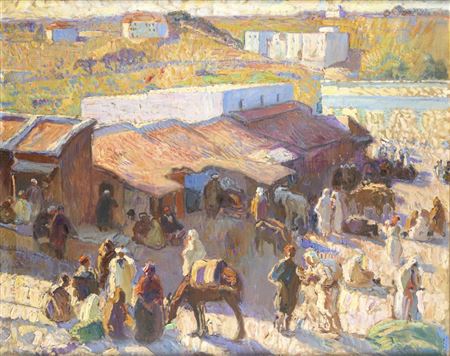
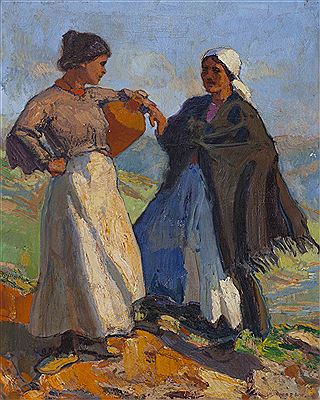
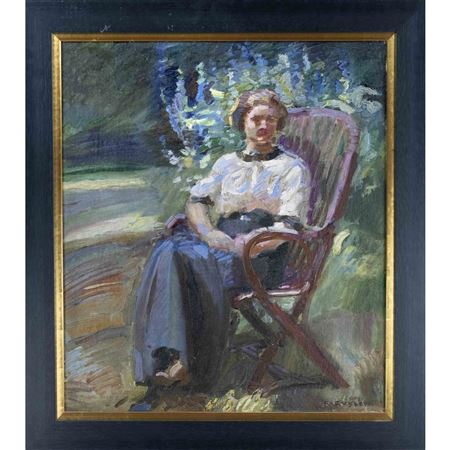
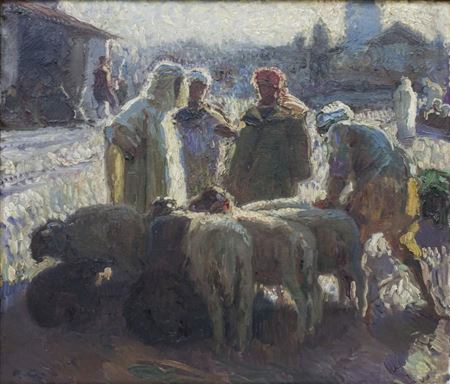
1863 - 1935. Known for: Portrait, figure, rural genre, landscape painting.
Rudolf Gudden was a German genre and landscape painter known for his expressive works inspired by light. He studied at the Munich and Karlsruhe Art Academies and later settled in Frankfurt, where he...
Read full biography Rudolf Gudden was a German genre and landscape painter known for his expressive works inspired by light. He studied at the Munich and Karlsruhe Art Academies and later settled in Frankfurt, where he founded the Frankfurt-Cronberg Artists' Association. Gudden's art was considered contrary to the...
Read full biography Rudolf Gudden was a German genre and landscape painter known for his expressive works inspired by light. He studied at the Munich and Karlsruhe Art Academies and later settled in Frankfurt, where he founded the Frankfurt-Cronberg Artists' Association. Gudden's art was considered contrary to the usual style of his time, making him a pioneer of modernism. He exhibited in Frankfurt, Karlsruhe, Paris, and at the Glaspalast in Munich from 1889. Unfortunately, many of his works were lost during World...
Read full biography Rudolf Gudden was a German genre and landscape painter known for his expressive works inspired by light. He studied at the Munich and Karlsruhe Art Academies and later settled in Frankfurt, where he founded the Frankfurt-Cronberg Artists' Association. Gudden's art was considered contrary to the usual style of his time, making him a pioneer of modernism. He exhibited in Frankfurt, Karlsruhe, Paris, and at the Glaspalast in Munich from 1889. Unfortunately, many of his works were lost during World War II.
Rudolf Gudden was a German genre and landscape painter known for his expressive works inspired by light. He studied at the Munich and Karlsruhe Art Academies and later settled in Frankfurt, where he founded the Frankfurt-Cronberg Artists' Association. Gudden's art was considered contrary to the usual style of his time, making him a pioneer of modernism. He exhibited in Frankfurt, Karlsruhe, Paris, and at the Glaspalast in Munich from 1889. Unfortunately, many of his works were lost during World War II.