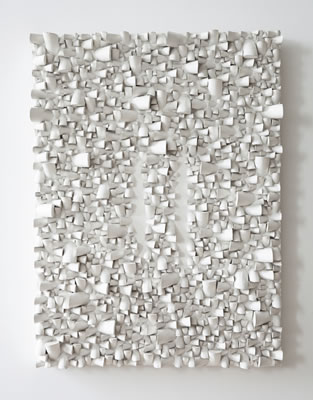
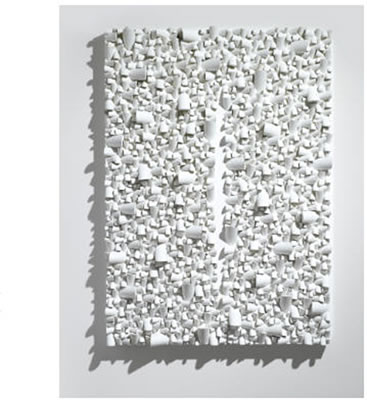
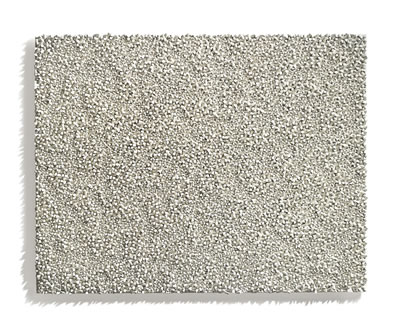
Sergio Camargo was born in Rio de Janeiro, Brazil, with Argentinian roots. His artistic formative years were spent at the Academia de Altamira in Buenos Aires, where he studied under painters Emilio... Read full biography
Sergio Camargo was born in Rio de Janeiro, Brazil, with Argentinian roots. His artistic formative years were spent at the Academia de Altamira in Buenos Aires, where he studied under painters Emilio Pettoruti and Lucio Fontana. Camargo was well-aware of the Argentine constructivist* movement of the... Read full biography
Sergio Camargo was born in Rio de Janeiro, Brazil, with Argentinian roots. His artistic formative years were spent at the Academia de Altamira in Buenos Aires, where he studied under painters Emilio Pettoruti and Lucio Fontana. Camargo was well-aware of the Argentine constructivist* movement of the period but chose to paint in a figurative* manner throughout the 1950's. He then moved to Paris where he abandoned figurative painting and opted to work with geometric wood constructions that... Read full biography
Sergio Camargo was born in Rio de Janeiro, Brazil, with Argentinian roots. His artistic formative years were spent at the Academia de Altamira in Buenos Aires, where he studied under painters Emilio Pettoruti and Lucio Fontana. Camargo was well-aware of the Argentine constructivist* movement of the period but chose to paint in a figurative* manner throughout the 1950's. He then moved to Paris where he abandoned figurative painting and opted to work with geometric wood constructions that explored two and three dimensional volume relationships. His work was represented in the 1955, 1957 and 1965 (where he won the Best National Sculptor Prize) Sao Paulo Biennials*, as well as in the 1963 Paris Biennale* (where he won the International... Read full biography
Sergio Camargo was born in Rio de Janeiro, Brazil, with Argentinian roots. His artistic formative years were spent at the Academia de Altamira in Buenos Aires, where he studied under painters Emilio Pettoruti and Lucio Fontana. Camargo was well-aware of the Argentine constructivist* movement of the period but chose to paint in a figurative* manner throughout the 1950's. He then moved to Paris where he abandoned figurative painting and opted to work with geometric wood constructions that explored two and three dimensional volume relationships. His work was represented in the 1955, 1957 and 1965 (where he won the Best National Sculptor Prize) Sao Paulo Biennials*, as well as in the 1963 Paris Biennale* (where he won the International sculpture award). Camargo also exhibited in the following groundbreaking shows: the Emergent Decade: Latin American Painters and Pain... Read full biography
Sergio Camargo - Art Prices in Auction LotsAuction Lots