Adolf Schrodter PRICE CHARTS
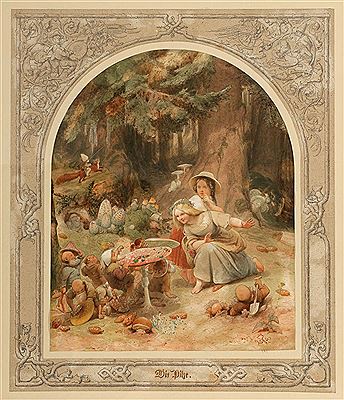
1805 Schwedt/Oder - 1875 Karlsruhe. Known for: Genre painting.
Born as the son of an engraver in Schwedt Oder, Adolf Schrödter (1805-1875) was trained at the Berlin Academy of Fine Arts and then went to Düsseldorf, where he was a student of Wilhelm von Schadow.... Read full biography
Born as the son of an engraver in Schwedt Oder, Adolf Schrödter (1805-1875) was trained at the Berlin Academy of Fine Arts and then went to Düsseldorf, where he was a student of Wilhelm von Schadow. Eventually, he was appointed professor of ornamentation in Karlsruhe. Schrödter was a painter,... Read full biography
Born as the son of an engraver in Schwedt Oder, Adolf Schrödter (1805-1875) was trained at the Berlin Academy of Fine Arts and then went to Düsseldorf, where he was a student of Wilhelm von Schadow. Eventually, he was appointed professor of ornamentation in Karlsruhe. Schrödter was a painter, draftsman and political cartoonist quite prominent. His artistic conception is due to a historicizing romantic concept popular at that time. His genre-like motifs often feature subjects of chivalry, the... Read full biography
Born as the son of an engraver in Schwedt Oder, Adolf Schrödter (1805-1875) was trained at the Berlin Academy of Fine Arts and then went to Düsseldorf, where he was a student of Wilhelm von Schadow. Eventually, he was appointed professor of ornamentation in Karlsruhe. Schrödter was a painter, draftsman and political cartoonist quite prominent. His artistic conception is due to a historicizing romantic concept popular at that time. His genre-like motifs often feature subjects of chivalry, the monastic life or the corresponding romantic literature. (cko)
Born as the son of an engraver in Schwedt Oder, Adolf Schrödter (1805-1875) was trained at the Berlin Academy of Fine Arts and then went to Düsseldorf, where he was a student of Wilhelm von Schadow. Eventually, he was appointed professor of ornamentation in Karlsruhe. Schrödter was a painter, draftsman and political cartoonist quite prominent. His artistic conception is due to a historicizing romantic concept popular at that time. His genre-like motifs often feature subjects of chivalry, the monastic life or the corresponding romantic literature. (cko)