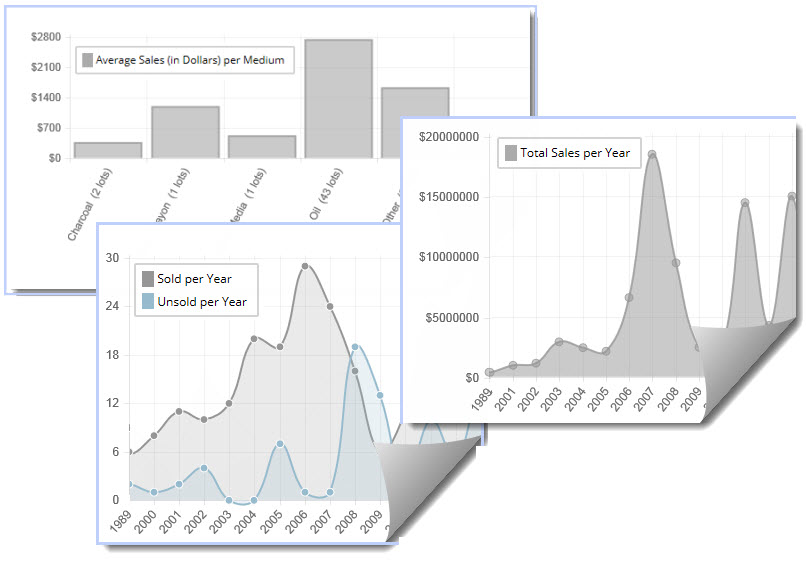
Ernesto Treccani PRICE CHARTS

1920 Milano - 2009 Milano. Known for: Paintings.
Ernesto Treccani was born in Milan, Italy, in 1920 and died in Milan, Italy, in 2009. He was a painter, writer, and intellectual associated with twentieth-century Italian art and culture. In 1938 he... Read full biography
Ernesto Treccani was born in Milan, Italy, in 1920 and died in Milan, Italy, in 2009. He was a painter, writer, and intellectual associated with twentieth-century Italian art and culture. In 1938 he founded the cultural review Corrente, which became a focal point for artists and writers opposed to... Read full biography
Ernesto Treccani was born in Milan, Italy, in 1920 and died in Milan, Italy, in 2009. He was a painter, writer, and intellectual associated with twentieth-century Italian art and culture. In 1938 he founded the cultural review Corrente, which became a focal point for artists and writers opposed to official Fascist cultural policies. After World War II he continued to develop a highly personal figurative style, producing paintings, drawings, and graphic works inspired by landscapes, daily life,... Read full biography
Ernesto Treccani was born in Milan, Italy, in 1920 and died in Milan, Italy, in 2009. He was a painter, writer, and intellectual associated with twentieth-century Italian art and culture. In 1938 he founded the cultural review Corrente, which became a focal point for artists and writers opposed to official Fascist cultural policies. After World War II he continued to develop a highly personal figurative style, producing paintings, drawings, and graphic works inspired by landscapes, daily life, social themes, and the human figure. Treccani exhibited extensively in Italy and abroad and remains one of the notable figures of modern Italian art.
Ernesto Treccani was born in Milan, Italy, in 1920 and died in Milan, Italy, in 2009. He was a painter, writer, and intellectual associated with twentieth-century Italian art and culture. In 1938 he founded the cultural review Corrente, which became a focal point for artists and writers opposed to official Fascist cultural policies. After World War II he continued to develop a highly personal figurative style, producing paintings, drawings, and graphic works inspired by landscapes, daily life, social themes, and the human figure. Treccani exhibited extensively in Italy and abroad and remains one of the notable figures of modern Italian art.