Otis Kaye PRICE CHARTS
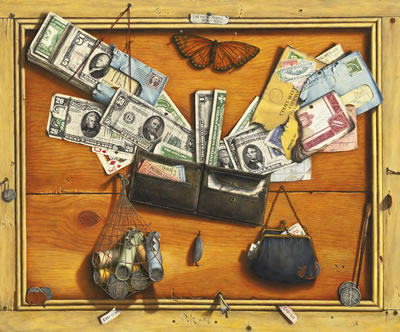
1885 Neemah, Michigan - 1974 Dresden, Germany. Known for: Trompe l'oeil still life-currency, genre painting.
Born in Michigan, Otis Kaye is considered the last of the trompe l'oeil still life painters, recognized primarily for his skill with American currency. At that time, the early part of the 20th... Read full biography
Born in Michigan, Otis Kaye is considered the last of the trompe l'oeil still life painters, recognized primarily for his skill with American currency. At that time, the early part of the 20th century, people were highly interested in this subject matter because the Federal Government was just... Read full biography
Born in Michigan, Otis Kaye is considered the last of the trompe l'oeil still life painters, recognized primarily for his skill with American currency. At that time, the early part of the 20th century, people were highly interested in this subject matter because the Federal Government was just beginning to print uniform money, replacing that which individual banks issued. Kaye was also an etcher and did exquisitely detailed drawings of birds, insects and animals. Although he lived well into the... Read full biography
Born in Michigan, Otis Kaye is considered the last of the trompe l'oeil still life painters, recognized primarily for his skill with American currency. At that time, the early part of the 20th century, people were highly interested in this subject matter because the Federal Government was just beginning to print uniform money, replacing that which individual banks issued. Kaye was also an etcher and did exquisitely detailed drawings of birds, insects and animals. Although he lived well into the 20th century, he was part of the still life tradition of 19th century trompe l'oeil painters, which included John Haberle, John Frederick Peto and William Harnett. Kaye was born to European immigrants and lived briefly in Michigan where his parents... Read full biography
Born in Michigan, Otis Kaye is considered the last of the trompe l'oeil still life painters, recognized primarily for his skill with American currency. At that time, the early part of the 20th century, people were highly interested in this subject matter because the Federal Government was just beginning to print uniform money, replacing that which individual banks issued. Kaye was also an etcher and did exquisitely detailed drawings of birds, insects and animals. Although he lived well into the 20th century, he was part of the still life tradition of 19th century trompe l'oeil painters, which included John Haberle, John Frederick Peto and William Harnett. Kaye was born to European immigrants and lived briefly in Michigan where his parents had a successful lumber business. His father died in a mill accident, and the family sold the business, and he and his... Read full biography