Toshio Bando PRICE CHARTS
1890 - 1973. Known for: Paintings.
Toshio Bando (1895-1973) moved to Tokyo in 1913 to study painting under Fujishima Takeji, who had lived in Italy and France. An admirer of French painting, he was inspired by French art magazines of... Read full biography
Toshio Bando (1895-1973) moved to Tokyo in 1913 to study painting under Fujishima Takeji, who had lived in Italy and France. An admirer of French painting, he was inspired by French art magazines of the various avant-garde movements of Post-Impressionism, Fauvism and Cubism. In 1922 he went to... Read full biography
Toshio Bando (1895-1973) moved to Tokyo in 1913 to study painting under Fujishima Takeji, who had lived in Italy and France. An admirer of French painting, he was inspired by French art magazines of the various avant-garde movements of Post-Impressionism, Fauvism and Cubism. In 1922 he went to Paris and met Léonard Tsuguharu Foujita and his circle of artists, who would influence him sustainably. In the 1920s and 1930s, Bando was at the height of his creative career. He created mainly still... Read full biography
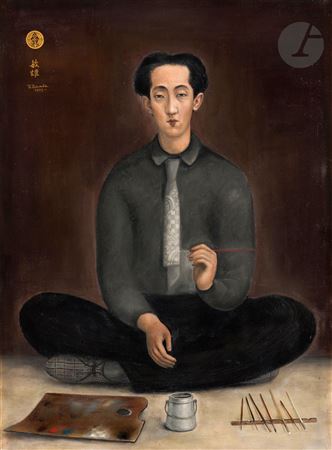
Toshio Bando (1895-1973) moved to Tokyo in 1913 to study painting under Fujishima Takeji, who had lived in Italy and France. An admirer of French painting, he was inspired by French art magazines of the various avant-garde movements of Post-Impressionism, Fauvism and Cubism. In 1922 he went to Paris and met Léonard Tsuguharu Foujita and his circle of artists, who would influence him sustainably. In the 1920s and 1930s, Bando was at the height of his creative career. He created mainly still lifes with flowers, animal depictions and portraits in oil and pastel, in which his Japanese roots are clearly visible. Bando is buried on the famous Père Lachaise Cemetery in Paris. (cko)
Toshio Bando (1895-1973) moved to Tokyo in 1913 to study painting under Fujishima Takeji, who had lived in Italy and France. An admirer of French painting, he was inspired by French art magazines of the various avant-garde movements of Post-Impressionism, Fauvism and Cubism. In 1922 he went to Paris and met Léonard Tsuguharu Foujita and his circle of artists, who would influence him sustainably. In the 1920s and 1930s, Bando was at the height of his creative career. He created mainly still lifes with flowers, animal depictions and portraits in oil and pastel, in which his Japanese roots are clearly visible. Bando is buried on the famous Père Lachaise Cemetery in Paris. (cko)