Hans Snel PRICE CHARTS
1925 Scheveningen - 1998. Known for: Painting.
Born in 1925, Han Snel is amongst the group of famed Dutch artists living in Bali who contributed vastly towards the artistic landscape in the Island of Gods. Snel’s signature style in cubism... Read full biography
Born in 1925, Han Snel is amongst the group of famed Dutch artists living in Bali who contributed vastly towards the artistic landscape in the Island of Gods. Snel’s signature style in cubism combines geometric female forms, bold patterns and vibrant colours with rhythmic patches of light and... Read full biography
Born in 1925, Han Snel is amongst the group of famed Dutch artists living in Bali who contributed vastly towards the artistic landscape in the Island of Gods. Snel’s signature style in cubism combines geometric female forms, bold patterns and vibrant colours with rhythmic patches of light and shade, evoking movement and depth. The change in various art styles was evident throughout his career as Snel was longing to break from his self-imposed figurative tradition. He first progressed from... Read full biography
Born in 1925, Han Snel is amongst the group of famed Dutch artists living in Bali who contributed vastly towards the artistic landscape in the Island of Gods. Snel’s signature style in cubism combines geometric female forms, bold patterns and vibrant colours with rhythmic patches of light and shade, evoking movement and depth. The change in various art styles was evident throughout his career as Snel was longing to break from his self-imposed figurative tradition. He first progressed from romanticism in the 1950s to impressionism in the 1960s, and in the 1970s kept his eye on abstraction. In the last stages of his career, led by his subconscious, Snel’s creative process transcended preconceptions and reached new heights.
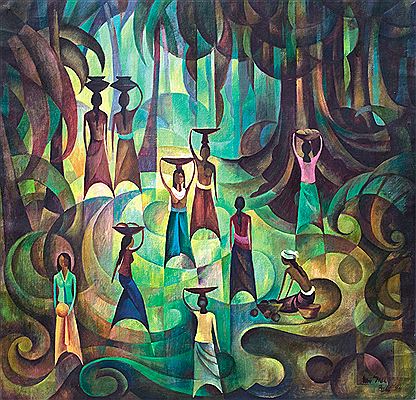
Born in 1925, Han Snel is amongst the group of famed Dutch artists living in Bali who contributed vastly towards the artistic landscape in the Island of Gods. Snel’s signature style in cubism combines geometric female forms, bold patterns and vibrant colours with rhythmic patches of light and shade, evoking movement and depth. The change in various art styles was evident throughout his career as Snel was longing to break from his self-imposed figurative tradition. He first progressed from romanticism in the 1950s to impressionism in the 1960s, and in the 1970s kept his eye on abstraction. In the last stages of his career, led by his subconscious, Snel’s creative process transcended preconceptions and reached new heights.