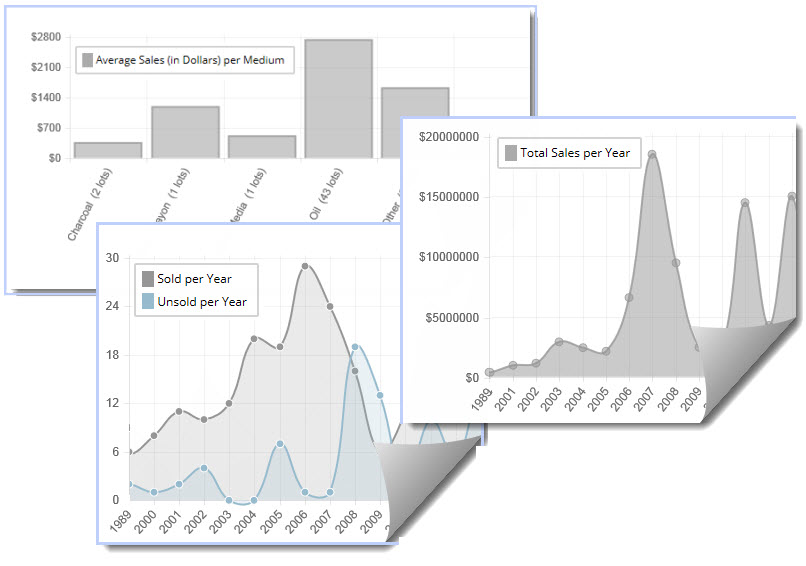
Nikos Hadjikyriakos-Ghykas PRICE CHARTS
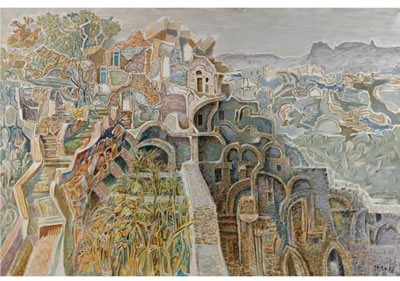
1906 - 1994. Known for: Painting and sculpture.
In 1955, Ghika embarked on a quest to capture the 'essential' in art. As explained by the painter himself, this quest had nothing to do with either realism or naturalism. It involved a nexus of... Read full biography
In 1955, Ghika embarked on a quest to capture the 'essential' in art. As explained by the painter himself, this quest had nothing to do with either realism or naturalism. It involved a nexus of forces, relationships and tensions that are inherent in nature and must be explored. From approximately... Read full biography
In 1955, Ghika embarked on a quest to capture the 'essential' in art. As explained by the painter himself, this quest had nothing to do with either realism or naturalism. It involved a nexus of forces, relationships and tensions that are inherent in nature and must be explored. From approximately 1957 on, Ghika's ordered architectural structures were gradually replaced by a world subject to natural forces, to explosions of color and form, where trees, leaves, bushes and flowers were set in... Read full biography
In 1955, Ghika embarked on a quest to capture the 'essential' in art. As explained by the painter himself, this quest had nothing to do with either realism or naturalism. It involved a nexus of forces, relationships and tensions that are inherent in nature and must be explored. From approximately 1957 on, Ghika's ordered architectural structures were gradually replaced by a world subject to natural forces, to explosions of color and form, where trees, leaves, bushes and flowers were set in motion, engaged in a perpetual, Dionysian dance. In 1958, the artist visited the USA at the invitation of the State Department and returned to Greece by way of the Far East. Inspired perhaps by Japanese calligraphy's pronounced gestures and constant flow... Read full biography
In 1955, Ghika embarked on a quest to capture the 'essential' in art. As explained by the painter himself, this quest had nothing to do with either realism or naturalism. It involved a nexus of forces, relationships and tensions that are inherent in nature and must be explored. From approximately 1957 on, Ghika's ordered architectural structures were gradually replaced by a world subject to natural forces, to explosions of color and form, where trees, leaves, bushes and flowers were set in motion, engaged in a perpetual, Dionysian dance. In 1958, the artist visited the USA at the invitation of the State Department and returned to Greece by way of the Far East. Inspired perhaps by Japanese calligraphy's pronounced gestures and constant flow of brush and pen, his landscapes became denser and more mystical, reflecting his perception of nature as a cosmo... Read full biography