Nils Adolf Wedel PRICE CHARTS
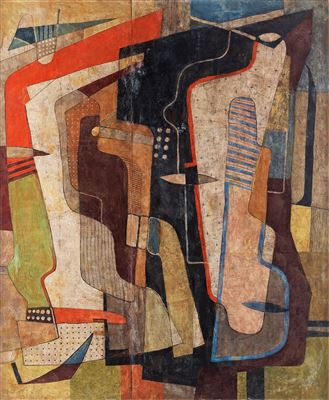
1897 Goteborg, Sweden - 1967. Known for: Cubist style painting, still life and figures.
Nils Wedel came to develop his own form of cubism and surrealism, close to Fernand Léger's design language but with clear inspiration from the surrealists' dreamlike world of images. Under Albert... Read full biography
Nils Wedel came to develop his own form of cubism and surrealism, close to Fernand Léger's design language but with clear inspiration from the surrealists' dreamlike world of images. Under Albert Eldh at the Handicraft Association's school in Gothenburg, Wedel was educated in 1915-17 but then went... Read full biography
Nils Wedel came to develop his own form of cubism and surrealism, close to Fernand Léger's design language but with clear inspiration from the surrealists' dreamlike world of images. Under Albert Eldh at the Handicraft Association's school in Gothenburg, Wedel was educated in 1915-17 but then went on a study trip to Copenhagen and on to Paris. Many were the artists who were drawn to the French capital in the early 20th century, a city that attracted with a cheerful elegance and creative spirit.... Read full biography
Nils Wedel came to develop his own form of cubism and surrealism, close to Fernand Léger's design language but with clear inspiration from the surrealists' dreamlike world of images. Under Albert Eldh at the Handicraft Association's school in Gothenburg, Wedel was educated in 1915-17 but then went on a study trip to Copenhagen and on to Paris. Many were the artists who were drawn to the French capital in the early 20th century, a city that attracted with a cheerful elegance and creative spirit. The Fauvist Othon Friesz at Académie Moderne became Wedel's teacher in 1921-22, but the one who came to influence him most in Paris was without a doubt Fernand Léger. Via Gösta Adrian-Nilsson, Nils Wedel came in contact with Léger, whose cubist... Read full biography
Nils Wedel came to develop his own form of cubism and surrealism, close to Fernand Léger's design language but with clear inspiration from the surrealists' dreamlike world of images. Under Albert Eldh at the Handicraft Association's school in Gothenburg, Wedel was educated in 1915-17 but then went on a study trip to Copenhagen and on to Paris. Many were the artists who were drawn to the French capital in the early 20th century, a city that attracted with a cheerful elegance and creative spirit. The Fauvist Othon Friesz at Académie Moderne became Wedel's teacher in 1921-22, but the one who came to influence him most in Paris was without a doubt Fernand Léger. Via Gösta Adrian-Nilsson, Nils Wedel came in contact with Léger, whose cubist forms astonished him. Wedel himself said in an interview in 1946: “When I came to France when I was very young after the First Worl... Read full biography