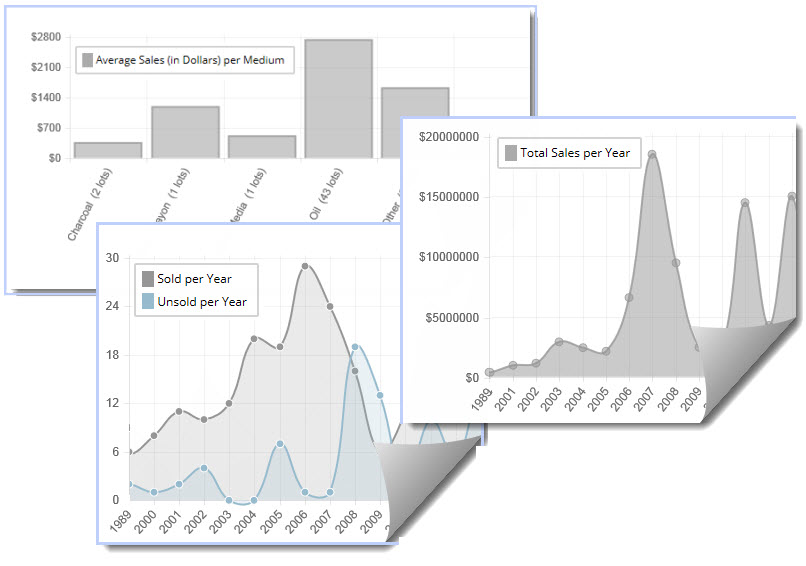
Robert Henderson Blyth PRICE CHARTS
1919 - 1970. Known for: Painting.
Robert Henderson Blyth was born in the Newlands area of Glasgow and studied at the Glasgow School of Art from 1934 to 1939. Blyth joined the Royal Army Medical Corps in 1941 and served with them... Read full biography
Robert Henderson Blyth was born in the Newlands area of Glasgow and studied at the Glasgow School of Art from 1934 to 1939. Blyth joined the Royal Army Medical Corps in 1941 and served with them until the end of the Second World War. During the war Blyth continued to paint and sketch, whilst on... Read full biography
Robert Henderson Blyth was born in the Newlands area of Glasgow and studied at the Glasgow School of Art from 1934 to 1939. Blyth joined the Royal Army Medical Corps in 1941 and served with them until the end of the Second World War. During the war Blyth continued to paint and sketch, whilst on active service in France, Belgium, the Netherlands and Germany. Four paintings from this period were acquired by the War Artists' Advisory Committee. Towards the end of the conflict Blyth's unit, 157... Read full biography
Robert Henderson Blyth was born in the Newlands area of Glasgow and studied at the Glasgow School of Art from 1934 to 1939. Blyth joined the Royal Army Medical Corps in 1941 and served with them until the end of the Second World War. During the war Blyth continued to paint and sketch, whilst on active service in France, Belgium, the Netherlands and Germany. Four paintings from this period were acquired by the War Artists' Advisory Committee. Towards the end of the conflict Blyth's unit, 157 Ambulance, was based in Hamburg much of which had been devastated by RAF bombing raids in 1943. Blyth used the background of a destroyed city in his most famous painting, In the Image of Man. Painted after the war ended the painting's title parodies the... Read full biography
Robert Henderson Blyth was born in the Newlands area of Glasgow and studied at the Glasgow School of Art from 1934 to 1939. Blyth joined the Royal Army Medical Corps in 1941 and served with them until the end of the Second World War. During the war Blyth continued to paint and sketch, whilst on active service in France, Belgium, the Netherlands and Germany. Four paintings from this period were acquired by the War Artists' Advisory Committee. Towards the end of the conflict Blyth's unit, 157 Ambulance, was based in Hamburg much of which had been devastated by RAF bombing raids in 1943. Blyth used the background of a destroyed city in his most famous painting, In the Image of Man. Painted after the war ended the painting's title parodies the Judeo-Christian concept of man made in the image of God and shows a city in ruins behind a bomb damaged crucif... Read full biography