Stass Paraskos PRICE CHARTS
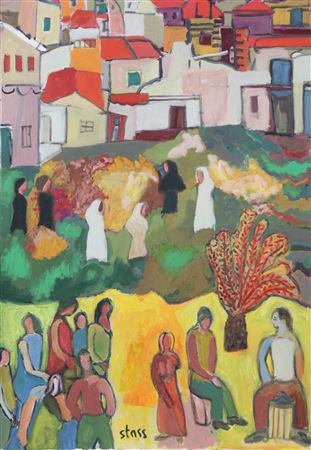
Born 1933 Anaphotia, Cyprus. Known for: Naive-sophisticated genre and figure painting, teaching.
Stass Paraskos was born in Anaphotia, on the Mediterranean island of Cyprus in 1933, the son of a shepherd farmer. He went to England in 1953 and became a cook in his brother's restaurant in the city... Read full biography
Stass Paraskos was born in Anaphotia, on the Mediterranean island of Cyprus in 1933, the son of a shepherd farmer. He went to England in 1953 and became a cook in his brother's restaurant in the city of Leeds. This was a popular haunt of the local art students who encouraged Paraskos to enroll for... Read full biography
Stass Paraskos was born in Anaphotia, on the Mediterranean island of Cyprus in 1933, the son of a shepherd farmer. He went to England in 1953 and became a cook in his brother's restaurant in the city of Leeds. This was a popular haunt of the local art students who encouraged Paraskos to enroll for classes at Leeds College of Art. Despite not having the usual entry qualifications, Paraskos was spotted by the college's inspirational Head of Fine Art, Harry Thubron, who made certain Paraskos was... Read full biography
Stass Paraskos was born in Anaphotia, on the Mediterranean island of Cyprus in 1933, the son of a shepherd farmer. He went to England in 1953 and became a cook in his brother's restaurant in the city of Leeds. This was a popular haunt of the local art students who encouraged Paraskos to enroll for classes at Leeds College of Art. Despite not having the usual entry qualifications, Paraskos was spotted by the college's inspirational Head of Fine Art, Harry Thubron, who made certain Paraskos was accepted. In 1966 Paraskos was involved in a notorious court case in which it was alleged he displayed paintings that were 'lewd and obscene', in contravention of the Vagrancy Act of 1823. The court case was one of a number of important legal... Read full biography
Stass Paraskos was born in Anaphotia, on the Mediterranean island of Cyprus in 1933, the son of a shepherd farmer. He went to England in 1953 and became a cook in his brother's restaurant in the city of Leeds. This was a popular haunt of the local art students who encouraged Paraskos to enroll for classes at Leeds College of Art. Despite not having the usual entry qualifications, Paraskos was spotted by the college's inspirational Head of Fine Art, Harry Thubron, who made certain Paraskos was accepted. In 1966 Paraskos was involved in a notorious court case in which it was alleged he displayed paintings that were 'lewd and obscene', in contravention of the Vagrancy Act of 1823. The court case was one of a number of important legal challenges to the freedom of the arts in the 1960s and 70s, starting with the Lady Chatterley trial in 1960, and ending with the... Read full biography