Page loaded successfully. Showing biography for Ada Walter Shulz.
Ada Walter Shulz BIOGRAPHY
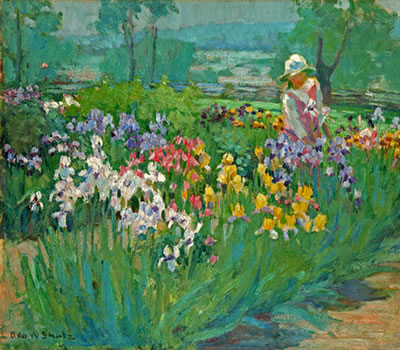
1870 Terre Haute, Indiana - 1928 Nashville, Indiana. Known for: Paintings of mothers and children in landscape.
Born in Terre Haute, Indiana, Ada Shulz became known for her impressionist paintings of mothers and children in outdoor settings, especially Brown County, Indiana. Her works, mostly painted outdoors,... Read full biography
Born in Terre Haute, Indiana, Ada Shulz became known for her impressionist paintings of mothers and children in outdoor settings, especially Brown County, Indiana. Her works, mostly painted outdoors, featured lush scenery and the warmth and sunlight of Indiana summers. Shulz lived her early years... Read full biography
Born in Terre Haute, Indiana, Ada Shulz became known for her impressionist paintings of mothers and children in outdoor settings, especially Brown County, Indiana. Her works, mostly painted outdoors, featured lush scenery and the warmth and sunlight of Indiana summers. Shulz lived her early years in Terre Haute. Her father, an architect, died of diptheria when she was three years old. Her grandmother helped raise her, and fortunately, enough money was available for secure living. Her mother and... Read full biography
Born in Terre Haute, Indiana, Ada Shulz became known for her impressionist paintings of mothers and children in outdoor settings, especially Brown County, Indiana. Her works, mostly painted outdoors, featured lush scenery and the warmth and sunlight of Indiana summers. Shulz lived her early years in Terre Haute. Her father, an architect, died of diptheria when she was three years old. Her grandmother helped raise her, and fortunately, enough money was available for secure living. Her mother and grandmother encouraged her art talent. When she was age fourteen, she moved with her family to Indianapolis where her mother sought professional art training for her daughter. Attending Shorridge High School, which later became Indianapolis High... Read full biography
Born in Terre Haute, Indiana, Ada Shulz became known for her impressionist paintings of mothers and children in outdoor settings, especially Brown County, Indiana. Her works, mostly painted outdoors, featured lush scenery and the warmth and sunlight of Indiana summers. Shulz lived her early years in Terre Haute. Her father, an architect, died of diptheria when she was three years old. Her grandmother helped raise her, and fortunately, enough money was available for secure living. Her mother and grandmother encouraged her art talent. When she was age fourteen, she moved with her family to Indianapolis where her mother sought professional art training for her daughter. Attending Shorridge High School, which later became Indianapolis High School, Shulz benefited from a sophisticated art department, which she later desc... Read full biography
Artist Biography
Biography page for Ada Walter Shulz ((1870 - 1928)), known for Paintings of mothers and children in landscape. Showing 1 biographical entries and 0 sample artworks.
Ada Walter Shulz - Artist Info
About Ada Walter Shulz
Name variants
Ada Walter
Biography from the Archives of askART
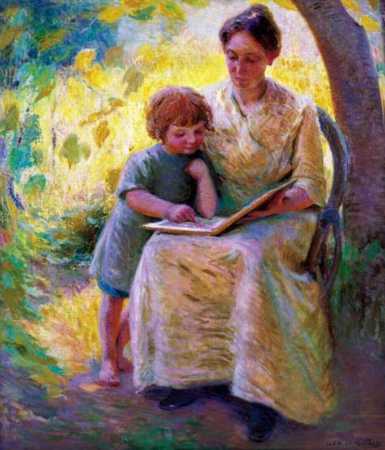 Born in Terre Haute, Indiana, Ada Shulz became known for her impressionist paintings of mothers and children in outdoor settings, especially Brown County, Indiana. Her works, mostly painted outdoors, featured lush scenery and the warmth and sunlight of Indiana summers.
Shulz lived her early years in Terre Haute. Her father, an architect, died of diptheria when she was three years old. Her grandmother helped raise her, and fortunately, enough money was available for secure living. Her mother and grandmother encouraged her art talent. When she was age fourteen, she moved with her family to Indianapolis where her mother sought professional art training for her daughter.
Attending Shorridge High School, which later became Indianapolis High School, Shulz benefited from a sophisticated art department, which she later described as "worthy of an art school" . . . (Newton 70). Roda Selleck (1847-1924) chaired the art curriculum and was a very inspiring teacher. Among her fellow students were a son and daughter of Theodore Steele (1847-1926), a key figure in the Brown County, Indiana plein-air painters, and Ada Shulz occasionally was a guest of the Steele's during her high-school years.
Graduating from high school in the spring of 1889, Shulz was sorry to leave the classroom of Roda Selleck and had a heavy heart due to the deaths of her grandmother and, several months earlier, her sixteen-year old brother. She and her mother then moved to Chicago where Ada began her four-year art studies at the Art Institute of Chicago with John Vanderpoel and Oliver Pennet Grover. Her mother, as ever, was totally encouraging. Ada later said that: "My mother believed that to succeed in any line, everything else must be excluded from the thought." At the Institute, one of the teachers especially encouraged Ada in her skill of drawing child figures.
In 1892, her mother died. Likely seeking diversion from her grief, she went on a painting excursion to Delavan, Wisconsin led by Institute instructors John Vanderpoel and Charles Boutwood. On this trip she did her first painting from nature and from models out of doors, and she also met her future husband, local artist Adolph Shulz who advised her on plein-air painting. They courted for the next two years, and then were married on September 5, 1894.
The couple then went to Paris, where Adolph enrolled in the Academie Julian and Ada in the Academie Vitti as a student of Luc Oliver Merson and Raphael Collin. At that time the school, was quite new, and many American girls were students. She received a bronze medal for doing the best nude drawing. In the spring of 1895, the Shulzes went to Munich to study and paint and to await the birth of the son, Walter, born in June, 1895.
Shortly after, they returned to America and settled in Delavan in a house that Walter had built on his parents' land before he had married. Ada devoted herself to domestic tasks, especially to raising their son, and was much diverted from using her painting skills. Of this part of her life, it was written: ". . .art was replaced by clubs, by housework, by those things that interest most women. And it was years later before she learned that she must give up the clubs, the bridge, the other things that really were not so important to her in order to take up her art once more." (Newton 73).
However, when the son, Walter, was age ten, she began a routine of doing her housework in the mornings so she could paint in the afternoons. Walter was intrigued by the paintings done by his parents, and showed considerable art talent as well. By the time he was a teenager, he was doing credible landscape painting. He had a special bond with his father, with whom he went plein-air painting as well as hunting and fishing.
Adolph supported the family by selling paintings and teaching, and the couple created a welcoming atmosphere, hosting many local groups and other visitors including summer classes of John Vanderpoel. Students in these classes often sold their paintings from the Shulz's front yard.
The Shulzes were devout Christian Scientists and committed to doing painting that would inspire and lighten people's spirits. Ada, especially, wanted her life and paintings to be testimonies to that which was uplifting and led people to rejoice in their lives. In 1901, the couple helped organize the Delavan Christian Science Society, which led to the building of a church.
In 1910, she and her husband began spending their summers painting in Brown County, Indiana, which was an area that later attracted many plein-air painters. Walter Shulz enrolled in the Art Institute of Chicago in 1913, and the next year he, age 19, and his parents exhibited their work at the Milwaukee Art Society.
From 1908 to 1917, the family spent time in the summer in Brown County, Indiana because Adolph Shulz had grown increasingly unhappy with the growing population around Delavan and the disappearance of open landscape for his paintings. He explored Brown County, focusing on its hill country of the Nashville region. In this location, with her son and husband painting out of doors, Ada Shulz was able to pursue her own painting, and she used some of the local children as models. She sometimes included barnyard animals in her paintings.
In 1915, her painting, Motherhood, was described in the Chicago Evening News as being among the best paintings in the 28th Annual Exhibition of the Chicago Art Institute. The next year, her painting The Picture Book won an award, and in 1917 Mother and Child won a purchase award.
These successes and the well-established career of Adolph led to enough professional security that the Shulzes bought land in Brown County in 1917 and moved there to oversee the building of their home. Their property, located on a ridge northeast of Nashville, had been owned by Gustave Baumann, printmaker, who was moving to Santa Fe, New Mexico. The Shulzes' son Walter, without consulting with his parents, enlisted in the Army, and by May was shipped to France with the Sixteenth Infantry of the First Division. Meanwhile his parents had moved into their spacious new home, which they named Lizard's Rest, and which had a large studio for Ada and a garden studio for Adolph. Shortly after they settled, World War I was coming to an end, and they anticipated the return of their son who had survived the battlefields and was part of a volunteer occupation in Germany. However, he became ill from diptheria and died overseas on December 12, 1918.
The loss devastated the parents, who even blamed each other for his joining the Army and subsequent death. The couple grew apart but remained active in the local community. Ada worked hard in the local Christian Science Society, volunteered much time in The Brown County Public Library, and became a beloved part of the community. Adolph spent much time in his studio, where he had a place dedicated to the memory of his son. He also painted extensively in the countryside, joined the Masonic Lodge and took up teaching. In 1926, both of them, no longer a couple, helped form the Brown County Art Gallery Association
Meanwhile several years earlier, Adolph had fallen in love with one of his students, Alberta Rehm Miller from Indianapolis who had rented a cabin near Nashville. When the relationship began, she was a thirty-four year old divorcee with a four-year old daughter. In 1924, Adolph left Ada and moved into a cabin studio near Nashville with Alberta and her daughter, Emilie. On September 30, 1926, the Shulzes were divorced, and within a month Adolph married Alberta.
Two years later Ada Shulze died from cancer, although she had been highly productive after the separation. She had continued living at Lizard's Rest and even painted landscapes as well as her figure work. However, being a Christian Scientist, she did not pay attention to her increasingly ill health, and she died at age fifty-eight tended only by a practitioner.
Sources:
Judith Vale Newton and Carol Ann Weiss, Skirting the Issue, pp. 69-80.
Rachel Perry, "The Paintings of Ada Walter Shulz", American Art Review, February 1998, p. 94