Page loaded successfully. Showing biography for Adolph Schreyer.
Adolph Schreyer BIOGRAPHY
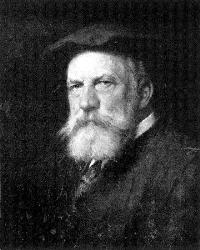
1828 Frankfurt, Germany - 1899 Cronberg, Germany. Known for: Painting-Arabian warrior genre.
Christian Adolf Schreyer was a German painter. He was born at Frankfurt-am-Main. He first studied at the Städel Institute in his native town, and then in Stuttgart and Munich. Schreyer first... Read full biography
Christian Adolf Schreyer was a German painter. He was born at Frankfurt-am-Main. He first studied at the Städel Institute in his native town, and then in Stuttgart and Munich. Schreyer first accompanied Prince Thurn and Taxis through Hungary, Wallachia, Russia and Turkey. Then, in 1854, he followed... Read full biography
Christian Adolf Schreyer was a German painter. He was born at Frankfurt-am-Main. He first studied at the Städel Institute in his native town, and then in Stuttgart and Munich. Schreyer first accompanied Prince Thurn and Taxis through Hungary, Wallachia, Russia and Turkey. Then, in 1854, he followed the Austrian army across the Wallachian frontier. In 1856 he went to Egypt and Syria, and in 1861 to Algiers. In 1862 Schreyer settled in Paris but he returned to Germany in 1870 and settled in... Read full biography
Christian Adolf Schreyer was a German painter. He was born at Frankfurt-am-Main. He first studied at the Städel Institute in his native town, and then in Stuttgart and Munich. Schreyer first accompanied Prince Thurn and Taxis through Hungary, Wallachia, Russia and Turkey. Then, in 1854, he followed the Austrian army across the Wallachian frontier. In 1856 he went to Egypt and Syria, and in 1861 to Algiers. In 1862 Schreyer settled in Paris but he returned to Germany in 1870 and settled in Cronberg, near Frankfurt, where he died. Schreyer was especially esteemed as a painter of horses, peasant life in Wallachia and Moldavia and of battles. His work is particularly remarkable for its excellent equine draughtsmanship and for the artist's... Read full biography
Christian Adolf Schreyer was a German painter. He was born at Frankfurt-am-Main. He first studied at the Städel Institute in his native town, and then in Stuttgart and Munich. Schreyer first accompanied Prince Thurn and Taxis through Hungary, Wallachia, Russia and Turkey. Then, in 1854, he followed the Austrian army across the Wallachian frontier. In 1856 he went to Egypt and Syria, and in 1861 to Algiers. In 1862 Schreyer settled in Paris but he returned to Germany in 1870 and settled in Cronberg, near Frankfurt, where he died. Schreyer was especially esteemed as a painter of horses, peasant life in Wallachia and Moldavia and of battles. His work is particularly remarkable for its excellent equine draughtsmanship and for the artist's power of observation and forceful statement. Schreyer was highly appreciated by French and American coll... Read full biography
Artist Biography
Biography page for Adolph Schreyer ((1828 - 1899)), known for Painting-Arabian warrior genre. Showing 4 biographical entries and 0 sample artworks.
Adolph Schreyer - Artist Info
About Adolph Schreyer
Name variants
Adolf Schreyer, Christian Adolf Schreyer, Adolphe Shreyer
Biography from the Archives of askART
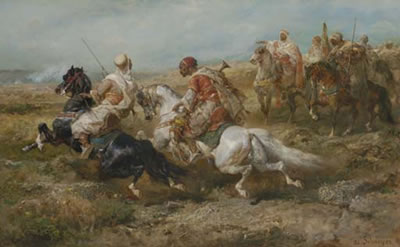 Christian Adolf Schreyer was a German painter.
He was born at Frankfurt-am-Main. He first studied at the Städel Institute in his native town, and then in Stuttgart and Munich.
Schreyer first accompanied Prince Thurn and Taxis through Hungary, Wallachia, Russia and Turkey. Then, in 1854, he followed the Austrian army across the Wallachian frontier. In 1856 he went to Egypt and Syria, and in 1861 to Algiers. In 1862 Schreyer settled in Paris but he returned to Germany in 1870 and settled in Cronberg, near Frankfurt, where he died.
Schreyer was especially esteemed as a painter of horses, peasant life in Wallachia and Moldavia and of battles. His work is particularly remarkable for its excellent equine draughtsmanship and for the artist's power of observation and forceful statement. Schreyer was highly appreciated by French and American collectors.
Schreyer is represented in the following collections: the Raven Gallery, Berlin; the Metropolitan Museum, New York; Kunsthalle, Hamburg.
Source:
Sphinx Fine Art
http://www.sphinxfineart.com/Schreyer-Christian-Adolf-DesktopDefault.aspx?tabid=45&tabindex=44&artistid=66546Biography from Hodgins
Adolf Schreyer was born in Frankfurt in 1828, where he received his artistic training at the Stadel School (under Jakob Becker and Johann David Passavant). He expanded his artistic education in Stuttgart, Munich and Paris. He is associated with the German Romanticism movement and the Dusseldorf School of Painting (having studied at the Dusseldorf Academy - now the Staatliche Kunstakademie Dusseldorf - under Wilhelm von Schadow). As part of his training, Schreyer studied equine anatomy, which helped to foster his confidence and skill in the treatment of this subject matter. Schreyer is particularly esteemed as a painter of horses and peasant life and, further, as a painter of Bedouin scenes, having developed a familiarity with the culture while travelling as a war artist in Northern Africa. Adolf Schreyer's work can be found in many public collections including the Metropolitan Museum in New York, the Musee de Luxembourg, the Kunsthalle in Hamburg and the Stadel Museum in Frankfurt.Biography from Millon & Associes
Adolf Schreyer, a German painter of the 19th century, was known for his exceptional talent in portraying equestrian scenes with anatomical precision. Trained in Frankfurt, Stuttgart, and Munich, he stood out for his love of horses and his ability to capture their essence on canvas. Schreyer's interest in horse anatomy stemmed from his own experience as a rider. He worked as a war draughtsman for the Prince of Thurn et Taxis before traveling to Algeria in 1861, where he immersed himself in the local culture, living among the people of the Hauts Plateaux and learning Arabic. His vibrant and colorful depictions of horses in harness showcased his mastery of brushwork and keen observation skills. Schreyer's work gained popularity among horse enthusiasts and the military in Europe and America, leading to significant patronage from prestigious collectors like the Vanderbilts, Rockefellers, and John Jacob Astor. His most renowned pieces can be found at the Metropolitan Museum in New York.Biography from Auctionata
The painter Christian Adolf Schreyer, born in Frankfurt, received his artistic training at the Städel School and attended, amongst others, the classes of Jakob Becker (1810-1872) and Johann David Passavant (1787-1861). From 1854 to 1856, he voluntarily joined the Austrian army in the Crimean War, which was followed by a number of private journeys to Hungary, Romania and Russia.
Schreyer lived in Paris from 1861 to 1870 and organized further extensive tours to Algiers and the Middle East. In 1872, the painter finally settled in Kronberg, Germany.
Christian Adolf Schreyer is highly appreciated for his depictions of horse and battle scenes and achieved great successes with his ‘Orientalist paintings’.
His works are now in the Metropolitan Museum in New York, the Musée de Luxembourg, the Kunsthalle in Hamburg and the Städel Museum in Frankfurt. (tm)