Page loaded successfully. Showing biography for Alfred Arthur Brunel de Neuville.
Alfred Arthur Brunel de Neuville BIOGRAPHY
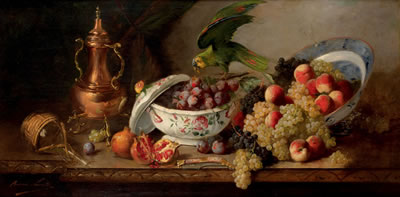
1852 Paris, France - 1941 Paris, France. Known for: Figure, landscape, still life and animal painting.
Alfred Arthur Brunel de Neuville ( 1852 – 1941 ). Alfred Arthur Brunel de Neuville was born on December 2, 1852 in Paris, France. After his basic education, de Neuville studied fine art with his... Read full biography
Alfred Arthur Brunel de Neuville ( 1852 – 1941 ). Alfred Arthur Brunel de Neuville was born on December 2, 1852 in Paris, France. After his basic education, de Neuville studied fine art with his father, a well-known teacher of landscape and still-life painting in Paris. In 1879, at the age of... Read full biography
Alfred Arthur Brunel de Neuville ( 1852 – 1941 ). Alfred Arthur Brunel de Neuville was born on December 2, 1852 in Paris, France. After his basic education, de Neuville studied fine art with his father, a well-known teacher of landscape and still-life painting in Paris. In 1879, at the age of twenty-seven, he exhibited his first painting at the Salon de Paris, which was a simple and elegant study of apples and raisins. It was definitely within the growing French fascination with the new style... Read full biography
Alfred Arthur Brunel de Neuville ( 1852 – 1941 ). Alfred Arthur Brunel de Neuville was born on December 2, 1852 in Paris, France. After his basic education, de Neuville studied fine art with his father, a well-known teacher of landscape and still-life painting in Paris. In 1879, at the age of twenty-seven, he exhibited his first painting at the Salon de Paris, which was a simple and elegant study of apples and raisins. It was definitely within the growing French fascination with the new style of Realism where details, textures, volumes and the sense of objects through acute observation of their appearance became the subject matter of the work of art. His first sentimental painting of playful kittens and domestic pets, another de Neuville... Read full biography
Alfred Arthur Brunel de Neuville ( 1852 – 1941 ). Alfred Arthur Brunel de Neuville was born on December 2, 1852 in Paris, France. After his basic education, de Neuville studied fine art with his father, a well-known teacher of landscape and still-life painting in Paris. In 1879, at the age of twenty-seven, he exhibited his first painting at the Salon de Paris, which was a simple and elegant study of apples and raisins. It was definitely within the growing French fascination with the new style of Realism where details, textures, volumes and the sense of objects through acute observation of their appearance became the subject matter of the work of art. His first sentimental painting of playful kittens and domestic pets, another de Neuville trademark, followed in 1880, causing a great popular and commercial success for the painter. With the growth of a large middle class... Read full biography
Artist Biography
Biography page for Alfred Arthur Brunel de Neuville ((1852 - 1941)), known for Figure, landscape, still life and animal painting. Showing 3 biographical entries and 0 sample artworks.
Alfred Arthur Brunel de Neuville - Artist Info
About Alfred Arthur Brunel de Neuville
Name variants
Leon Brun, Bernard Neuville, Brunel de Neuville, Bernard Neville
Biography from the Archives of askART
 Alfred Arthur Brunel de Neuville ( 1852 – 1941 )
Alfred Arthur Brunel de Neuville was born on December 2, 1852 in Paris, France. After his basic education, de Neuville studied fine art with his father, a well-known teacher of landscape and still-life painting in Paris. In 1879, at the age of twenty-seven, he exhibited his first painting at the Salon de Paris, which was a simple and elegant study of apples and raisins. It was definitely within the growing French fascination with the new style of Realism where details, textures, volumes and the sense of objects through acute observation of their appearance became the subject matter of the work of art.
His first sentimental painting of playful kittens and domestic pets, another de Neuville trademark, followed in 1880, causing a great popular and commercial success for the painter. With the growth of a large middle class during the rise of the Industrial Revolution in France and the rise of an urban population, de Neuville responded to the desire for paintings that captured the charm and moods of household kittens and cats frolicking in the comfortable and well-appointed interiors of the rising middle class.
From 1889 to 1909, de Neuville exhibited at the Salon of the Societe des Artistes Francais. He was made an Associate in 1907.Throughout his career, de Neuville was both a popular painter and a well-respected practitioner of the new academic Realism in France. He became a master at capturing the appearance of things from the texture and shine of metal to the softness of fur.
He is listed in numbers of reference books and single subject books on the period including, The Benezit Dictionary of Painters, Sculptors, Draftsmen, and Engravers, French Flower: Painters of the Nineteenth Century: A Dictionary, The Artists Bluebook, and Painters of the Still-Life in France.
Alfred Arthur Brunel de Neuville died in Paris in 1941. He is buried in Montmartre Cemetery. His work can be seen in museums throughout Europe, North America and South America. The standard bibliographies on de Neuville contain an important essay on de Neuville in Artes Plasticas by Brazilian art historian, Julio Lozad.
Written and submitted by Gary Libby, art historian and authorBiography from Cotai Fine Art (CLOSED)
One of the most popular subjects for an artist during the 19th century was cats and dogs. As the Industrial Revolution progressed and more people moved to the large cities, the number of people keeping cats and dogs as pets increased. With this increase more and more artists were called upon to paint charming and sentimental works featuring the domesticated animals.
Arthur A. Brunel de Neuville was a French 19th century artist working in Paris who took up the call and devoted his artistic talent to portraying the different moods of cats and kittens. A typical scene includes a small feline family drinking from a bowl of milk, playing with a ball of yarn or toying with a bug. His animals are often set against a dark background, in the corner of a room, and are painted in a mixture of the Academic and Impressionist styles.
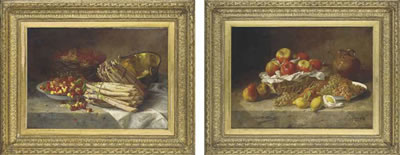
Brunel de Neuville also painted a number of still life paintings during his lifetime. These works are often rustic in feeling and definitely reflect the Realist tradition that was so prevalent during the late 19th century.Biography from Wolf's Fine Art
A highly skilled artist of the French school, Alfred Arthur Brunel de Neuville painted primarily animals, still lives, fruits, and occasionally flowers. A student of his father, he received a rather basic foundation in the fine art of painting, and spent the rest of his career elaborating upon it, improving his talents all the while.
In 1879, Brunel de Neuville began exhibiting at the famed Paris Salon. That first year, he presented to the audience a piece entitled Pommes et raisin, and then in 1880 showed his Halte de chasse, a scene of frolicking kittens very appreciated and widely executed at the time. The artist continued to paint kittens through out his career and his works on this subject are highly valued. In 1889, he began to exhibit at the Salon des Artistes Francais with a canvas depicting a still life of fish, and continued participating in shows at this institution until 1909. In 1907, this group made him an associated member.
In his celebrated still lives of fruits, the velvety richness of their smooth and silky texture is set in opposition to the rougher material of wicker baskets. Brunel de Neuville was in addition rather well-known for his wonderful ability to render the texture and shine of copper pots, and this aspect of his oeuvre is commonly reproduced and cited. In the history of French painting, he most definitely earned a lasting reputation as a highly skilled artist with a fantastic ability to bring the contents of his canvases to life.
Literature:
Benezit, Emmanuel. Dictionnaire des Peintres, Sculpteurs, Dessinateurs, et Graveurs. (Paris: Librairie Grund, 1976, 1999).
Hardouin-Fugier, Elisabeth and Etienne Grafe. French Flower Painters of the 19th Century: A Dictionary. (London: Philip Wilson Publishers Ltd., 1989).
Hardouin-Fuger, Elisabeth and Etienne Grafe. Les Peintres de Fleurs en France de Redoute a Redon. (Paris: Les Editions de l'Amateur, 1992).
Hardouin- Fugier, Elisabeth. Les Peintres de Natures Mortes en France au XIXe Siecle. (Paris: Les Editions de l'Amateur, 1998).
Schurr, Gerald and Pierre Cabanne. Dictionnaire des Petits Maitres de la Peinture 1820 - 1920. (Paris: Les Editions de l'Amateur, 1996).