Page loaded successfully. Showing biography for Alfred Joseph Casson.
Alfred Joseph Casson BIOGRAPHY
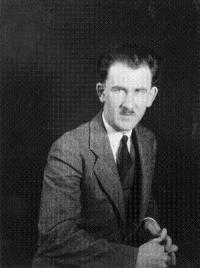
1898 Toronto, Ontario - 1992. Known for: Landscape and portrait painting, graphics.
Alfred Joseph Casson was known for his watercolor paintings of small communities in southern and central Ontario, Canada. He was one of the members of the Group of Seven, active in the 1920s. He was... Read full biography
Alfred Joseph Casson was known for his watercolor paintings of small communities in southern and central Ontario, Canada. He was one of the members of the Group of Seven, active in the 1920s. He was born in 1898 in Toronto, Ontario but grew up in Guelph and attended school in Hamilton. He first saw... Read full biography
Alfred Joseph Casson was known for his watercolor paintings of small communities in southern and central Ontario, Canada. He was one of the members of the Group of Seven, active in the 1920s. He was born in 1898 in Toronto, Ontario but grew up in Guelph and attended school in Hamilton. He first saw the artwork of the unformed Group of Seven when he and his family had returned to Toronto in 1916. He enrolled in art classes at the Central Technical School and worked as a freelance commercial... Read full biography
Alfred Joseph Casson was known for his watercolor paintings of small communities in southern and central Ontario, Canada. He was one of the members of the Group of Seven, active in the 1920s. He was born in 1898 in Toronto, Ontario but grew up in Guelph and attended school in Hamilton. He first saw the artwork of the unformed Group of Seven when he and his family had returned to Toronto in 1916. He enrolled in art classes at the Central Technical School and worked as a freelance commercial designer. At the commercial art firm of Rous and Mann, Casson worked under the guidance of Franklin Carmichael. Casson learned typography and graphics from Carmichael, and the two often took sketching trips together around Toronto. Already an... Read full biography
Alfred Joseph Casson was known for his watercolor paintings of small communities in southern and central Ontario, Canada. He was one of the members of the Group of Seven, active in the 1920s. He was born in 1898 in Toronto, Ontario but grew up in Guelph and attended school in Hamilton. He first saw the artwork of the unformed Group of Seven when he and his family had returned to Toronto in 1916. He enrolled in art classes at the Central Technical School and worked as a freelance commercial designer. At the commercial art firm of Rous and Mann, Casson worked under the guidance of Franklin Carmichael. Casson learned typography and graphics from Carmichael, and the two often took sketching trips together around Toronto. Already an accomplished landscape painter, he was soon introduced to the rest of the members of the Group of Seven.... Read full biography
Artist Biography
Biography page for Alfred Joseph Casson ((1898 - 1992)), known for Landscape and portrait painting, graphics. Showing 2 biographical entries and 0 sample artworks.
Alfred Joseph Casson - Artist Info
About Alfred Joseph Casson
Name variants
A J Casson
Biography from the Archives of askART
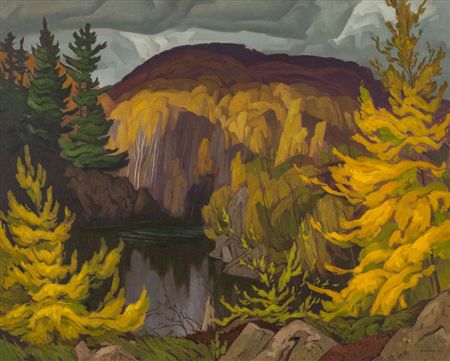 Alfred Joseph Casson was known for his watercolor paintings of small communities in southern and central Ontario, Canada. He was one of the members of the Group of Seven, active in the 1920s. He was born in 1898 in Toronto, Ontario but grew up in Guelph and attended school in Hamilton. He first saw the artwork of the unformed Group of Seven when he and his family had returned to Toronto in 1916.
He enrolled in art classes at the Central Technical School and worked as a freelance commercial designer. At the commercial art firm of Rous and Mann, Casson worked under the guidance of Franklin Carmichael. Casson learned typography and graphics from Carmichael, and the two often took sketching trips together around Toronto. Already an accomplished landscape painter, he was soon introduced to the rest of the members of the Group of Seven.
Casson together with Franklin Carmichael and Frederic Henry Brigden founded the Ontario Society of Painters in Water Color in 1925. Soon after this event, Casson accepted an invitation to join the Group of Seven. He struggled free from the influence of Carmichael's painting style to establish his own. He strayed from the more typical depictions of northern landscapes to concentrate on the smaller communities such as Parry Sound, Glen Williams, Norval, Salem and Killarney Park.
He died at the age of 94 and was buried along side the other members of the Group of Seven.
Source:
David Burnett, Masterpieces of Canadian ArtBiography from Waddington's
When he joined the Group of Seven in 1926, A.J. Casson (1898-1992) was strongly influenced by the work of its established senior members. This influence gradually diminished as he turned to watercolour as a favoured medium (he was a founding member of the Canadian Society of Painters in Watercolour in 1925) and chose the villages and houses of rural Ontario as his primary subject matter. Looking back on his career from the 1970s, he called it his “Ontario quest.”
Casson felt that his particular contribution to Canadian art lay in the preservation of rapidly vanishing rural villages by painting them. Working as a commercial artist for the firm Sampson-Matthews Limited from the mid-1920s until his retirement in 1957 (stepping down from the position of vice-president and art director), Casson was a very talented designer. Integrating domestic structures with their regular shapes and lines into the natural environment engaged his keen sense of design.
Casson’s choice of rural villages as a subject also fulfilled his desire to inject some humanity into Canadian painting, which had been dominated by landscapes devoid of figural content throughout the 1920s. Casson would repeatedly return to the subject of the rural village, featuring different types of buildings, often the country store. As his artistic priorities shifted, Casson altered the formal treatment of his paintings, applying greater or lesser degrees of abstraction.