Page loaded successfully. Showing biography for Andre Marfaing.
Andre Marfaing BIOGRAPHY
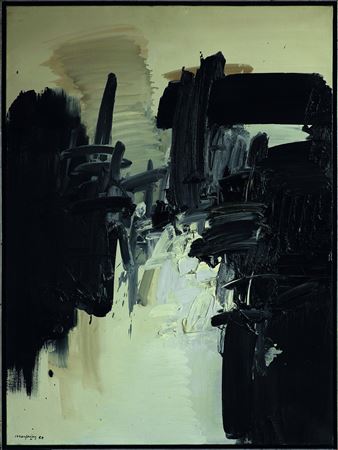
1925 Toulouse, France - 1987 Paris, France. Known for: Lyrical abstract paintings, arclhitectural shapes and geometric abstraction.
The French abstractionist Marfaing was born in Toulouse in 1925. He studied law and worked as a lawyer for several years. He began to paint as an amateur at first, and then attended classes in... Read full biography
The French abstractionist Marfaing was born in Toulouse in 1925. He studied law and worked as a lawyer for several years. He began to paint as an amateur at first, and then attended classes in sculpture and painting. In 1949 he moved to Paris and devoted himself entirely to painting. Over many... Read full biography
The French abstractionist Marfaing was born in Toulouse in 1925. He studied law and worked as a lawyer for several years. He began to paint as an amateur at first, and then attended classes in sculpture and painting. In 1949 he moved to Paris and devoted himself entirely to painting. Over many years he associated with the leading artists and poets of the School of Paris: Fernand Léger, Maurice Estève, Alfred Manessier and Gerard Schneider, amongst others. This circle of artists had a decisive... Read full biography
The French abstractionist Marfaing was born in Toulouse in 1925. He studied law and worked as a lawyer for several years. He began to paint as an amateur at first, and then attended classes in sculpture and painting. In 1949 he moved to Paris and devoted himself entirely to painting. Over many years he associated with the leading artists and poets of the School of Paris: Fernand Léger, Maurice Estève, Alfred Manessier and Gerard Schneider, amongst others. This circle of artists had a decisive influence on the development of his individual style. The figuratism of his early works gave way to lyrical abstraction*. His first abstract compositions date from the beginning of the 1950s. Marfaing was an active participant in exhibitions in Paris... Read full biography
The French abstractionist Marfaing was born in Toulouse in 1925. He studied law and worked as a lawyer for several years. He began to paint as an amateur at first, and then attended classes in sculpture and painting. In 1949 he moved to Paris and devoted himself entirely to painting. Over many years he associated with the leading artists and poets of the School of Paris: Fernand Léger, Maurice Estève, Alfred Manessier and Gerard Schneider, amongst others. This circle of artists had a decisive influence on the development of his individual style. The figuratism of his early works gave way to lyrical abstraction*. His first abstract compositions date from the beginning of the 1950s. Marfaing was an active participant in exhibitions in Paris from the early 1950s and he became a regular exhibitor at the Salon des Réalités Nouvelles* from 1954 onwards. During this period h... Read full biography
Artist Biography
Biography page for Andre Marfaing ((1925 - 1987)), known for Lyrical abstract paintings, arclhitectural shapes and geometric abstraction. Showing 2 biographical entries and 0 sample artworks.
Andre Marfaing - Artist Info
About Andre Marfaing
Biography from the Archives of askART
 The French abstractionist Marfaing was born in Toulouse in 1925. He studied law and worked as a lawyer for several years. He began to paint as an amateur at first, and then attended classes in sculpture and painting. In 1949 he moved to Paris and devoted himself entirely to painting.
Over many years he associated with the leading artists and poets of the School of Paris: Fernand Léger, Maurice Estève, Alfred Manessier and Gerard Schneider, amongst others. This circle of artists had a decisive influence on the development of his individual style. The figuratism of his early works gave way to lyrical abstraction*. His first abstract compositions date from the beginning of the 1950s.
Marfaing was an active participant in exhibitions in Paris from the early 1950s and he became a regular exhibitor at the Salon des Réalités Nouvelles* from 1954 onwards. During this period he also exhibited in international shows.
In the second half of the 1950s, Marfaing’s style developed new characteristics. Geometric and architectural shapes replaced the lyrical abstraction of his early compositions.
His first solo exhibition was held in October 1958 at the Claude Bernard Gallery in Paris, and from then on he took part in many exhibitions. In 1962 he represented France at the Venice Biennale* and in 1966 he participated in the group exhibition, “Fifteen Artists of My Generation”. He used a variety of techniques in his work: etching*, lithograph*, oils, acrylics and collage*, and he also worked as an illustrator.
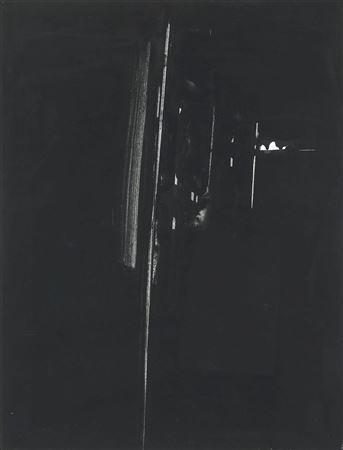
Marfaing gradually moved over to working solely in black. According to him black was the most appropriate medium for expressing feelings. His compositions show endless diversity, but principally depict a perpetual conflict of opposing realities: light and dark, volume and vacuum, space and plane. Many critics and friends of the artist have called his style “ascetic”. He makes use of black and its subtle half-tones with incredible precision and conciseness.
From the 1970s Marfaing began to use acrylic paints, and it is this medium that particularly brings out the contrasting rhythm of black and white splashes in his compositions of that period. His own words, “I am examining the world without addressing reality”, provide the best summary of his many etchings and lithographs, now very popular amongst today’s modern art collectors.
After Marfaing’s death in Paris in 1987 a series of one-man exhibitions was held in Paris and Toulouse.
PUBLIC COLLECTIONS
Fonds National d’Art Contemorain, Abbaye de Beaulieu en Rouergue
Musee de Châteauroux (Peinture sur Papier)
Musée d’Art Moderne d’Haifa
Musée de Liège (Huile sur toile 1967)
Musée d’Art Moderne de la Ville de Paris
Musée de Roanne
Musée de Skoplje
Musée de Strasbourg
Musée des Augustins, Toulouse
F.R.A.C. Midi Pyrénées
Fond National d’Art Contemporation
R.R.A.C. Poitou Charentes
F.D.A.C. Val de Marne
Source:
"Andre Marfaing," Aktis Gallery, Web, 1, 2018
* For more in-depth information about these terms and others, see AskART.com. Glossary http://www.askart.com/AskART/lists/Art_Definition.aspx.Biography from Bukowski Stockholm
André Marfaing was born in Toulouse in 1925. He studied law and later became a professor of the field while painting for himself. Later, he became more and more involved in the arts, taking sculpture and painting lessons in Toulouse. In 1949 he left his hometown to settle on the suburbs of Paris, where he continued his artistic career.Until 1953, Marfaing's painting was figurative: the subjects were traditional, depicting nature and still life, but in a more suggestive than descriptive way.
In Paris, he met artists such as Fernand Léger, Maurice Estève, Alfred Manessier and Pierre Soulages. With the latter, he shared his south-western roots, a passion for Romanesque art and a love for the colour black. Marfaing definitely embraced the use of black, which is a combination of all colours, in relation to white, its opposite.In the mid-1950s, Marfaing began to experiment with the abstract painting that characterises his work today, a painting related to lyrical abstraction but with its own expression.
Eventually, he came to use only black on his canvases. "For me, black is the most natural means of expression," he said.Marfaing's art has a depth, he questions himself and constantly explores the conflicts between shadow and light, between emptiness and abundance, between nothingness and being; a kind of spiritual art... Towards the end of his life, the works are stripped down and explore the balance where the tension of the line responds to the stability of the volumes.
He wanted to express one thing in its fullness with as few mediums as possible.Marfaing's first solo exhibition was held in 1958 at Galerie Claude Bernard. The following year he was invited to participate in Documenta in Kassel, Germany, and the first Paris Biennale at the Musée d'Art Modern. He won prizes alongside Martin Barre, Hundertwasser, Yves Klein and Joan Mitchell. In 1962, he participated in the Venice Biennale and joined the Galerie Ariel, directed by Jean Pollak. In 1967 he also joined the Birch Gallery in Copenhagen, Denmark.