Page loaded successfully. Showing biography for Arthur Runquist.
Arthur Runquist BIOGRAPHY
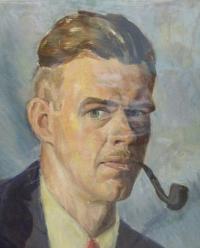
1891 South Bend, Washington - 1971. Known for: Collaborative painting, figures, landscape, regional WPA artwork.
Arthur & Albert C. Runquist. Brothers born in Washington in the 1890s, they spent much of their lives chronicling the people and landscapes of the Oregon coast. Their work reveals an intimate... Read full biography
Arthur & Albert C. Runquist. Brothers born in Washington in the 1890s, they spent much of their lives chronicling the people and landscapes of the Oregon coast. Their work reveals an intimate familiarity with the people and places they painted, providing unique insights into the roots of regional... Read full biography
Arthur & Albert C. Runquist. Brothers born in Washington in the 1890s, they spent much of their lives chronicling the people and landscapes of the Oregon coast. Their work reveals an intimate familiarity with the people and places they painted, providing unique insights into the roots of regional painting in the Northwest. Their imagery ranges from laboring and domestic life and simple landscape studies to more abstracted examinations of the natural world. The Runquist brothers, born three... Read full biography
Arthur & Albert C. Runquist. Brothers born in Washington in the 1890s, they spent much of their lives chronicling the people and landscapes of the Oregon coast. Their work reveals an intimate familiarity with the people and places they painted, providing unique insights into the roots of regional painting in the Northwest. Their imagery ranges from laboring and domestic life and simple landscape studies to more abstracted examinations of the natural world. The Runquist brothers, born three years apart, attended the University of Oregon, and spent time at the Art Students’ League in New York during the 1920s. During the depression, each artist painted W.P.A. murals at sites including a Washington State Post Office and the University of... Read full biography
Arthur & Albert C. Runquist. Brothers born in Washington in the 1890s, they spent much of their lives chronicling the people and landscapes of the Oregon coast. Their work reveals an intimate familiarity with the people and places they painted, providing unique insights into the roots of regional painting in the Northwest. Their imagery ranges from laboring and domestic life and simple landscape studies to more abstracted examinations of the natural world. The Runquist brothers, born three years apart, attended the University of Oregon, and spent time at the Art Students’ League in New York during the 1920s. During the depression, each artist painted W.P.A. murals at sites including a Washington State Post Office and the University of Oregon Library. For nearly two decades, they lived and painted on the Oregon Coast at Neakahnie. Arthur and Albert shared a uniquely... Read full biography
Artist Biography
Biography page for Arthur Runquist ((1891 - 1971)), known for Collaborative painting, figures, landscape, regional WPA artwork. Showing 2 biographical entries and 0 sample artworks.
Arthur Runquist - Artist Info
About Arthur Runquist
Biography from the Archives of askART
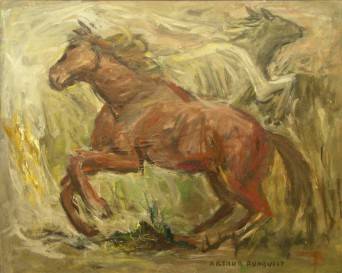 Arthur & Albert C. Runquist
Brothers born in Washington in the 1890s, they spent much of their lives chronicling the people and landscapes of the Oregon coast. Their work reveals an intimate familiarity with the people and places they painted, providing unique insights into the roots of regional painting in the Northwest. Their imagery ranges from laboring and domestic life and simple landscape studies to more abstracted examinations of the natural world.
The Runquist brothers, born three years apart, attended the University of Oregon, and spent time at the Art Students’ League in New York during the 1920s. During the depression, each artist painted W.P.A. murals at sites including a Washington State Post Office and the University of Oregon Library. For nearly two decades, they lived and painted on the Oregon Coast at Neakahnie. Arthur and Albert shared a uniquely similar style in their work. On occasion, it is believed that they even contributed to one another’s canvases. Both were actively painting shortly before their deaths, which occurred only months apart in 1971.
Arthur Runquist, the elder of the two brothers, was born in South Bend, Washington in 1891 and educated at the University of Oregon. He was Alfred Schroff’s assistant there until he left in 1920 to study at the Art Students League. Like his brother Albert, he exhibited at the New York World's Fair in 1939 and the American Artists Congress in New York a year later. In addition, Arthur had work at the Golden Gate International Exposition in 1939.
Working for the WPA, he completed two murals with the theme, Tree of Life, painted in 1938 at the University of Oregon. Albert also assisted on this project, as did Martina Gangle. Murals for Pendleton High School in Eastern Oregon were completed in 1941. Arthur served in the Kaiser Shipyards in Vancouver, Washington from 1942-1945. His painted documentation of the workers gained him a reputation for social commentary.
Figures are more prominent in his work than in his brother Albert's. Even landscapes were secondary in importance to the people appearing in them. Like his brother, he recorded life on the Oregon coast with sensitivity. In their early works it is often difficult to distinguish one brother's work from the other. It was only later that their styles began to differ. Arthur's work was somewhat tighter, more linear and figure centered, while Albert's was looser, more painterly, showing atmosphere and effects of light.
In 1963 the brothers returned to Portland and continued painting until shortly before Arthur died in 1971 and Albert later the same year. Often thought of as one person because they lived their lives in parallel, the Runquist brothers played an important role as social critics of life in the 1930s and 1940s. They are also remembered as important chroniclers of life on the Oregon coast.
Albert C. Runquist, the younger of the Runquist brothers, was born in Aberdeen, Washington and educated at the University of Oregon, the Museum Art School, and the Art Students League in New York. He exhibited at the New York World's Fair in 1939 and at the San Francisco Museum of Art the following year. He worked on the WPA post office project in Sedro Wooley, Washington in 1940, but left to work as a shipbuilder for Willamette Iron and Steel. He continued at the Kaiser Shipyards in Vancouver, Washington until 1945 and the end of WWII.
In 1946 the Runquist brothers, Albert and Arthur, moved into the Harry Wentz house at Neahkahnie on the Oregon Coast. They lived and worked there for eighteen years. Albert commuted to Portland in 1946 to teach at the Museum Art School. The years on the Coast were productive; they lived in relative isolation and devoted their lives to painting. A Portland Art Museum catalog states, "Working within a limited range of color he achieves canvases which are genuinely poetic interpretations of the coastal scenes he knows so intimately.
Driftwood, fishermen, boats, surf, dunes, and meadows, expressed with a light, nervous brushstroke, exist in a cool, silvery light." Albert's work appeals to the eye and emotions. He painted at the scene and worked quickly to capture the light before it disappeared. "Nature does not sit still to have her portrait painted." The two brothers returned to Portland in 1963. Albert continued to paint until 1970 and died the following year.
There was an original quality about the work of the Runquist brothers, and many times they were thought of as one. It is often difficult to distinguish the difference in style between the two. They felt signatures were not important and left many works unsigned. When Albert developed medical problems, Arthur signed his paintings for him.
Source:
Website of the artists, 2019Biography from the Archives of askART
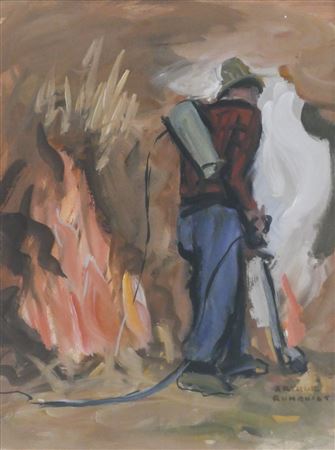 A regionalist artist, he was a painter, etcher, lithographer and teacher who spent his career in Oregon, living primarily in Manzanita. He and his brother, Albert, were part of the group of artists who gathered at the cottage of Harry Wentz, leader of the Oregon Regionalist movement. His style was characterized as relaxed and "brushy."
He was born in South Bend, Washington and studied at the University of Oregon and at the Art Students League in New York City. His painting is in the Portland Art Museum, and murals are at the University of Oregon Library at Eugene.