Page loaded successfully. Showing biography for Augustus B Koopman.
Augustus B Koopman BIOGRAPHY
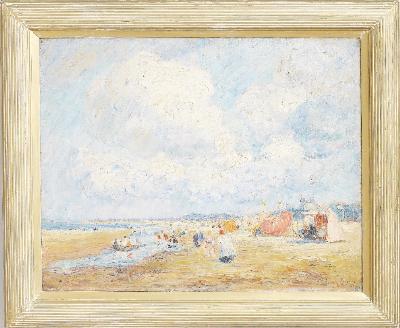
1869 Charlotte, North Carolina - 1914 Etaples, France. Known for: Genre, landscape, figure and portrait painting.
Born in Charlotte, North Carolina, Augustus Koopman was a painter and etcher of subjects that included the American West. He lived only 45 years and spent most of his short life in Paris where he was... Read full biography
Born in Charlotte, North Carolina, Augustus Koopman was a painter and etcher of subjects that included the American West. He lived only 45 years and spent most of his short life in Paris where he was a member of an extensive expatriate community in Montparnasse. He also did much painting of marine... Read full biography
Born in Charlotte, North Carolina, Augustus Koopman was a painter and etcher of subjects that included the American West. He lived only 45 years and spent most of his short life in Paris where he was a member of an extensive expatriate community in Montparnasse. He also did much painting of marine and figurative subjects at Etaples, along the coast near Belgium. Koopmna studied at the Pennsylvania Academy of Fine Arts, and in Paris between 1887 and 1892 at the Academie Julian and the Ecole des... Read full biography
Born in Charlotte, North Carolina, Augustus Koopman was a painter and etcher of subjects that included the American West. He lived only 45 years and spent most of his short life in Paris where he was a member of an extensive expatriate community in Montparnasse. He also did much painting of marine and figurative subjects at Etaples, along the coast near Belgium. Koopmna studied at the Pennsylvania Academy of Fine Arts, and in Paris between 1887 and 1892 at the Academie Julian and the Ecole des Beaux Arts. Among his teachers were William Bouguereau and Benjamin Constant and Tony Robert-Fleury. His dry-points and etchings are in the Congressional and New York Public Libraries. He first visited the Grand Canyon in 1913, and his painting... Read full biography
Born in Charlotte, North Carolina, Augustus Koopman was a painter and etcher of subjects that included the American West. He lived only 45 years and spent most of his short life in Paris where he was a member of an extensive expatriate community in Montparnasse. He also did much painting of marine and figurative subjects at Etaples, along the coast near Belgium. Koopmna studied at the Pennsylvania Academy of Fine Arts, and in Paris between 1887 and 1892 at the Academie Julian and the Ecole des Beaux Arts. Among his teachers were William Bouguereau and Benjamin Constant and Tony Robert-Fleury. His dry-points and etchings are in the Congressional and New York Public Libraries. He first visited the Grand Canyon in 1913, and his painting Vision of the Grand Canyon is in the Santa Fe Railway Collection. Sources:. Doris Dawdy, Artists of the American West... Read full biography
Artist Biography
Biography page for Augustus B Koopman ((1869 - 1914)), known for Genre, landscape, figure and portrait painting. Showing 2 biographical entries and 0 sample artworks.
Augustus B Koopman - Artist Info
About Augustus B Koopman
Name variants
Augustus Koosmann
Biography from the Archives of askART
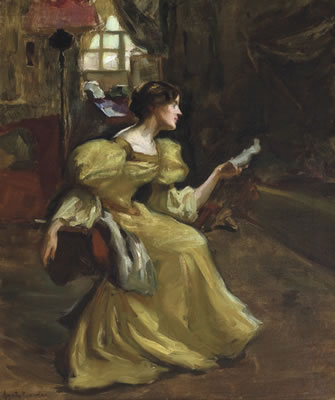 Born in Charlotte, North Carolina, Augustus Koopman was a painter and etcher of subjects that included the American West. He lived only 45 years and spent most of his short life in Paris where he was a member of an extensive expatriate community in Montparnasse. He also did much painting of marine and figurative subjects at Etaples, along the coast near Belgium.
Koopmna studied at the Pennsylvania Academy of Fine Arts, and in Paris between 1887 and 1892 at the Academie Julian and the Ecole des Beaux Arts. Among his teachers were William Bouguereau and Benjamin Constant and Tony Robert-Fleury.
His dry-points and etchings are in the Congressional and New York Public Libraries. He first visited the Grand Canyon in 1913, and his painting Vision of the Grand Canyon is in the Santa Fe Railway Collection.
Sources:
Doris Dawdy, Artists of the American West, Volume III
Peter Hastings Falk, Editor, Who Was Who in American ArtBiography from The Johnson Collection
AUGUSTUS KOOPMAN (1869-1914)
The vast majority of Augustus Bernard Koopman’s career as a painter and etcher was spent in cities far from the southern United States, but he would always be identified as a North Carolinian. Though he was born in Charlotte, he didn’t stay for long. When the family fortune was lost, seven-year-old Augustus Koopman moved to Philadelphia with his father. Koopman quickly found his career path in the arts at a unique preparatory public school called Central High School, where he made a speech on the Fine Arts at his 1886 commencement.
The year after graduation, he began his studies at the Pennsylvania Academy of the Fine Arts (PAFA). The academy was infamously progressive for its inclusion of women in the anatomy drawing classes, led by Thomas Eakins at the time. PAFA would, however, struggle against Modernism for a few more decades.
Koopman left for Paris in 1889, excited about the modern direction art was taking. Though he did sell paintings there, finances stretched thin. He enrolled in École des Beaux-Arts and then Académie Julian, where he studied under William-Adolphe Bouguereau, Tony Robert Fleury, and Jean-Joseph Benjamin-Constant. Though running desperately low on funds by his 1892 graduation, he followed his time in Paris with time in Spain studying the work of Diego Velázquez.
Koopman found some recognition depicting playful snippets of everyday people and scenery, evidenced by his placement at the Paris Salon of 1890 and 1892. This success wouldn’t be enough, however, and he journeyed back to the United States around this time to sell all his belongings so he could return to Paris. Then in 1895, he travelled to Volendam, Holland (now the Netherlands) on commission; he painted The Two Forces and was not paid what was promised.
It turns out that such misfortune would be the start of his success; this painting would go on to win the first William Clarke prize in 1898 at the Paris American Art Association, and medals in the Paris Exhibition of 1900 and the Buffalo Exhibition of 1901. At some point, Koopman met Louise Lovette Osgood, the daughter of a Bostonian reverend, who had also been studying art in Europe in 1895. After a brief stint home in Boston, she was back on a boat to England, and in April of 1897 she and Augustus Koopman married in Paris. Around this time, Koopman lectured and taught art classes for free. His class eventually became popular, and his participation in the Champs de Mars Salon of 1896 gained him friendship with such notable figures as Auguste Rodin.
With two children by 1900, Koopman’s life was becoming very busy, and he frequently traveled without his family. He sold many prints and etchings, received painting commissions, and exhibited in solo and group exhibitions in Europe and the United States, lecturing and traveling to such places as New York, Detroit, Indianapolis, Atlanta, Boston, Philadelphia, St. Louis (1904 World’s Fair), Pittsburgh, DC, New Orleans, Chicago, Budapest, Munich, Glasgow, and London.
He participated in group exhibitions with contemporaries such as Birge Harrison, Henry Ossawa Tanner, and Cecilia Beaux. With popularity, however, came commentary from the public. Koopman began to receive mixed reviews at his shows, and he was one of thirty artists “indignant” at the rejection from the National Academy of Design in 1907, along with Colin Campbell Cooper. Supposedly, the academy was participating in some “door slamming in the faces of progressive men.” A 1911 review complimented his work but recommended he “restrain his exuberant technique,” perhaps in reference to his vivid colors, applied in thick daubs with a palette knife. Despite the criticism, Koopman defended his emotional color use, saying that Modernism “is a revolution,” and advocating for modern art and its accessibility in such places as Atlanta, Georgia, where he recommended an art museum be established.
At the height of his career, in 1913, and after a stressful divorce from his wife, Augustus Koopman fell ill with rheumatic fever. He contradicted the reports that he had become partially paralyzed and would never paint again, but less than two months later, at 45 years old, he died in Étaples, France. The Charlotte News (1914) reported that Koopman had been planning a show in Charlotte before he died. Despite being the only North Carolinian painter exhibited at such notable exhibitions as the 1900 Paris Exhibition, Koopman fell into relative obscurity after his death. Even still, Koopman’s work would continue to feature in group exhibitions in the South, and his work has remained in major public and private collections around the country and throughout Europe.
The Johnson Collection, Spartanburg, South Carolina
thejohnsoncollection.org