Page loaded successfully. Showing biography for Avigdor Arikha.
Avigdor Arikha BIOGRAPHY
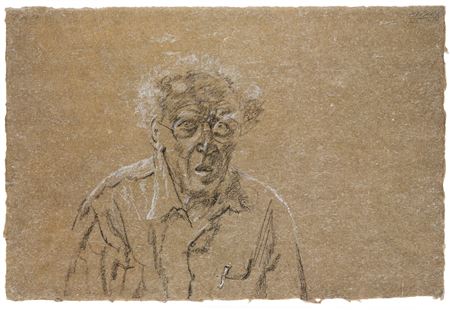
1929 Bukovina, Romania - 2010 Paris, France. Known for: Portrait and landscape painting, sculpture, stained glass, teaching.
Avigdor Arikha is an Israeli who was born in Romania in 1929. He survived the Nazi labor camps in Central Europe and was repatriated as an orphan to an Israeli kibbutz in 1944. He studied art and... Read full biography
Avigdor Arikha is an Israeli who was born in Romania in 1929. He survived the Nazi labor camps in Central Europe and was repatriated as an orphan to an Israeli kibbutz in 1944. He studied art and philosophy in Paris, where he lived with his wife and two children. Of those who still paint from life,... Read full biography
Avigdor Arikha is an Israeli who was born in Romania in 1929. He survived the Nazi labor camps in Central Europe and was repatriated as an orphan to an Israeli kibbutz in 1944. He studied art and philosophy in Paris, where he lived with his wife and two children. Of those who still paint from life, Arikha is one of the few who, while not abandoning some older ways of painting, remains tellingly modern. At the same time, Arikha knows very well, and at first hand, the devouring doubt of this... Read full biography
Avigdor Arikha is an Israeli who was born in Romania in 1929. He survived the Nazi labor camps in Central Europe and was repatriated as an orphan to an Israeli kibbutz in 1944. He studied art and philosophy in Paris, where he lived with his wife and two children. Of those who still paint from life, Arikha is one of the few who, while not abandoning some older ways of painting, remains tellingly modern. At the same time, Arikha knows very well, and at first hand, the devouring doubt of this century. He is a close personal friend of Samuel Becket, whom he had portrayed many times; he knew Giacometti well and once also sketched him. In short, Arikha bears the curse of knowingness. He is an intellectual who has not developed the protective... Read full biography
Avigdor Arikha is an Israeli who was born in Romania in 1929. He survived the Nazi labor camps in Central Europe and was repatriated as an orphan to an Israeli kibbutz in 1944. He studied art and philosophy in Paris, where he lived with his wife and two children. Of those who still paint from life, Arikha is one of the few who, while not abandoning some older ways of painting, remains tellingly modern. At the same time, Arikha knows very well, and at first hand, the devouring doubt of this century. He is a close personal friend of Samuel Becket, whom he had portrayed many times; he knew Giacometti well and once also sketched him. In short, Arikha bears the curse of knowingness. He is an intellectual who has not developed the protective blindness that most artists use to shield their own art. How does such an artist find a space of his own?... Read full biography
Artist Biography
Biography page for Avigdor Arikha ((1929 - 2010)), known for Portrait and landscape painting, sculpture, stained glass, teaching. Showing 2 biographical entries and 0 sample artworks.
Avigdor Arikha - Artist Info
About Avigdor Arikha
Biography from the Archives of askART
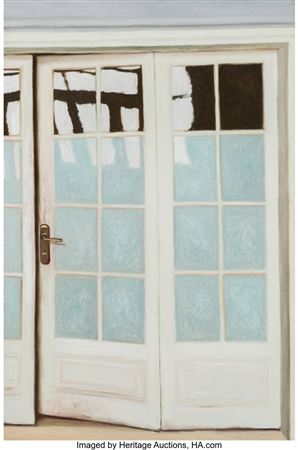 Avigdor Arikha is an Israeli who was born in Romania in 1929. He survived the Nazi labor camps in Central Europe and was repatriated as an orphan to an Israeli kibbutz in 1944. He studied art and philosophy in Paris, where he lived with his wife and two children. Of those who still paint from life, Arikha is one of the few who, while not abandoning some older ways of painting, remains tellingly modern.
At the same time, Arikha knows very well, and at first hand, the devouring doubt of this century. He is a close personal friend of Samuel Becket, whom he had portrayed many times; he knew Giacometti well and once also sketched him. In short, Arikha bears the curse of knowingness. He is an intellectual who has not developed the protective blindness that most artists use to shield their own art. How does such an artist find a space of his own?
It has taken Arikha a long time. In the 1950s, like most ambitious artists, he painted abstract pictures, although he also drew from life on the side. In 1965, he stopped painting. He says that he saw his basic 'form' recur in his abstractions and "painting afterward was never a revelation and therefore not interesting." There followed a difficult period: for eight years he only drew and made prints. Then, in 1973, he suddenly began to paint again -- this time from life.
Painting from life is one way to exorcise the demon of history, with its tyrranical parade of style; it's Arikha's way to get around the "used up" feeling of modernism. His favorite artists are those who, like Caravaggio, escape the mannerism of their day and turn with fresh conviction to the world. "Nature is infinite," he says. "It cannot be exhausted. You cannot put the mark of time on a great portrait."
He paints most of his pictures in mad four or five hours. Critics have sometimes exaggerated his indifference to subject matter -- and like many artists who paint from life, he seems frightened of being mistaken for an illustrator.
Almost no artist uses color like Arikha. He modulates and blends his hues to suggest the weight and density of an object, rather than building his pictures with primary and unmixed colors; his touch and handling of color are very fine.
For art historians, Arikha will be a slippery subject. The odd meeting of styles is part of the force of his work, helping to establish its splendid tension. By painting each nose differently, he also evokes the flux of the world; by seizing each inch of canvas, he suggests how hard it is to hold on to any belief.
Written and submitted by Jean Ershler Schatz, artist and researcher from Laguna Woods, California.
Sources include:
Robert Hughes in Time Magazine, May 7, 1973
Mark Stevens, Newsweek, July 2, 1979.Biography from Montefiore Auction House
Avigdor Arikha was born 28th April, 1929 in Bukovina, Romania and died 2010 in Paris.
Education:
High School for Arts, Czernowitz-Bukovina 1946-1949
Bezalel Academy, Jerusalem 1949-1951
Ecole des Beaux Arts and Philosophy at Sorbonne, Paris. studied History of Art. Teaching 1971
Cabinet des Dessins, Louvre Museum, Paris, curatorial courses on drawing.
Awards and Prizes:
1954 Gold Medal, Triennale, Milan
1987 Paris Prize for Artists 1989 French Jews' Foundation Prize
1995 Honorary Professor, National Academy of Fine Arts of China, Hangchow
1997 Doctor of Philosophy, Honorus Causa, Hebrew University, Jerusalem
Environmental Sculptures: Woonsocket, Rhode Island, 30 stained-glass windows, Bnei Israel Synagogue. Jerusalem, 5 stained glass windows Municipal Council Hall and mosaic, Beit Hahayal. New York, stained glass window, J.F. Kennedy Airport