Page loaded successfully. Showing biography for Barnett Benedict Newman.
Barnett Benedict Newman BIOGRAPHY
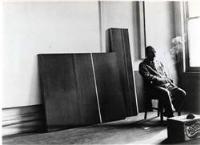
1905 New York City - 1970 New York City. Known for: Abstract expression, vertical sculpture.
Barnett Newman was born on January 29, 1905 in New York City of Polish immigrant parents. He worked in his father's clothing business, which collapsed, from 1929 through 1937. He studied at the Art... Read full biography
Barnett Newman was born on January 29, 1905 in New York City of Polish immigrant parents. He worked in his father's clothing business, which collapsed, from 1929 through 1937. He studied at the Art Students League under John Sloan, William von Schlegel and Adolph Gottlieb in the 1920s. He studied... Read full biography
Barnett Newman was born on January 29, 1905 in New York City of Polish immigrant parents. He worked in his father's clothing business, which collapsed, from 1929 through 1937. He studied at the Art Students League under John Sloan, William von Schlegel and Adolph Gottlieb in the 1920s. He studied from 1922 through 1926 at Cornell University and in 1927 he received a Bachelor of Arts degree in Philosophy from City College of New York. In 1940 he stopped painting for several years because he... Read full biography
Barnett Newman was born on January 29, 1905 in New York City of Polish immigrant parents. He worked in his father's clothing business, which collapsed, from 1929 through 1937. He studied at the Art Students League under John Sloan, William von Schlegel and Adolph Gottlieb in the 1920s. He studied from 1922 through 1926 at Cornell University and in 1927 he received a Bachelor of Arts degree in Philosophy from City College of New York. In 1940 he stopped painting for several years because he needed to clarify his break with European traditions and get in touch with his own mind. During that time he studied botanics and ornithology at Cornell University. Early in his career he painted in the Surrealist style, but he destroyed most of those... Read full biography
Barnett Newman was born on January 29, 1905 in New York City of Polish immigrant parents. He worked in his father's clothing business, which collapsed, from 1929 through 1937. He studied at the Art Students League under John Sloan, William von Schlegel and Adolph Gottlieb in the 1920s. He studied from 1922 through 1926 at Cornell University and in 1927 he received a Bachelor of Arts degree in Philosophy from City College of New York. In 1940 he stopped painting for several years because he needed to clarify his break with European traditions and get in touch with his own mind. During that time he studied botanics and ornithology at Cornell University. Early in his career he painted in the Surrealist style, but he destroyed most of those paintings as well as others he had completed before 1930. Newman was an impoverished, self-proclaimed anarchist who kept... Read full biography
Artist Biography
Biography page for Barnett Benedict Newman ((1905 - 1970)), known for Abstract expression, vertical sculpture. Showing 2 biographical entries and 0 sample artworks.
Barnett Benedict Newman - Artist Info
About Barnett Benedict Newman
Biography from the Archives of askART
 Barnett Newman was born on January 29, 1905 in New York City of Polish immigrant parents. He worked in his father's clothing business, which collapsed, from 1929 through 1937. He studied at the Art Students League under John Sloan, William von Schlegel and Adolph Gottlieb in the 1920s. He studied from 1922 through 1926 at Cornell University and in 1927 he received a Bachelor of Arts degree in Philosophy from City College of New York. In 1940 he stopped painting for several years because he needed to clarify his break with European traditions and get in touch with his own mind. During that time he studied botanics and ornithology at Cornell University. Early in his career he painted in the Surrealist style, but he destroyed most of those paintings as well as others he had completed before 1930.
Newman was an impoverished, self-proclaimed anarchist who kept failing the exam that would promote him from substitute art teacher in the public schools to a regular one. Consequently, his wife, Annalee, worked two jobs. He had married her in June of 1936. Newman ran for mayor as a write-in candidate. He couldn't bring himself to commit anything to an actual canvas until he was forty years old.
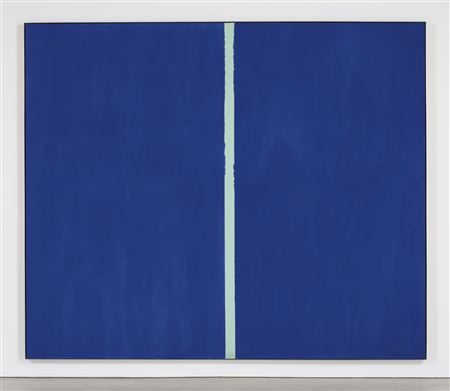
In 1948 he did his first stripe painting with forms appearing to lie flat on the surface and to be a totality rather than single entity. These paintings were only about themselves, hence the name, Minimalist art. From that time, Newman worked within the same format of thin vertical bands placed between broad bands of color of equal size to the bands. Some of his paintings were only several inches wide and have been called the first shaped canvases. One, called The Wild was eight feet tall and only 1 & 1/2 inches wide.
From 1962 through 1964 Newman taught at the University of Pennsylvania in Philadelphia. He died on July 4, 1970 at the age of sixty-five.
Written and submitted by Jean Ershler Schatz, artist and researcher from Laguna Woods, California.
Sources:
From the internet, AskART.com and Artnet.com
An Invitation to See, from the Museum of Modern Art
Robert Hughes in Time Magazine, October 15, 1971
Mantle Fielding's Dictionary of American Painters, Sculptors and Engravers 1986-87Biography from the Archives of askART
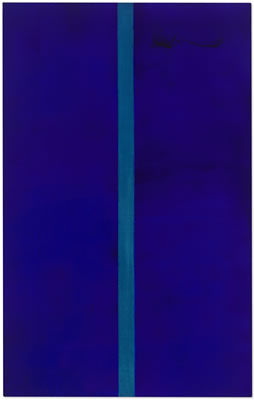 Born in New York City, Barnett Newman was a leading figure in 20th century Abstract Expressionism, creating canvases with fields of strong saturated colour and vertical stripes. He was both a pioneer of using large-scale canvases, and of a style of painting that heralded the Minimalist movement. He was committed to the idea that art was not merely decoration nor a copy of European models but must be an expression from personal meditation.
Newman also was a sculptor and lithographer and held teaching positions including the University of Saskatchewan, Canada in 1959 and the University of Pennsylvania from 1962 to 1964. With William Baziotes, Robert Motherwell and Mark Rothko, he founded a school named Subject of the Artists.
Early in his career, he painted in the Surrealist style, but he destroyed most of those paintings as well as others that he completed before 1930.
He studied at the Art Students League in the 1920s and 1930s and in 1940, stopped painting for several years because he needed to clarify his break with European traditions and get in touch with his own mind.
In 1948, he did his first stripe painting with forms appearing to lie flat on the surface and to be a totality rather than single entity. These paintings were only about themselves, hence the name, Minimalist art. From that time, Newman worked within the same format of thin vertical bands placed within broad fields of color of equal size to the bands. Some of his paintings were only several inches wide and have been called the first shaped canvases. He also experimented with lithographs and did some sculpture, one of them a twenty-six foot steel obelisk, Broken Obelisk in front of the Rothko Chapel in Houston, Texas. The work memorializes Martin Luther King.
One of his paintings, Who's Afraid of Red, Yellow and Blue III, was slashed numerous times in 1987 at Amsterdam's Stedelijk Museum, and the same vandal, Gerard Jan van Bladeren, slashed another work, Cathedra, in 1998. Van Bladeren claimed that vandalism-by-slashing was his art.
Sources:
Matthew Baigell, Dictionary of American Art
Marika Herskovic, American Abstract Expressionism of the 1950s
Peter Hastings Falk, Editor, Who Was Who in American Art