Page loaded successfully. Showing biography for Beauford Delaney.
Beauford Delaney BIOGRAPHY
1901 Knoxville, Tennessee - 1979 Paris, France. Known for: Lyrical abstract painting, city scenes-jazz.
Born in 1901, Beauford Delaney, an expatriate African-American painter, spent his childhood and teen years in Knoxville, Tennessee. He studied at the Massachusetts Normal School in Boston, in 1924,... Read full biography
Born in 1901, Beauford Delaney, an expatriate African-American painter, spent his childhood and teen years in Knoxville, Tennessee. He studied at the Massachusetts Normal School in Boston, in 1924, moving to Harlem and other New York City locations in 1929. In 1953, he went permanently to live in... Read full biography
Born in 1901, Beauford Delaney, an expatriate African-American painter, spent his childhood and teen years in Knoxville, Tennessee. He studied at the Massachusetts Normal School in Boston, in 1924, moving to Harlem and other New York City locations in 1929. In 1953, he went permanently to live in France, mainly Paris. He died there on March 25, 1979. Among many intellectuals Delaney knew as a kindred soul, friend and mentor, were James Baldwin, then a young author, who became a lifelong friend.... Read full biography
Born in 1901, Beauford Delaney, an expatriate African-American painter, spent his childhood and teen years in Knoxville, Tennessee. He studied at the Massachusetts Normal School in Boston, in 1924, moving to Harlem and other New York City locations in 1929. In 1953, he went permanently to live in France, mainly Paris. He died there on March 25, 1979. Among many intellectuals Delaney knew as a kindred soul, friend and mentor, were James Baldwin, then a young author, who became a lifelong friend. Writer Henry Miller introduced many people to Delaney in his essay The Amazing and Invariable Beauford Delaney. Early critics of Delaney's paintings lauded his wit and eye, yet tended to pigeon-hole him as a "Negro artist." A natural draughtsman, he... Read full biography
Born in 1901, Beauford Delaney, an expatriate African-American painter, spent his childhood and teen years in Knoxville, Tennessee. He studied at the Massachusetts Normal School in Boston, in 1924, moving to Harlem and other New York City locations in 1929. In 1953, he went permanently to live in France, mainly Paris. He died there on March 25, 1979. Among many intellectuals Delaney knew as a kindred soul, friend and mentor, were James Baldwin, then a young author, who became a lifelong friend. Writer Henry Miller introduced many people to Delaney in his essay The Amazing and Invariable Beauford Delaney. Early critics of Delaney's paintings lauded his wit and eye, yet tended to pigeon-hole him as a "Negro artist." A natural draughtsman, he went beyond the rendering of likeness to the search for feelings, states of mind and being,... Read full biography
Artist Biography
Biography page for Beauford Delaney ((1901 - 1979)), known for Lyrical abstract painting, city scenes-jazz. Showing 5 biographical entries and 0 sample artworks.
Beauford Delaney - Artist Info
About Beauford Delaney
Biography from the Archives of askART
 Born in 1901, Beauford Delaney, an expatriate African-American painter, spent his childhood and teen years in Knoxville, Tennessee. He studied at the Massachusetts Normal School in Boston, in 1924, moving to Harlem and other New York City locations in 1929. In 1953, he went permanently to live in France, mainly Paris. He died there on March 25, 1979.
Among many intellectuals Delaney knew as a kindred soul, friend and mentor, were James Baldwin, then a young author, who became a lifelong friend. Writer Henry Miller introduced many people to Delaney in his essay The Amazing and Invariable Beauford Delaney.
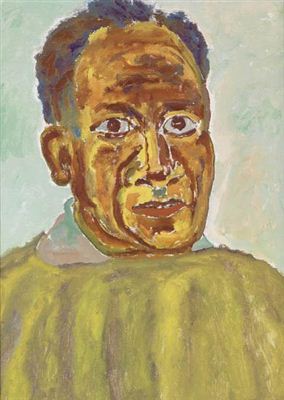
Early critics of Delaney's paintings lauded his wit and eye, yet tended to pigeon-hole him as a "Negro artist." A natural draughtsman, he went beyond the rendering of likeness to the search for feelings, states of mind and being, emotional temperatures. He worked in realistic and abstract modes, both characterized by Expressionist freedom of drawing, paint-handling and composition.
Delaney's love of art and life carried him through many economic and spiritual crises. He suffered from alcoholism and its attendant problems. In the early 1960s, he was diagnosed by one psychiatrist as having paranoid delusions aggravated by alcohol. Regardless of this, Delaney was clearly a very sensitive person stressed by slow art sales, the departure of friends, and his own poor nutritional habits. These precipitated depression, followed by heavy drinking.
Charley Boggs, a long-time friend of Delaney's, helped with financial support, lodging and friendship during times that were some of the least graceful in Delaney's life -- when his mind and body were falling apart.
Some exhibition venues of Beauford Delaney's work include the Vendome Gallery, Roko Gallery and Artists' Gallery, New York City, in the 1940s; Gallerie Paul Fachetti, 1960; and Black Master, Studio Museum in Harlem, 1978.
David Leeming, who knew Beauford Delaney, has written a recent biography of the artist, Amazing Grace: A Life of Beauford Delaney, Oxford University Press, 1998. Some reviews include the following:
Sources include:
http://www.artgallery.umd.edu/driskell/exhibition/artists/bio.htm
http://www.unhooked.com/booktalk/beauford_delaney.htmBiography from Michael Rosenfeld Gallery
 Beauford Delaney was born in Knoxville, Tennessee, and studied with a local artist before moving to Boston in 1923. While in Boston, Beauford Delaney studied art at the Massachusetts Normal School, the Copley Society and the South Boston School of Art and spent time admiring the collections of the Museum of Fine Arts and the Isabella Stewart Gardner Museum.
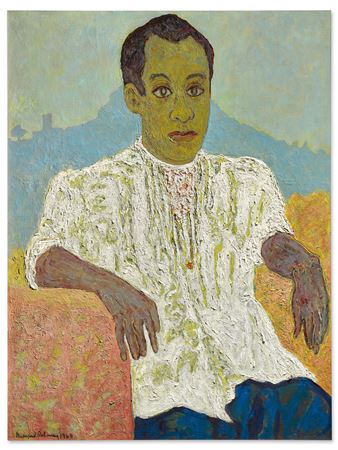
In 1929, Delaney moved to New York City and studied for a brief time at the Arts Students League with John Sloan and Thomas Hart Benton. His paintings of the 1940s and early 1950s consist largely of portraits, modernist interiors and street scenes executed in impasto with broad areas of vibrant colors. Delaney's interest in the arts also included poetry and jazz, and he formed close friendships with writers such as James Baldwin and Henry Miller, and other artists, including Alfred Stieglitz, Georgia O'Keefe, and Al Hirshfeld.
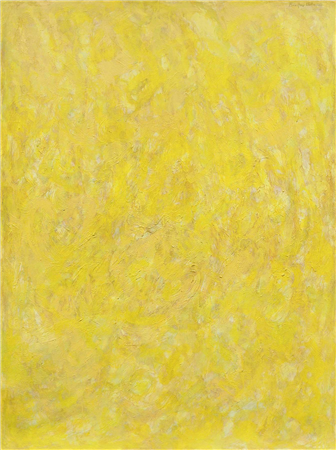
Although he maintained relationships with the artists of 306 and was a member of the Harlem Artists Guild, Delaney was consumed by his own artistic vision and was firmly connected to the Greenwich Village artistic community. In 1953, Beauford Delaney left New York and traveled to Europe, settling in Paris. Feeling a new sense of freedom from racial and sexual biases, Delaney focused on creating lyrical, colorful non-objective abstractions. These paintings, consisting of elaborate and fluid swirls of paint applied in luminous hues, are pure and simplified expressions of light.
In 1978, The Studio Museum in Harlem organized his first major retrospective exhibition, and in 1979, Delaney died in Paris while hospitalized for mental illness.Biography from Janet Lehr Fine Arts (CLOSED)
Beauford Delaney died in a Parisian mental hospital in 1979, alone and impoverished, tortured by alcoholism and schizophrenia. At the time, his closest friend, the author James Baldwin, told people that Delaney's struggle to live as a black man, a gay man, and an artist had simply proved too much. A recent exhibition of Beauford Delaney's work at the Sert Gallery of the Harvard University Art Museums, however, shows the painter successfully reconciling race, sexuality, and exile, and doing so with a passion for experimentation; a spectacularly successful passion.
For a time, Delaney was a minor celebrity in the expatriate community of postwar Paris, a friend of Colette and Henry Miller, of Jean Genet and James Jones. In those same years, between 1953 and the mid-1960's, he created a remarkable body of work using vibrant color to translate the unique light of Paris into the language of Abstract Expressionism. Exile offered Beauford Delaney the space to work through his sense of being different; it also gave him somewhere to hide from that difference. His first art teacher convinced Delaney to strike out for Boston in 1924. Hardly the center of the early 20th-century art world, Boston was nonetheless a fine place for Delaney to study painting and sketch the Old Masters' works in museums. African-American cultural life in Boston was then in the midst of a flowering that has since been overshadowed by the Harlem Renaissance.
Today, Delaney is regarded as a painter of great lyricism, both a true expressionist and colorist of major accomplishment.
Beauford Delaney was born in Knoxville, Tennessee, and studied with a local artist before moving to Boston in 1923. While in Boston, Beauford Delaney studied art at the Massachusetts Normal School, the Copley Society and the South Boston School of Art and spent time admiring the collections of the Museum of Fine Arts and the Isabella Stewart Gardner Museum.
In 1929, Delaney moved to New York City and studied for a brief time at the Arts Students League with John Sloan and Thomas Hart Benton. His paintings of the 1940s and early 1950s consist largely of portraits, modernist interiors and street scenes executed in impasto with broad areas of vibrant colors. Delaney's interest in the arts also included poetry and jazz, and he formed close friendships with writers such as James Baldwin and Henry Miller, and other artists, including Alfred Stieglitz, Georgia O'Keefe, and Al Hirshfeld. He formed a life centered around questions concerning the aesthetics and development of modernism in Europe and the United States; primarily influenced by the ideas of his friends the photographer Alfred Stieglitz and the cubist artist Stuart Davis (painter), and the paintings of the European modernists and their predecessors like Cezanne, Matisse, Picasso and Van Gogh.
Although he maintained relationships with the artists of 306 and was a member of the Harlem Artists Guild, Delaney was consumed by his own artistic vision and was firmly connected to the Greenwich Village artistic community. In 1953, Beauford Delaney left New York and traveled to Europe, settling in Paris. Feeling a new sense of freedom from racial and sexual biases, Delaney focused on creating lyrical, colorful non-objective abstractions. These paintings, consisting of elaborate and fluid swirls of paint applied in luminous hues, are pure and simplified expressions of light.
In 1978, The Studio Museum in Harlem organized his first major retrospective exhibition, and in 1979, Delaney died in Paris while hospitalized for mental illness.
Some exhibitions of Beauford Delaney's work include the Vendome Gallery, Roko Gallery and Artists' Gallery, New York City, in the 1940s; Gallerie Paul Fachetti, 1960; and Black Master, Studio Museum in Harlem, 1978.
David Leeming, who knew Beauford Delaney, has written a recent biography of the artist entitled Amazing Grace: A Life of Beauford Delaney, Oxford University Press, 1998.
Works by Delaney are in the following public collections, among others: Art Institute of Chicago; Beck Cultural Exchange; Greenville County Museum; Minneapolis Institute of the Arts; National Gallery of Art; Smithsonian Museum of American Art; Baltimore Museum of Arts; Newark Museum of Art and University of Michigan Museum of Art.Biography from The Johnson Collection
BEAUFORD DELANEY (1901–1979)
Growing up in Knoxville, Tennessee, Beauford Delaney was one of ten siblings. His parents were John Samuel Delaney, an itinerant Methodist Episcopal minister, and Delia Johnson Delaney, a native Virginian born into slavery. A quilter and singer remembered as “the much deferred-to matriarch of the Delaney household,” Delia encouraged Beauford and his brother Joseph Delaney’s early interests in art. While working as a shoeshine boy, Beauford’s drawings came to the attention of the well-known Knoxville painter Lloyd Branson, who operated a local art school that attracted many promising artists, including Catherine Wiley. Branson tutored Delaney for several years, during which the young artist produced representational landscapes and portraits.
In 1923, Branson—firmly convinced of his student’s potential—facilitated and financed Delaney’s move to Boston for further education. There, Delaney studied at several institutions and regularly availed himself of the city’s art collections, all the while working as a janitor. Eager to advance his career and intrigued by the budding Harlem Renaissance, Delaney relocated to New York in November 1929, arriving just days after the stock market crash that marked the beginning of the Great Depression. This inauspicious start aside, Delaney quickly set to work. His initial efforts resulted in pastel portraits of notable African Americans, as well as Harlem genre scenes. By 1931, he was enrolled at the Art Students League, studying under John Sloan, Thomas Hart Benton, and Stuart Davis, and alongside Jackson Pollock and Charles Alston. Living in Greenwich Village, he formed close friendships with James Baldwin, Henry Miller, Alfred Stieglitz, and Georgia O’Keeffe, among others. Despite his own race-neutral approach to culture and community, a 1938 Life magazine article cited Delaney as a laudable example of an accomplished “Negro” artist and included a photograph of him painting outdoors in Washington Square. Regardless of these advances and associations, the perennially impoverished Delaney repeatedly confronted prejudice against his race and sexual orientation, ranging from professional biases to a gang beating.
At the age of fifty-one, Delaney left New York for Paris in late summer 1953. Although he originally intended to visit for only a month, he remained until his death. He was welcomed into the expatriate cultural community and delighted in the city’s esprit. By 1954, Delaney had made a dramatic aesthetic shift, fully embracing Abstract Expressionism and participating in select solo and group shows on both sides of the Atlantic. Such successes did not improve Delaney’s financial situation, however, and he once famously cut up his only raincoat to use as a canvas.
Delaney’s most celebrated paintings date to the late 1950s and 1960s. Characterized by fluid brush strokes, these fully abstracted works are explorations of saturated color and strong texture. His signature use of yellow—which he described as “the color of his sacred light” and representational of a “higher power”—reveals a joy that seems to contradict his deteriorating personal circumstances while illuminating a resolve to resist an inner darkness. In 1963, he wrote these hopeful lines to his friend, the author Henry Miller: “I pray for the courage to keep struggling to express in color the substance of what life is directing. The need in the world for beauty, harmony, good confidence, brotherhood, sunlight, music, humanity . . . was never so urgent. The creative life is holy.”
It was toward the end of the 1960s that Delaney’s alcoholism and paranoia became perilous, resulting in a suicide attempt. In 1975, he was hospitalized in a Paris mental institution and died there in 1979, shortly after his first major retrospective, an exhibition of sixty-seven works held at Harlem’s Studio Museum in 1978. In a 1985 essay, James Baldwin recalled that “Beauford was the first walking, living proof, for me, that a black man could be an artist. . . . He became, for me, an example of courage and integrity, humility and passion. An absolute integrity: I saw him shaken many times and I lived to see him broken, but I never saw him bow.”
The Johnson Collection, Spartanburg, South Carolina
thejohnsoncollection.orgBiography from Case Auctions
Beauford Delaney was born in 1901, in Knoxville, Tennessee. An apprentice of artist Lloyd Branson, Beauford was encouraged by his mentor to study art in Boston. In 1929, Beauford traveled to New York and established himself as a prominent artist of the Harlem Renaissance. There he gained the attention and admiration of well known writers and artists such as James Baldwin, Georgia O'Keefe, Alfred Stieglitz, and many others. Beauford moved to Paris in 1953, and it was there that his work transitioned from figurative compositions to abstract expressionism with a focus on color and light. In 1975, Beauford Delaney was admitted to a mental hospital in Paris, where he died in 1979, one year after his first major retrospective exhibit held at the Studio Museum in Harlem.