Page loaded successfully. Showing biography for Benjamin Palencia Perez.
Benjamin Palencia Perez BIOGRAPHY
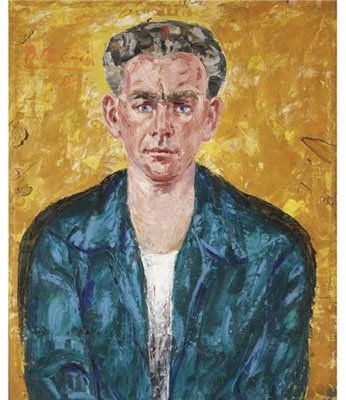
1894 Albacete, Spain - 1980 Madrid, Spain. Known for: Landscape and still-life painting, drawing, teaching.
Benjamín Palencia (7 July 1894 - 16 January 1980) was a Spanish painter and draftsman from Barrax, Albacete. Most notably he became known as co-founder of the School of Vallecas (together with... Read full biography
Benjamín Palencia (7 July 1894 - 16 January 1980) was a Spanish painter and draftsman from Barrax, Albacete. Most notably he became known as co-founder of the School of Vallecas (together with sculptor Alberto Sánchez. The quintessence of the large body of his work is perhaps the poetry of the... Read full biography
Benjamín Palencia (7 July 1894 - 16 January 1980) was a Spanish painter and draftsman from Barrax, Albacete. Most notably he became known as co-founder of the School of Vallecas (together with sculptor Alberto Sánchez. The quintessence of the large body of his work is perhaps the poetry of the Castilian landscape as defined by the Generation of '98. Source:. "Benjamin Palencia," Wikipedia, Feb., 2018. Benjamín Palencia gives his works on paper a character that is almost completely independent... Read full biography
Benjamín Palencia (7 July 1894 - 16 January 1980) was a Spanish painter and draftsman from Barrax, Albacete. Most notably he became known as co-founder of the School of Vallecas (together with sculptor Alberto Sánchez. The quintessence of the large body of his work is perhaps the poetry of the Castilian landscape as defined by the Generation of '98. Source:. "Benjamin Palencia," Wikipedia, Feb., 2018. Benjamín Palencia gives his works on paper a character that is almost completely independent from his paintings, to the extent that sometimes they almost come into conflict with each other. However, paradoxically the drawings also provide a suitable complement for the paintings, anticipating them in certain cases and explaining their... Read full biography
Benjamín Palencia (7 July 1894 - 16 January 1980) was a Spanish painter and draftsman from Barrax, Albacete. Most notably he became known as co-founder of the School of Vallecas (together with sculptor Alberto Sánchez. The quintessence of the large body of his work is perhaps the poetry of the Castilian landscape as defined by the Generation of '98. Source:. "Benjamin Palencia," Wikipedia, Feb., 2018. Benjamín Palencia gives his works on paper a character that is almost completely independent from his paintings, to the extent that sometimes they almost come into conflict with each other. However, paradoxically the drawings also provide a suitable complement for the paintings, anticipating them in certain cases and explaining their significance afterwards in others. The two years of 1933 and 1934 saw Palencia’s most emphatically Surrealist period, in whi... Read full biography
Artist Biography
Biography page for Benjamin Palencia Perez ((1894 - 1980)), known for Landscape and still-life painting, drawing, teaching. Showing 2 biographical entries and 0 sample artworks.
Benjamin Palencia Perez - Artist Info
About Benjamin Palencia Perez
Name variants
Benjamin Palencia
Biography from the Archives of askART
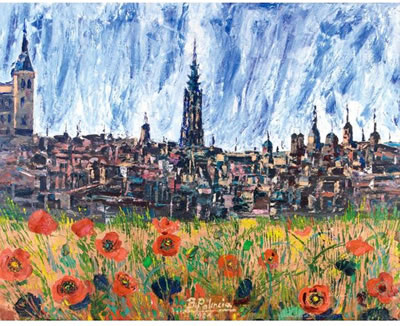 Benjamín Palencia (7 July 1894 - 16 January 1980) was a Spanish painter and draftsman from Barrax, Albacete. Most notably he became known as co-founder of the School of Vallecas (together with sculptor Alberto Sánchez. The quintessence of the large body of his work is perhaps the poetry of the Castilian landscape as defined by the Generation of '98.
Source:
"Benjamin Palencia," Wikipedia, Feb., 2018
Benjamín Palencia gives his works on paper a character that is almost completely independent from his paintings, to the extent that sometimes they almost come into conflict with each other. However, paradoxically the drawings also provide a suitable complement for the paintings, anticipating them in certain cases and explaining their significance afterwards in others.
The two years of 1933 and 1934 saw Palencia’s most emphatically Surrealist period, in which he created an extensive and interesting series of drawings, mostly large format in pen and ink, which includes Composición (Composition). For these drawings, Palencia’s point of departure was the world of farming or subjects linked to bullfighting, transforming the motifs into a mysterious oneiric universe of metamorphic beings, along the lines of the most authentic Surrealist visions.
Source:
"Benjamin Palencia," Composicion (Composition), Web, Feb. 2018Biography from Setdart
After starting his training in a self-taught way, Benjamin Palencia moved to Madrid at the age of fifteen. In the capital he entered the Free Academy of Julio Moisés, where he met other prominent painters such as Salvador Dalí. In 1926 he traveled to Paris and met Picasso and Miró, and on his return to Madrid he made his solo debut at the Museum of Modern Art (1928).
He then made several study trips to Italy, Berlin and New York. In 1941 he founded the Vallecas School, and in 1943 he was First Medal in the National Exhibition of Fine Arts. In 1974 he was appointed a member of the Royal Academy of Fine Arts of San Fernando, and a few years after that of San Jorge in Barcelona.
The style of Benjamín Palencia, starting from Surrealism, Cubism and other avant-gardes finally evolved towards an austere realism. Little by little, his style became more intense and powerful, the forms acquiring a greater volume and, in painting, the painter's concern was focused on lighting aspects.
Focusing his work on landscape painting, he tried to restart a second Vallecas School together with Álvaro Delgado, Carlos Pascual de Lara, Gregorio del Olmo, Enrique Núñez Casteló and Francisco San José.
His paintings and drawings are images of the Castilian countryside and the figures that can be found in it, peasants and animals, bulls, horses, goats, etc. His painting becomes a testimony of the rough, the rough and the rural, of the sober Castilian and of the Spanish.
Palencia is represented in the Reina Sofía National Museum, in the Patio Herreriano in Valladolid and in the Fine Arts in Valencia and Albacete, among many others.