Page loaded successfully. Showing biography for Bob De Moor.
Bob De Moor BIOGRAPHY
1925 - 1992. Known for: Comic Strips.
Bob De Moor was one of Hergé's main collaborators and sacrificed his own ambition in service to the master of the ‘Clear Line'. He demonstrates this in his flagship series, Barelli, where he composed... Read full biography
Bob De Moor was one of Hergé's main collaborators and sacrificed his own ambition in service to the master of the ‘Clear Line'. He demonstrates this in his flagship series, Barelli, where he composed a board whose top part, dark and covered with silhouettes, contrasts with the lower part, dominated... Read full biography
Bob De Moor was one of Hergé's main collaborators and sacrificed his own ambition in service to the master of the ‘Clear Line'. He demonstrates this in his flagship series, Barelli, where he composed a board whose top part, dark and covered with silhouettes, contrasts with the lower part, dominated by a large marine illustration typical of the ‘Clear Line'.
Bob De Moor was one of Hergé's main collaborators and sacrificed his own ambition in service to the master of the ‘Clear Line'. He demonstrates this in his flagship series, Barelli, where he composed a board whose top part, dark and covered with silhouettes, contrasts with the lower part, dominated by a large marine illustration typical of the ‘Clear Line'.
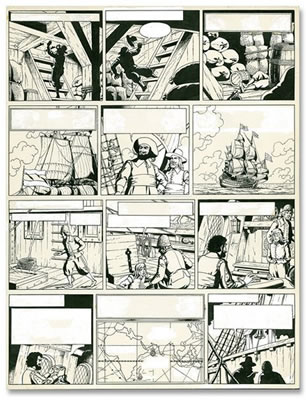
Bob De Moor was one of Hergé's main collaborators and sacrificed his own ambition in service to the master of the ‘Clear Line'. He demonstrates this in his flagship series, Barelli, where he composed a board whose top part, dark and covered with silhouettes, contrasts with the lower part, dominated by a large marine illustration typical of the ‘Clear Line'.
Artist Biography
Biography page for Bob De Moor ((1925 - 1992)), known for Comic Strips. Showing 1 biographical entries and 0 sample artworks.
Bob De Moor - Artist Info
About Bob De Moor
Biography
Bob De Moor was one of Hergé's main collaborators and sacrificed his own ambition in service to the master of the ‘Clear Line'. He demonstrates this in his flagship series, Barelli, where he composed a board whose top part, dark and covered with silhouettes, contrasts with the lower part, dominated by a large marine illustration typical of the ‘Clear Line'.