Page loaded successfully. Showing biography for Bruce Guldner Conner.
Bruce Guldner Conner BIOGRAPHY
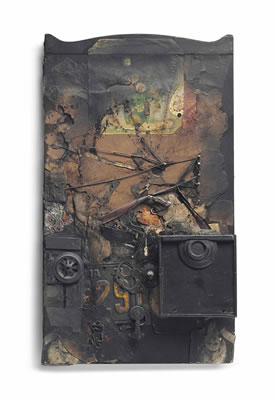
1933 McPherson, Kansas - 2008 San Francisco, California. Known for: Abstraction, collage, funk art and film making.
Known for film making, assemblage, drawing, painting, collage, photographs, and conceptual events, Bruce Conner has been a hard working artist who has spent much of his life searching for artistic... Read full biography
Known for film making, assemblage, drawing, painting, collage, photographs, and conceptual events, Bruce Conner has been a hard working artist who has spent much of his life searching for artistic truth. He is best known for his assemblage, but turned to other mediums after 1964 because he did not... Read full biography
Known for film making, assemblage, drawing, painting, collage, photographs, and conceptual events, Bruce Conner has been a hard working artist who has spent much of his life searching for artistic truth. He is best known for his assemblage, but turned to other mediums after 1964 because he did not want to be only associated with one style. He has achieved much fame but shows little interest in its trappings. In fact, he has refused to be photographed and often does not sign his work. As a... Read full biography
Known for film making, assemblage, drawing, painting, collage, photographs, and conceptual events, Bruce Conner has been a hard working artist who has spent much of his life searching for artistic truth. He is best known for his assemblage, but turned to other mediums after 1964 because he did not want to be only associated with one style. He has achieved much fame but shows little interest in its trappings. In fact, he has refused to be photographed and often does not sign his work. As a prank, he sent a notice of his death to "Who's Who in American Art," and exhibited a series of his collages under the name of his friend, Dennis Hopper. However, a Walker Art Gallery retrospective in 2000 has given him much public exposure. In the early... Read full biography
Known for film making, assemblage, drawing, painting, collage, photographs, and conceptual events, Bruce Conner has been a hard working artist who has spent much of his life searching for artistic truth. He is best known for his assemblage, but turned to other mediums after 1964 because he did not want to be only associated with one style. He has achieved much fame but shows little interest in its trappings. In fact, he has refused to be photographed and often does not sign his work. As a prank, he sent a notice of his death to "Who's Who in American Art," and exhibited a series of his collages under the name of his friend, Dennis Hopper. However, a Walker Art Gallery retrospective in 2000 has given him much public exposure. In the early 1960s, he became a key figure among artists in San Francisco, a city where he and his wife, Jean, arrived in 1957 from his childhood home... Read full biography
Artist Biography
Biography page for Bruce Guldner Conner ((1933 - 2008)), known for Abstraction, collage, funk art and film making. Showing 4 biographical entries and 0 sample artworks.
Bruce Guldner Conner - Artist Info
About Bruce Guldner Conner
Biography from the Archives of askART
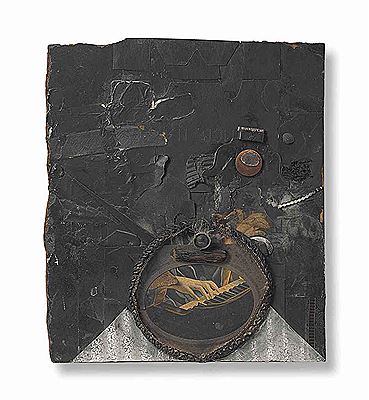 Conner was born November 18, 1933 in McPherson, Kansas. Attended East High School in Wichita. Studied art at the Univ. of Wichita with David Bernard from 1951-52 and at the Univ. of Nebraska, where he received a BFA in 1956. He continued his studies at the Brooklyn Art School and the Univ. of Colorado. Moved to San Francisco in 1957 where he was part of the counter-culture movement known as Beat-Generation artists. In the 1960s and after he turned to film, photography, and collages made from old engravings and intricate felt-tip pen drawings. He died in San Francisco, California on July 7, 2008.
Exhibitions: Museum of Modern Art, 1961; Institute of Contemporary Art, Philadelphia, 1967; De Young Memorial Museum, San Francisco, 1974; Univ. Art Museum, Berkeley, 1987; Wichita Art Museum, 1997; San Francisco Museum of Modern Art, 1999; Walker Art Center, 2000; American Univ. Museum, 2005; and many more. Collections: Amherst (MA) Fine Arts; Sheldon Memorial Art Gallery; Norton Simon Museum of Art; Fine Arts Of San Francisco; San
Francisco Museum of Modern Art; De Saisset Museum; Cantor Arts Center; Museum of
Modern Art; Art Institute of Chicago; Los Angeles County Museum of Art; Whitney
Museum of American Art; Univ. Art Museum, Berkeley; Museum of Art & Archaeology,
Columbia, MO; Oakland Museum; Norton Simon Museum; Smithsonian American Art
Museum; National Gallery of Art; Emprise Bank Collection; and more.Biography from the Archives of askART
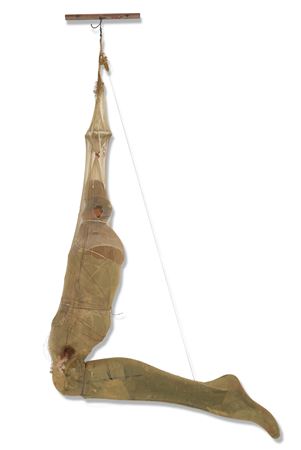 Known for film making, assemblage, drawing, painting, collage, photographs, and conceptual events, Bruce Conner has been a hard working artist who has spent much of his life searching for artistic truth. He is best known for his assemblage, but turned to other mediums after 1964 because he did not want to be only associated with one style. He has achieved much fame but shows little interest in its trappings.
In fact, he has refused to be photographed and often does not sign his work. As a prank, he sent a notice of his death to "Who's Who in American Art," and exhibited a series of his collages under the name of his friend, Dennis Hopper. However, a Walker Art Gallery retrospective in 2000 has given him much public exposure.
In the early 1960s, he became a key figure among artists in San Francisco, a city where he and his wife, Jean, arrived in 1957 from his childhood home of Wichita, Kansas. Conner and his artist friends including Joan Brown, Jay De Feo, Manuel Neri, and Wallace Berman, formed the Rat-Bastard Protective Association, a counter-culture group to distance themselves from mainstream values. They became known as Beat-Generation artists who looked for something deeper than what they perceived as the shallow pieties of Eisenhower dominated America.
Continuing to search for something beyond conventional America, he spent two years in Mexico where he did embryonic drawings in obsessive patterning. He returned to San Francisco and went into a period of exile from 1967 to 1971 when he quit exhibiting or teaching art. He supported himself by being a janitor and a salesman and made art only for himself. He developed inkblot drawings that explored symmetry and chance and experimented with methods of photography and film.
His career, focused on his search for artistic truth, has led him through a wide range of forms and mediums, and his personality is one of humor and a love of the absurd.
Source:
Michael Duncan, 'Keeping Up With Conner', "Art in America", June 2000Biography from Gallery Paule Anglim
Bruce Conner has become a central figure in the evolution of new media and unconventional art forms, providing contemporary art with radical and iconic approaches. From film, photography, painting, drawing and printmaking to found object/found media appropriations Conner's unexpected drawings, sculptures, collages and assemblages defined an otherworldly state of consciousness.
Education:
1956 B.F.A., Nebraska University
1956 Brooklyn Museum Art School
1957 University of Colorado
Solo Exhibitions:
2007 Bruce Conner, Susan Inglett Gallery, New York, NY
Gallery Paule Anglim, San Francisco, CA
Michael Kohn Gallery, Los Angeles, CA
2005 After Conner: Anonymous, Anonymouse and Emily Feather, Katzen Art Center Museum, American University, Washington, D.C.
Conner Obscura, Film Screening, SFMOMA, San Francisco, CA
Bruce Conner, Gallery Paule Anglim, San Francisco, CA
Bruce Conner, Smith Andersen Gallery, Palo Alto, CA
Emily Feather: Inkblot Drawings, Michael Kohn Gallery, Los Angeles, CA
Bruce Conner: Punk Photos: 1978, Luke(DVD): 2004, Barbara Gladstone Gallery,
New York, NY
2004 Bruce Conner: Prints, Susan Inglett Gallery, New York, NY
Bruce Conner and Company, Michael Kohn Gallery, Los Angeles, CA
Bruce Conner: Tapestries, Michael Kohn Gallery, Los Angeles, CA
The Films of Bruce Conner, The Seventh Art: New Dimensions in Cinema,
SFMOMA, San Francisco, CA
2003 Michael Kohn Gallery, Los Angeles, CA
2003 The Dennis Hopper One Man Show Vol. II, Susan Inglett, New York
2002 2002 B.C., Gallery Paule Anglim, San Francisco
2000 Bruce Conner : Early Assemblages and Recent Inkblot Drawings, Kohn Turner Gallery, Los Angeles, CA
Bruce Conner, Gallery Paule Anglim, San Francisco, CA, June 2000
Bruce Conner: Wood Engraving Collages 1961-1996, Susan Inglett, New York, NY
Dead Punks and Ashes, Curt Marcus Gallery, New York, NY
Asynchronous snapping of the Synapses: Permanent Collection Works by Bruce Conner, de Saisset Museum, Santa Clara University, Santa Clara, CA
2000 B.C.: The Bruce Conner Story Part II, Museum of Contemporary Art, Los
Angeles, CA, October 2000
2000 B.C.: The Bruce Conner Story Part II, M.H. deYoung Memorial Museum,
San Francisco, CA, May, 2000
2000 B.C.: The Bruce Conner Story Part II, Modern Art Museum of Fort Worth,
Fort Worth, TX, February, 2000
1999 2000 B.C.: The Bruce Conner Story Part II, Walker Art Center, Minneapolis,
MN, October, 1999
Looking for Mushrooms, Bruce Conner Drawings 1960-1968, Kohn Turner
Gallery, Los Angeles, CA, March 1999
1998 Bruce Conner, Curt Marcus Gallery, New York, NY
1997 Fearful Symmetry: Inkblot Drawings and Engraving Collages, Kohn Turner
Gallery, Los Angeles, CA
Bruce Conner: Engraving Collages, Wichita Art Museum, Wichita, Kansas
1996 Elite Novelties: Salon Art of the Nineties, Thirteen Engraving Collages by
Bruce Conner, Smith-Andersen Gallery, Palo Alto, CA
1995 Bruce Conner: 15 Beautiful Mysteries, Kohn Turner Gallery, Los Angeles;
Prints and Multiples, I.C. Editions, New York
Curt Marcus Gallery, New York
1993 Kohn Abrams Gallery, Los Angeles
Gallery Paule Anglim
Zabriskie Gallery, New York
1992 Feigen Gallery, Chicago
Curt Marcus Gallery, New York
1991 Michael Kohn Gallery, Santa Monica
Smith-Andersen Gallery, Palo Alto
1990 Michael Kohn Gallery, Santa Monica
1989 Smith-Andersen Gallery, Palo Alto
1988 56, Bleecker Gallery LTD, New York
1987 Pink and Pearl Gallery, San Diego
Berkeley Art Museum, Berkeley
1986 Fraenkel Gallery, San Francisco
1985 Bruce Conner: Photograms, Art Museum Association of America, San Francisco (Traveling Exhibition)
1983 Smith-Andersen Gallery, Palo Alto
1980-81 North Point Gallery, San Francisco
1977 University of Colorado, Boulder, Colorado
Denver Art Museum, Denver, Colorado
1976 Braunstein/Quay Gallery, San Francisco
1975 Braunstein/Quay Gallery, San Francisco
1974-75 DeYoung Museum, San Francisco; Joslyn Museum, Omaha, Nebraska;
Wadsworth Athenaum, Hartford, Connecticut; Otis Art Gallery, Los Angeles;
Chicago Museum of Contemporary Art, Chicago Henry Art Gallery, University
of Washington, Seattle
1974 Galerie Smith-Andersen, Palo Alto
Tyler Art Museum, Tyler, Texas
Quay Gallery, San Francisco
1973 Texas Gallery, Houston
1972 Reese Palley Gallery, San Francisco
City Lights Bookstore, San Francisco
Martha Jackson Gallery, New York
James Willis Gallery, San Francisco
Texas Gallery, Houston
Nicholas Wilder Gallery, Los Angeles
1971 San Francisco Art Institute, San Francisco
Public Collections:
Museum of Modern Art, New York
Whitney Museum of American Art, New York
National Gallery of Art, Washington D.C.
Rose Art Museum, Brandeis University, Waltham, Massachusetts
San Francisco Museum of Modern Art
Los Angeles County Museum of Art
University Art Museum, Berkeley
Rockhill Nelson Gallery, Kansas City, Missouri
Addison Gallery, Andover, Massachusetts
Worchester Art Museum, Worchester, Massachusetts
Sheldon Memorial Art Gallery, University of Nebraska
St. Louis Art Museum
Norton Simon Museum, Pasadena, California
Netherlands Film Museum, Amsterdam
Musee National d'Art Moderne, Centre Pompidou, Paris
Oakland Museum, Oakland, California
Wichita Art Museum, Kansas
Achenbach Foundation, San Francisco
Guggenheim Museum, New York
Indiana University Art Museum, Bloomington
University of Arizona Museum of Art, Tucson.
Yale University, New Haven, Connecticut
Art Institute of Chicago, Chicago, Illinois
University of New Mexico Art Museum, Albuquerque
Joslyn Art Museum, Omaha, Nebraska
Hirschhorn Museum and Sculpture Garden,Washington D.C.
Steinberg Gallery, Washington University, St. Louis, Missouri
Elder Art Gallery, Nebraska Wesleyan University, Lincoln, Nebraska
Richard Nelson Gallery, University of California, Davis
Museum of Art and Architecture, University of Missouri, Columbia Missouri
Princeton University Art Museum, Princeton, New Jersey
National Museum of American Art, Washington D.C.
Museum Moderner Kunst, Vienna, Austria
Newport Harbor Art Museum, Newport Beach, California
Museum of Contemporary Art, Los Angeles
Walker Art Center, Minneapolis, Minnesota
La Jolla Museum of Contemporary Art, La Jolla, California
de Saisset Museum, University of Santa Clara, Santa Clara, California
Musee Moderna, Stockholm, Sweden
Museum of Contemporary Art, Chicago, Illinois
Laguna Art Museum, Laguna Beach, California
Denver Art Museum, Denver, COBiography from Wright
Bruce Conner was born in McPherson, Kansas in 1933 and died (by his own account) several times, after spending fifty years creating one of the most idiosyncratic and interesting bodies of work of the latter half of the twentieth century. Never content to work in one medium or mode, Conner explored moments of chaos and order, grief and ecstasy, our private and collective experiences, through assemblage, photography, film, collage, drawing and conceptual vagaries. Conner once called Kansas “a place to be from,” and, like many young creative people of his generation, he was eventually drawn to the west coast. He studied literature and art at several schools, including Kansas Art Institute, Wichita University, University of Nebraska and briefly, Brooklyn Museum School. Connor later admitted his perpetual enrollment was largely to avoid the horror of being drafted. Painting was the first medium he explored seriously, citing Modigliani, Paul Klee and the ethos of Dada as early influences. Though he was painting at the height of abstract expressionism, and in an abstract mode, he found very little kinship with the style, its disciples and New York, calling the city “a rat maze, going from one little box to another little box … to get from one safe haven to another.”