Page loaded successfully. Showing biography for Carl Milles.
Carl Milles BIOGRAPHY
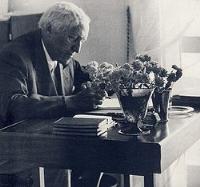
1875 Lagga, Sweden - 1955 Stockholm, Sweden. Known for: Sculpture-classical figure, commemorative medals.
Born in Uppsala, Sweden, Carl Milles, whose original surname was Anderson, was a sculptor in the classical style of figures and monuments and was a long-time professor of sculpture at the Cranbrook... Read full biography
Born in Uppsala, Sweden, Carl Milles, whose original surname was Anderson, was a sculptor in the classical style of figures and monuments and was a long-time professor of sculpture at the Cranbrook Academy of Art in Bloomfield Hills, Michigan. Many of his works are in that museum. He first studied... Read full biography
Born in Uppsala, Sweden, Carl Milles, whose original surname was Anderson, was a sculptor in the classical style of figures and monuments and was a long-time professor of sculpture at the Cranbrook Academy of Art in Bloomfield Hills, Michigan. Many of his works are in that museum. He first studied sculpture at the Technical School in Stockholm, and then attended the Ecole des Beaux-Arts, Paris and worked in Rodin's sculpture atelier. Before coming to America in 1929, he was "recognized as... Read full biography
Born in Uppsala, Sweden, Carl Milles, whose original surname was Anderson, was a sculptor in the classical style of figures and monuments and was a long-time professor of sculpture at the Cranbrook Academy of Art in Bloomfield Hills, Michigan. Many of his works are in that museum. He first studied sculpture at the Technical School in Stockholm, and then attended the Ecole des Beaux-Arts, Paris and worked in Rodin's sculpture atelier. Before coming to America in 1929, he was "recognized as Sweden's leading sculptor" and was also a professor of modeling at the Royal Academy of Stockholm. However, his unique, flamboyant style offended many persons, which led to his emigration. In 1945, he became a United States citizen. He did over a hundred... Read full biography
Born in Uppsala, Sweden, Carl Milles, whose original surname was Anderson, was a sculptor in the classical style of figures and monuments and was a long-time professor of sculpture at the Cranbrook Academy of Art in Bloomfield Hills, Michigan. Many of his works are in that museum. He first studied sculpture at the Technical School in Stockholm, and then attended the Ecole des Beaux-Arts, Paris and worked in Rodin's sculpture atelier. Before coming to America in 1929, he was "recognized as Sweden's leading sculptor" and was also a professor of modeling at the Royal Academy of Stockholm. However, his unique, flamboyant style offended many persons, which led to his emigration. In 1945, he became a United States citizen. He did over a hundred public works, mostly in bronze and received many honors including the French Legion of Honor and many ho... Read full biography
Artist Biography
Biography page for Carl Milles ((1875 - 1955)), known for Sculpture-classical figure, commemorative medals. Showing 3 biographical entries and 0 sample artworks.
Carl Milles - Artist Info
About Carl Milles
Name variants
Vilhelm Carl Emil Milles
Biography from the Archives of askART
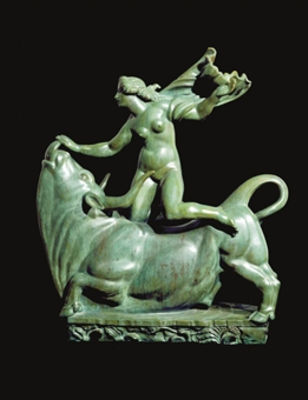 Born in Uppsala, Sweden, Carl Milles, whose original surname was Anderson, was a sculptor in the classical style of figures and monuments and was a long-time professor of sculpture at the Cranbrook Academy of Art in Bloomfield Hills, Michigan. Many of his works are in that museum.
He first studied sculpture at the Technical School in Stockholm, and then attended the Ecole des Beaux-Arts, Paris and worked in Rodin's sculpture atelier. Before coming to America in 1929, he was "recognized as Sweden's leading sculptor" and was also a professor of modeling at the Royal Academy of Stockholm. However, his unique, flamboyant style offended many persons, which led to his emigration.
In 1945, he became a United States citizen. He did over a hundred public works, mostly in bronze and received many honors including the French Legion of Honor and many honorary doctorates from American and European universities. One of his pieces, Man and Nature, was installed in 1937 in New York City at One Rockefeller Center in the main lobby on the west wall. It is composed of huge blocks of carved Michigan pine, pressed together with glue under tremendous pressure. The work was made at Cranbrook Academy with his students participating in the project. An accompanying silver bird was made in the Cranbrook jewelry studio.
Other venues for installed works by Milles are the City Hall of St. Paul, Minnesota; fountains in St. Louis and Chicago; and a monument in Wilmington, Delaware.
In the 1950s, he returned to Sweden and established the Milles Gardens as a museum for his own work.
Memberships in the United States include the National Sculpture Society and the National Institute of Arts and Letters.
Sources:
Christine Roussel, The Guide to the Art of Rockefeller Center
Peter Hastings Falk, Editor, Who Was Who in American Art
Written by Lonnie Pierson Dunbier
A note, submitted by Paul Bosco:
Milles created a number of commemorative medals, which are stylistically distinctive, and much more modern than those produced elswhere in Europe/Scandinavia, even after the transition from Art-Nouveau ("jugendstil") to Art-Deco. Circular pieces in bronze and silver, usually about 2 inches in diameter, these are regularly seen in the numismatic marketplace, at modest prices.Biography from the Archives of askART
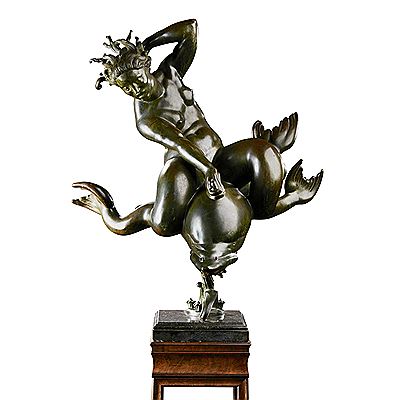 "Carl Milles was born the 23 June, 1875 at Lagga, near Uppsala, but received his artistic training in France, where he studied under Fremiet. Milles, who has bee residing in Stockholm for about a decade past, is a fertile artist, rich in creative power. He is as full of ideas and projects as he is conscientious in their execution, plunging into the biggest and most arduous tasks with joyous enthusiasm.
The statue of the Swedish chemist, Scheele, at Koping, is considered one of his best works, and the huge seated statue of Gustaf Vasa, in the Northern Museum, at Stockholm, shows that Milles has already entered into the popular consciousness, for this Gustaf Vasa stands for Swedes as the true type of the king who "built up Sweden from floor to roof."
Eagles, elephants, giant lizards, and bears, at once grotesque and monumental, have also been
fashioned by Milles in granite and in bronze. His work is free and broad in treatment and never fails to reveal a welcome measure of spirited, graphic verity."
Source:
Christian Brinton, the Catalogue for the 1912 -1913
EXHIBITION of CONTEMPORARY SCANDINAVIAN ART at
New York, Buffalo, Toledo, Chicago and Boston
Submitted to askART by M.D. Silverbrooke, Art Historian and Collector, West Vancouver, British Columbia.
Biography from Bukowski Stockholm
Carl Emil (Vilhelm) Milles was a Swedish sculptor born in Lägga. He studied in Stockholm and Paris under Auguste Rodin, where he was influenced by the animals in the Jardin des Plantes. Milles made a breakthrough with a monument to Sten Sture in Uppsala and exhibited at the World's Fair in 1900. He later became a professor of modeling at the Royal Academy of Arts in Stockholm. Some of his well-known sculptures include the "Gustav Vasa" statue at the Nordic Museum, "Orfeusgruppen" in Stockholm, and the "Poseidonfontänen" in Gothenburg.