Page loaded successfully. Showing biography for Celso Lagar Arroyo.
Celso Lagar Arroyo BIOGRAPHY
1891 Ciudad Rodrigo, Spain - 1966 Sevilla, Spain. Known for: Expressionist portrait, still life and figure painting.
Celso Lagar Arroyo (Ciudad Rodrigo, 1891 - Seville, 1966) was a Spanish expressionist painter of the first generation of the School of Paris, where he lived most of his life. He was influenced by... Read full biography
Celso Lagar Arroyo (Ciudad Rodrigo, 1891 - Seville, 1966) was a Spanish expressionist painter of the first generation of the School of Paris, where he lived most of his life. He was influenced by vanguard movements of all kinds, such as Cubism and Fovismo. He painted mostly landscapes and still... Read full biography
Celso Lagar Arroyo (Ciudad Rodrigo, 1891 - Seville, 1966) was a Spanish expressionist painter of the first generation of the School of Paris, where he lived most of his life. He was influenced by vanguard movements of all kinds, such as Cubism and Fovismo. He painted mostly landscapes and still life. From a personal point of view, he was a depressed person and completely dependent on his wife, the French sculptor Hortense Begué. From his native city Rodrigo, he went to Madrid to be part of the... Read full biography
Celso Lagar Arroyo (Ciudad Rodrigo, 1891 - Seville, 1966) was a Spanish expressionist painter of the first generation of the School of Paris, where he lived most of his life. He was influenced by vanguard movements of all kinds, such as Cubism and Fovismo. He painted mostly landscapes and still life. From a personal point of view, he was a depressed person and completely dependent on his wife, the French sculptor Hortense Begué. From his native city Rodrigo, he went to Madrid to be part of the workshop of one of the best sculptors of the moment, Miguel Blay. During 1910 and 1911, he visited Barcelona. Later he studied sculpture in Paris in 1911 advised by Blay, where he met Joseph Bernard, his friend Amedeo Modigliani, and his future wife,... Read full biography
Celso Lagar Arroyo (Ciudad Rodrigo, 1891 - Seville, 1966) was a Spanish expressionist painter of the first generation of the School of Paris, where he lived most of his life. He was influenced by vanguard movements of all kinds, such as Cubism and Fovismo. He painted mostly landscapes and still life. From a personal point of view, he was a depressed person and completely dependent on his wife, the French sculptor Hortense Begué. From his native city Rodrigo, he went to Madrid to be part of the workshop of one of the best sculptors of the moment, Miguel Blay. During 1910 and 1911, he visited Barcelona. Later he studied sculpture in Paris in 1911 advised by Blay, where he met Joseph Bernard, his friend Amedeo Modigliani, and his future wife, the French sculptor, Hortense Begué. It was precisely from that moment that he gradually abandoned sculpture in favor of pa... Read full biography
Artist Biography
Biography page for Celso Lagar Arroyo ((1891 - 1966)), known for Expressionist portrait, still life and figure painting. Showing 2 biographical entries and 0 sample artworks.
Celso Lagar Arroyo - Artist Info
About Celso Lagar Arroyo
Biography from the Archives of askART
 Celso Lagar Arroyo (Ciudad Rodrigo, 1891 - Seville, 1966) was a Spanish expressionist painter of the first generation of the School of Paris, where he lived most of his life. He was influenced by vanguard movements of all kinds, such as Cubism and Fovismo. He painted mostly landscapes and still life. From a personal point of view, he was a depressed person and completely dependent on his wife, the French sculptor Hortense Begué.
From his native city Rodrigo, he went to Madrid to be part of the workshop of one of the best sculptors of the moment, Miguel Blay. During 1910 and 1911, he visited Barcelona. Later he studied sculpture in Paris in 1911 advised by Blay, where he met Joseph Bernard, his friend Amedeo Modigliani, and his future wife, the French sculptor, Hortense Begué. It was precisely from that moment that he gradually abandoned sculpture in favor of painting.
The outbreak of the First World War meant, in the life and work of Celso Lagar, the beginning of a new stage. He remained in Barcelona during the war, where he achieved a certain recognition, which allowed him to return to Paris. In 1919, he settled definitively in France. This time until the end of the 30s, were the moments of greatest splendor of the artist. He was able to exhibit his works in the best Parisian galleries, his production is abundant and constant.
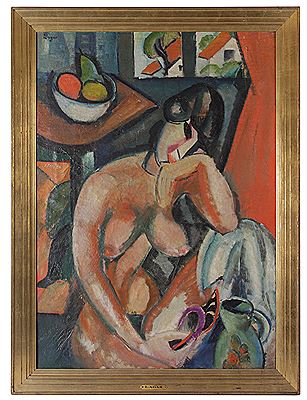
Both in his residence in Paris and in his stays, since 1928, in Normandy he developed an artistic production with very specific themes: still lifes, Spanish reminiscences, landscapes and his celebrated circus scenes.
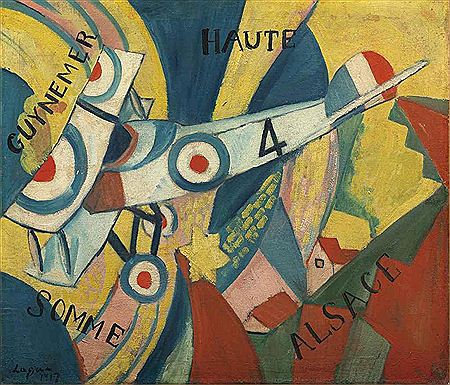
After the period of avant-garde influences of all kinds (Cubism, Fauvism, Vibrationism, Biologism, Simultaneism, Ultraist, ...), Celso Lagar found his own path marked primarily by the Goya and Picasso inspiration. The recognition of criticism and public increased.
The beginning of the Second World War ended his 'golden age'. Lagar and Hortense were forced to take refuge in the French Pyrenees in the midst of very difficult living conditions. His return after the liberation of Paris, did not have so much repercussion. Lagar continued the same themes and techniques as before the war, but the public was already looking for new content. Little by little, success faded and economic hardships affected the couple.
At this time, his wife Hortense entered the Broca hospital, and in 1955 died. Lagar fell into a deep depression and entered the psychiatric hospital of Sainte Anne. His artistic work ended completely. At that time, by court order, two auctions of the works that remained in his workshop were held to pay for his stay in the asylum. In October 1964 he returned to Spain living in Seville with a sister until his death on September 6, 1966.
Source:
"Celso Lagar Arroy," Wikipedia, Google Translate, 2017Biography from Setdart
Celso Lagar began his training in the field of sculpture with Miguel Blay in Madrid. His teacher advised him to travel to Paris to complete his studies. After spending a year in Barcelona, he traveled to the French capital for the first time in 1911.
Lagar's career, both personally and artistically, can be divided into four distinct stages, marked by the two World Wars. The first of these periods is that of apprenticeship, in Madrid, Barcelona and Paris, in contact with artists such as Amadeo Modigliani. This stage comes to an end when he is forced to leave Paris at the outbreak of the Great War.
He settled in Barcelona but held several exhibitions in the French capital, which served as a letter of introduction upon his return to the city after the war, in 1919. By then Lagar is already a consolidated artist, and settles definitively in Paris.
He regularly exhibited in the best Parisian galleries (Berthe Weil, Percier, Zborowski, Barreiro, Brouant, Druet), his style reached its personal maturity and he devoted himself fully to painting, leaving sculpture behind. He developed a painting focused on very specific themes: still lifes, Spanish themes, landscapes and circus scenes.
After the period of avant-garde influences (cubist, fauvist, etc.), Lagar reached his own style, marked by the influences of Goya and Picasso. Gradually his palette cools down, but his favorite themes remain the same, and his recognition by the public and critics increases. The beginning of World War II marked the end of Lagar's golden age. He emigrated to the French Pyrenees, and his return to the recently liberated city of Paris did not have the repercussions he had hoped for, as the collecting public demanded new contents and modes.
After his wife fell ill in 1956, Lagar fell into a deep depression and was admitted to a psychiatric center. He definitively stopped painting and in 1964 he returned to Spain, spending his last years at his sister's house in Seville.
Lagar is represented in the Museum of Contemporary Art in Madrid, the Museum of Art Nouveau and Art Deco Casa Lis, the Patio Herreriano in Valladolid, the Petit Palais in Geneva, the Fine Arts of La Rochelle, Castres and Honfleur (France) and in prestigious collections such as Crane Kallman (London), the Zborowski (Paris) or the Mapfre (Madrid).