Page loaded successfully. Showing biography for Changshuo Wu.
Changshuo Wu BIOGRAPHY
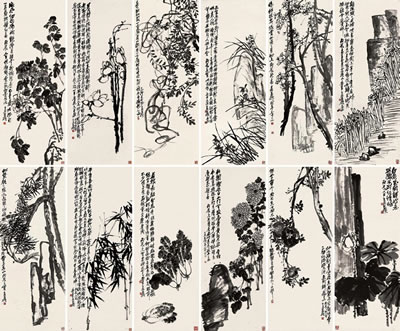
1844 Huzhou - 1927. Known for: Shanghai School style of painting.
As a leading painter during the early twentieth century, Wu Changshuo (1844-1927) was renowned for rejuvenating the art of painting flowers and birds by introducing an expressive, individualistic... Read full biography
As a leading painter during the early twentieth century, Wu Changshuo (1844-1927) was renowned for rejuvenating the art of painting flowers and birds by introducing an expressive, individualistic style more generally associated with literati painting. Born to a scholarly family in Huzhou, Zeijiang,... Read full biography
As a leading painter during the early twentieth century, Wu Changshuo (1844-1927) was renowned for rejuvenating the art of painting flowers and birds by introducing an expressive, individualistic style more generally associated with literati painting. Born to a scholarly family in Huzhou, Zeijiang, Wu Changshuo became an imperial official in Liaoning before the eventual collapse of the Qing Dynasty. He initially dedicated his artistic efforts to poetry and calligraphy, and also led the Xiling... Read full biography
As a leading painter during the early twentieth century, Wu Changshuo (1844-1927) was renowned for rejuvenating the art of painting flowers and birds by introducing an expressive, individualistic style more generally associated with literati painting. Born to a scholarly family in Huzhou, Zeijiang, Wu Changshuo became an imperial official in Liaoning before the eventual collapse of the Qing Dynasty. He initially dedicated his artistic efforts to poetry and calligraphy, and also led the Xiling Seal Art Society in Hangzhou. In his thirties he began to paint, and it was only later on that he considered himself part of the Shanghai School of painters. Wu's art is positioned at the intersection of traditional and modern styles of painting and... Read full biography
As a leading painter during the early twentieth century, Wu Changshuo (1844-1927) was renowned for rejuvenating the art of painting flowers and birds by introducing an expressive, individualistic style more generally associated with literati painting. Born to a scholarly family in Huzhou, Zeijiang, Wu Changshuo became an imperial official in Liaoning before the eventual collapse of the Qing Dynasty. He initially dedicated his artistic efforts to poetry and calligraphy, and also led the Xiling Seal Art Society in Hangzhou. In his thirties he began to paint, and it was only later on that he considered himself part of the Shanghai School of painters. Wu's art is positioned at the intersection of traditional and modern styles of painting and calligraphy, encapsulating both ancient traditions and innovative modern trends that set his works apart. e favoured the... Read full biography
Artist Biography
Biography page for Changshuo Wu ((1844 - 1927)), known for Shanghai School style of painting. Showing 3 biographical entries and 0 sample artworks.
Changshuo Wu - Artist Info
About Changshuo Wu
Name variants
Wu ZhangShuo
Biography from Chiswick Auctions
As a leading painter during the early twentieth century, Wu Changshuo (1844-1927) was renowned for rejuvenating the art of painting flowers and birds by introducing an expressive, individualistic style more generally associated with literati painting. Born to a scholarly family in Huzhou, Zeijiang, Wu Changshuo became an imperial official in Liaoning before the eventual collapse of the Qing Dynasty.
He initially dedicated his artistic efforts to poetry and calligraphy, and also led the Xiling Seal Art Society in Hangzhou. In his thirties he began to paint, and it was only later on that he considered himself part of the Shanghai School of painters. Wu's art is positioned at the intersection of traditional and modern styles of painting and calligraphy, encapsulating both ancient traditions and innovative modern trends that set his works apart.
e favoured the use of bright colours and sharp contrasts in his works, which can be noted from the varied themes in his paintings, including bright floral motifs such as chrysanthemums and wisterias, captured in his favoured style of freehand (daxieyi), often translated as large/monumental freehand style.
Today, Wu’s works are housed in the collections of the Metropolitan Museum of Art in New York, the Museum School of Fine Arts in Boston, and the National Gallery of Victoria in Melbourne, among others.Biography from Theodore Bruce Beaconsfield (Sydney)
Wu Changshuo was a prominent painter, calligrapher and seal artist of the late Qing Period. Wu was born into a scholarly family in Huzhou, Zhejiang. In his twenties, Wu moved to Jiangsu Province and settled down in Suzhou. Prior to the collapse of the Great Qing, he served as an imperial official in Liaoning.
Initially, he devoted himself to poetry and calligraphy with a strong interest in early scripts. He also led the Xiling Society of the Seal Art, an academic organization for Hangzhou-based seal artists. Only later did he consider himself a painter associated with the "Shanghai school."
As a painter, he was noted for helping to rejuvenate the art of painting flowers and birds. Wu Changshuo's favorite subjects were colorful abstract images of flowers and rocks. His work is not a literal depiction from nature, but an arrangement that playfully emphasizes his skillful use of bold calligraphic brushwork against blank space. He considered carving seals and doing paintings to be integrated to each other.
His works were highly sought after by the new Shanghai urban elite. His work garnered him fame and was highly regarded in Japan.Biography from Leonard Joel
Wu Changshuo's favorite subjects were colorful abstract images of flowers and rocks. His work is not a literal depiction from nature, but an arrangement that playfully emphasizes his skillful use of bold calligraphic brushwork against blank space. His works were highly sought after by the new Shanghai urban elite.