Page loaded successfully. Showing biography for Charles Fergus Binns.
Charles Fergus Binns BIOGRAPHY
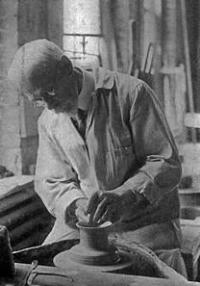
1857 Worcester, England - 1934 Alfred, New York. Known for: Ceramicist, matte glaze pottery vases, teaching.
Lots Sold: 92%, High Price: Subscribe.
Charles Fergus Binns was one of the most influential ceramic educators in the United States. Trained in England at the Royal Worcester Porcelain Works in Staffordshire, he came to this country in... Read full biography
Charles Fergus Binns was one of the most influential ceramic educators in the United States. Trained in England at the Royal Worcester Porcelain Works in Staffordshire, he came to this country in 1897. By that time, he had already published and lectured widely on ceramics. He played a pivotal role... Read full biography
Charles Fergus Binns was one of the most influential ceramic educators in the United States. Trained in England at the Royal Worcester Porcelain Works in Staffordshire, he came to this country in 1897. By that time, he had already published and lectured widely on ceramics. He played a pivotal role as an educator, heading the New York State School of Clay-Working and Ceramics (now the New York State College of Ceramics at Alfred University), the first American institution to grant a degree in... Read full biography
Charles Fergus Binns was one of the most influential ceramic educators in the United States. Trained in England at the Royal Worcester Porcelain Works in Staffordshire, he came to this country in 1897. By that time, he had already published and lectured widely on ceramics. He played a pivotal role as an educator, heading the New York State School of Clay-Working and Ceramics (now the New York State College of Ceramics at Alfred University), the first American institution to grant a degree in ceramics. Binns taught ceramic technology, offering instruction in clay bodies and glaze chemistry. Among his most notable students were Arthur Baggs of the Marblehead Pottery, Frederick Walrath, Adelaide Robineau, and Mary Chase Perry. At Alfred Binns... Read full biography
Charles Fergus Binns was one of the most influential ceramic educators in the United States. Trained in England at the Royal Worcester Porcelain Works in Staffordshire, he came to this country in 1897. By that time, he had already published and lectured widely on ceramics. He played a pivotal role as an educator, heading the New York State School of Clay-Working and Ceramics (now the New York State College of Ceramics at Alfred University), the first American institution to grant a degree in ceramics. Binns taught ceramic technology, offering instruction in clay bodies and glaze chemistry. Among his most notable students were Arthur Baggs of the Marblehead Pottery, Frederick Walrath, Adelaide Robineau, and Mary Chase Perry. At Alfred Binns explored a range of glazes, including traditional gloss finishes, but he particularly favored matte glazes. This relatively large vase... Read full biography
Artist Biography
Biography page for Charles Fergus Binns ((1857 - 1934)), known for Ceramicist, matte glaze pottery vases, teaching. Showing 1 biographical entries and 0 sample artworks.
Charles Fergus Binns - Artist Info
About Charles Fergus Binns
Biography from Metropolitan Museum of Art
Charles Fergus Binns was one of the most influential ceramic educators in the United States. Trained in England at the Royal Worcester Porcelain Works in Staffordshire, he came to this country in 1897. By that time, he had already published and lectured widely on ceramics. He played a pivotal role as an educator, heading the New York State School of Clay-Working and Ceramics (now the New York State College of Ceramics at Alfred University), the first American institution to grant a degree in ceramics.
Binns taught ceramic technology, offering instruction in clay bodies and glaze chemistry. Among his most notable students were Arthur Baggs of the Marblehead Pottery, Frederick Walrath, Adelaide Robineau, and Mary Chase Perry.
At Alfred Binns explored a range of glazes, including traditional gloss finishes, but he particularly favored matte glazes. This relatively large vase, among the earliest extant examples of his work, is representative of Binss disdain for surface decoration in his personal work, relying instead on the vessel’s form and glaze of its aesthetic effect. Its refined stoneware body is of a type introduced at the school in 1903, one that Binns used throughout his career.
The vase’s elegant Chinese shape is a form that the ceramics preferred during his first decades at Alfred. Also inspired by Eastern traditions, the matte glazes—a dark brown dripping over a soft, lighter brown—reflect the admiration many American art potters then had for Asian aesthetics.
Binns preferred to throw his vessels in sections, carefully calculating the diameters to make certain that the segments aligned properly. X-radiography by the Museum’s Department of Objects Conservation revealed that the vase, though measuring just under fourteen inches in height, was thrown in three sections. [Can we include the radiograph image here??]