Page loaded successfully. Showing biography for Charles Heaney.
Charles Heaney BIOGRAPHY
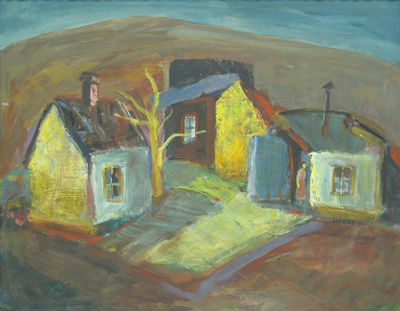
1897 Ocanto Falls, Wisconsin - 1981 Portland, Oregon. Known for: Abstract farm scenes, villages, figure.
An Oregon regionalist painter who combined abstraction and romanticism, Charles Heaney was a follower of Harry Wentz, the philosopher behind the Oregon regionalist movement and a professor at the... Read full biography
An Oregon regionalist painter who combined abstraction and romanticism, Charles Heaney was a follower of Harry Wentz, the philosopher behind the Oregon regionalist movement and a professor at the Portland Art Museum School. Heaney is associated with paintings of Northwest landscape, urban... Read full biography
An Oregon regionalist painter who combined abstraction and romanticism, Charles Heaney was a follower of Harry Wentz, the philosopher behind the Oregon regionalist movement and a professor at the Portland Art Museum School. Heaney is associated with paintings of Northwest landscape, urban architecture in ruins with his "demolition series," and of unidentified towns in inland Oregon. Characteristic of his expression are empty roads, isolated trees and threatening skies. Born in Oconto Falls,... Read full biography
An Oregon regionalist painter who combined abstraction and romanticism, Charles Heaney was a follower of Harry Wentz, the philosopher behind the Oregon regionalist movement and a professor at the Portland Art Museum School. Heaney is associated with paintings of Northwest landscape, urban architecture in ruins with his "demolition series," and of unidentified towns in inland Oregon. Characteristic of his expression are empty roads, isolated trees and threatening skies. Born in Oconto Falls, Wisconsin, Charles Heaney was from a family of Irish and German immigrants. In 1913, he quit school to support his widowed mother and found work as a jeweler's apprentice doing engravings, which proved to be his trade for much of his life. In the 1930s,... Read full biography
An Oregon regionalist painter who combined abstraction and romanticism, Charles Heaney was a follower of Harry Wentz, the philosopher behind the Oregon regionalist movement and a professor at the Portland Art Museum School. Heaney is associated with paintings of Northwest landscape, urban architecture in ruins with his "demolition series," and of unidentified towns in inland Oregon. Characteristic of his expression are empty roads, isolated trees and threatening skies. Born in Oconto Falls, Wisconsin, Charles Heaney was from a family of Irish and German immigrants. In 1913, he quit school to support his widowed mother and found work as a jeweler's apprentice doing engravings, which proved to be his trade for much of his life. In the 1930s, he adopted intaglio, having taken classes in this medium at the Portland School. In 1917, he became a part-time student at the Portland... Read full biography
Artist Biography
Biography page for Charles Heaney ((1897 - 1981)), known for Abstract farm scenes, villages, figure. Showing 1 biographical entries and 0 sample artworks.
Charles Heaney - Artist Info
About Charles Heaney
Biography from the Archives of askART
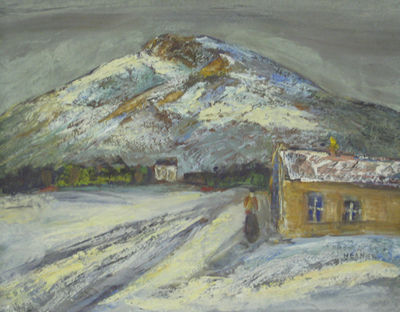 An Oregon regionalist painter who combined abstraction and romanticism, Charles Heaney was a follower of Harry Wentz, the philosopher behind the Oregon regionalist movement and a professor at the Portland Art Museum School. Heaney is associated with paintings of Northwest landscape, urban architecture in ruins with his "demolition series," and of unidentified towns in inland Oregon. Characteristic of his expression are empty roads, isolated trees and threatening skies.
Born in Oconto Falls, Wisconsin, Charles Heaney was from a family of Irish and German immigrants. In 1913, he quit school to support his widowed mother and found work as a jeweler's apprentice doing engravings, which proved to be his trade for much of his life. In the 1930s, he adopted intaglio, having taken classes in this medium at the Portland School.
In 1917, he became a part-time student at the Portland Art Museum School and studied there intermittently into the mid 1920s. From Harry Wentz, "an early advocate of artistic response to the region", he was influenced to focus on scenes of his own environment and to use rich coloration, abstraction, geometric form and emotional expression. Heaney also learned block printing, which was having a resurgence because of regionalism.
From 1929 to 1932, Heaney traveled throughout Oregon for the Oregon State Motor Association as a researcher for the placement of road signs, which he would then make to fit the site. He lost that job during the Depression, and found work as a ditch digger for the Civil Works Administration. Then he qualified as an artist for the Public Works of Art Administration, the predecessor of the Federal Art Project of the WPA (Works Progress Administration).
Timberline Lodge on Mount Hood was a major WPA project, and Charles Heaney did a painting for the Lodge titled "The Mountain", 1937, which was his first major painting. The work is "fiercely geological in its mass and angular crevices."
As a WPA artist, Heaney found many opportunities to experiment with his interpretations of Oregon places, taking special interest in fossil beds, which he used in mixed-media works including impressions in plaster.
During the last twenty-five years of his life, Charles Heaney devoted himself exclusively to painting and the exploration of line, shape, color and texture. He also traveled in Nevada and painted mining camps and desert scenes and took particular interest in Virginia City where a distant cousin, John W. Mackay, was the wealthy Comstock lode silver king. Heaney did not know Mackay but had heard stories from childhood of this relative's fabulous wealth.
In Portland, Heaney lived in a very modest one-story cottage, and he painted many scenes of his neighborhood with special interest on homes, demolition, passing of time, history, roads, underpasses, etc. His focus was ever on his personal responses to his surroundings and his "quest for understanding and enlightenment".
Source:
Roger Hull, 'Charles E Heaney: Memory, Imagination, and Place', "American Art Review", January 2005