Page loaded successfully. Showing biography for Chen Li.
Chen Li BIOGRAPHY
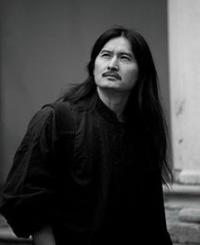
Born 1963 Yunlin, Taiwan. Known for: Sculpture, oil painting.
Li Chen or Li Zhen is a sculptor who was born in 1963 in Yunlin, Taiwan. When Li Chen was first starting out and accepting projects from Buddhist shrines to produce traditional Buddha statues he... Read full biography
Li Chen or Li Zhen is a sculptor who was born in 1963 in Yunlin, Taiwan. When Li Chen was first starting out and accepting projects from Buddhist shrines to produce traditional Buddha statues he studied the Buddhist and Taoist classics. However, the richness of his creative thinking led to him... Read full biography
Li Chen or Li Zhen is a sculptor who was born in 1963 in Yunlin, Taiwan. When Li Chen was first starting out and accepting projects from Buddhist shrines to produce traditional Buddha statues he studied the Buddhist and Taoist classics. However, the richness of his creative thinking led to him giving up that work and in the 1990s he began to focus on a career in art. Li’s works, which appear both classical and modern, are infused with personal sentiment and modern spirit. They give viewers a... Read full biography
Li Chen or Li Zhen is a sculptor who was born in 1963 in Yunlin, Taiwan. When Li Chen was first starting out and accepting projects from Buddhist shrines to produce traditional Buddha statues he studied the Buddhist and Taoist classics. However, the richness of his creative thinking led to him giving up that work and in the 1990s he began to focus on a career in art. Li’s works, which appear both classical and modern, are infused with personal sentiment and modern spirit. They give viewers a sense of life harmony and encourage people to reflect on a great many things. Li Chen first became interested in art at a very young age and at seven or eight delighted in playing with a paint brush. As a child he loved lying on rocks and watching the... Read full biography
Li Chen or Li Zhen is a sculptor who was born in 1963 in Yunlin, Taiwan. When Li Chen was first starting out and accepting projects from Buddhist shrines to produce traditional Buddha statues he studied the Buddhist and Taoist classics. However, the richness of his creative thinking led to him giving up that work and in the 1990s he began to focus on a career in art. Li’s works, which appear both classical and modern, are infused with personal sentiment and modern spirit. They give viewers a sense of life harmony and encourage people to reflect on a great many things. Li Chen first became interested in art at a very young age and at seven or eight delighted in playing with a paint brush. As a child he loved lying on rocks and watching the clouds float across the sky, constantly changing shape as they moved. He was also fascinated by the old wall... Read full biography
Artist Biography
Biography page for Chen Li ((Born 1963)), known for Sculpture, oil painting. Showing 3 biographical entries and 0 sample artworks.
Chen Li - Artist Info
About Chen Li
Name variants
Li Chen, Zhen Li
Biography from the Archives of askART
 Li Chen or Li Zhen is a sculptor who was born in 1963 in Yunlin, Taiwan. When Li Chen was first starting out and accepting projects from Buddhist shrines to produce traditional Buddha statues he studied the Buddhist and Taoist classics. However, the richness of his creative thinking led to him giving up that work and in the 1990s he began to focus on a career in art. Li’s works, which appear both classical and modern, are infused with personal sentiment and modern spirit. They give viewers a sense of life harmony and encourage people to reflect on a great many things.
Li Chen first became interested in art at a very young age and at seven or eight delighted in playing with a paint brush. As a child he loved lying on rocks and watching the clouds float across the sky, constantly changing shape as they moved. He was also fascinated by the old walls of homes and the irregular mottling on them and at night often used a light to reflect images of his hand against the wall, intrigued by the myriad shapes he could create. At school, Li’s favorite subject was painting, which allowed his imagination to soar to new heights and enabled him to escape the restrictions imposed by his parents. When he attended National Dajia Industrial Senior High School, Li studied arts and crafts and during his six years at junior and senior-high school was influenced by such important contemporary Taiwanese artists as Chen Hsin-wan, Cheng Chiung-ming, Lee Chin-hsiu and Huang Pu-ching. Before joining Taiwan's mandatory military service, Li Chen took up a position in the workshop of renowned local sculptor Hsieh Tung-liang where he studied body sculpture.
In 1987, a lay Buddhist bumped into Li Chen working in his studio and said to him: “Young man I used to paint a little myself, your realist work is really quite good, would you like to try and make a Buddha statue? I have a small Buddhist alter why not try your hand?” Li agreed right away. It was not until later that he discovered sculpting Buddha was much harder than sculpting a person. His response was to throw himself heart and soul into the study of religious art and the Buddhist classics. In between the different projects he accepted, Li Chen spent as much time as he could pursuing his own creative interests, but soon came to find sculpting Buddha statues too limiting. Li had always sought to express the creative desire that resides in the hearts of all true artists, but there was no place for such subjective thinking in his chosen profession, which is why he does not consider the pieces produced in this period to be his own creations. As a result, Li decided to focus on research. Only then was he finally able to devote his full attention to creating art, making his artistic debut in 1999.
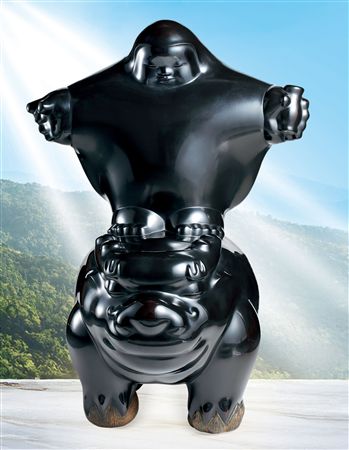
Li Chen seeks to convey the spirit and meaning of Eastern culture through sculpture. However, because expressive methods contain ideas novel to a specific time, the forms used by Buddhist sculpture for a Millennia presented a uniquely difficult obstacle, one that Li has been able to identify and overcome. Two of Li Chen’s early art series The Beauty of Emptiness and Energy of Emptiness were filled with simple minimalist lines that created an aesthetic of emptiness and reinterpreted the semiotic image of Buddha statues. At the same time, the roundness and fullness of the statues combined the Chinese philosophy of the Tao, “Qi” and energy, creating a visual tension that is both heavy and light. In the Spiritual Journey Through the Great Ether series Li Chen is already far less limited by tradition, inventing an innovative technique that incorporated gold and silver leaf on the exterior of his bronze sculptures. In contrast, Soul Guardians was inspired by the artist’s reflections on the occurrence of natural disasters over almost a decade and based on a “spiritual and philosophical interpretations of these catastrophes.” In this way, Li took the main character of a myth as his creative focus as he discussed the significance of “God” for humanity. This series conveys Li Chen’s genuine concern about the nature of society, culture and humanity, and as a result the pieces are infused with a transcendent quality. This was followed by the The Beacon: When Night Light Glimmers series, which took a “special light” as its creative core. From the use of materials to the philosophy behind the work, the idea of a “creative spark” explains Li Chen’s fascination with spiritual light and energy, and the way in which after observing culture, life and the world, he found it easier to portray Eastern humanism. In the near decades, Li Chen has spent most of the time carrying out his reflections on human nature in his creative works, thus started the Ordinary People series in 2010 that further reflected the artist's extensive spiritual contemplation. Once viewers are familiar with the ink black surface and the creative idea of lightness and weight in his works, viewing his sculptures while pursuing spiritual pleasure will become a kind of habitual response. In Ordinary People series exhibited this time, Li turned to characterize all walks of life, which sought to face the weight of reality. While Li takes pleasure in Spiritual Journey Through the Great Ether, he still returned to the most primitive mode of exploring the foundation of human nature, experiencing the virtual and inspecting the real at the same time. The 2011 series Immortality of Fate, which is one of the Li's "virtual" series, utilized wood, rope and ceramic clay to convey the artist’s awareness of the changeability of cause and effect in life. Regardless of whether these bodies are “alive” or “dead,” they record the process of corruption and decay. Facing the endless flow of history, viewers feel first hand the rise and fall of powers, cycles and perpetual change. In the same year, Li Chen also produced the Ethereal Cloud series, the first time he showed cast stainless steel pieces, which ingeniously imitated clouds and smoke. For Li, these cyclical phenomena are imbued with their own soul.
Selected solo exhibitions;
Openasia 2004, 7th International Exhibition of Sculptures and Installations in Venice, Italy; 2007 Venice Biennale;
2008 National Art Museum of China, Beijing;
2009 Singapore Art Museum;
2011 Art Stage Singapore and Greatness of Spirit: Li Chen Premiere Sculpture Exhibition in Taiwan, Taipei;
2012 Frye Art Museum in Seattle; Li Chen
2013 Place Vendôme Premiere Sculpture Exhibition in Paris.
2014-15 Journey of Solitary Existence: Li Chen's “Ordinary People” Series Debut Exhibition, Asia Art Center, Beijing
Source:
wikipedia.orgBiography from Kingsley Art Auction (CLOSED)
Taiwan Contemporary sculptor Li Chen is a highly talented artist. Li was born in Yunlin, Taiwan; and now works in Tanzih, Taichung County. Li Chen's artwork allows one to sense harmony and reflect on life, and its mischievous innocence captures the spirit of Zen. Li delicately blends Chinese Buddhist, Taoist, and Confucian into modern sculpture. He not only extends what Chinese traditional culture general pursuit in philosophy and spirituality, but also demonstrates his personal religion, artistic character, and choice of aesthetics. He extracts historical and cultural element from China five thousand years of history and culture, such as Chinese immortals, Buddhas, dragons, fairy tales, and folk tales, etc. Furthermore, he bridges the gap between the Modern and Contemporary, and his unique and perceptive works have given sculptures new Asian live.
After exhibited in 2004 OPENASIA 7th International Exhibition of Sculptures and Installations, Venice-based curator Paolo De Grandis flew to Taiwan to invite Li Chen to be the candidate of 52nd Venice Biennale - Energy of Emptiness in 2007 and Shanghai International Biennial Urban Sculpture Exhibition. What results establishing Li Chen as the new Asian sculptor master worldwide.Biography from Aspire Auctions, Cleveland
Li Chen, born in 1963 in Yunlin, Taiwan, began studying art, primarily painting, from a young age. Prior to entering the military he began studying sculpture of the human form with renowned artist Hsieh Tung-liang.
During the late 80s and early 90s, Chen devoted himself to studying Eastern religions and launched his artistic career in 1999, where he imbued these philosophies into his bronze budha sculptures. The combination of traditional ancient philosophies and Chen's contemporary style form a visually unique oeuvre in which he is internationally renowned.