Page loaded successfully. Showing biography for Christo & Jean Claude.
Christo & Jean Claude BIOGRAPHY
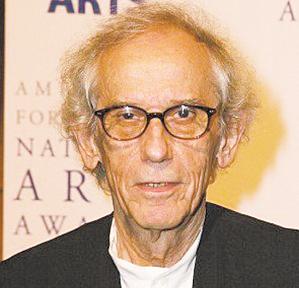
1935 Gabrovo, Bulgaria/Casablanca, Morocco - 2020/2009 New York City. Known for: Installations-wrappings, collage, environmental art.
Following is The New York Times obituary of the artist, by William Grimes, November 19, 2009:. "Jeanne-Claude, Christo's Collaborator on Environmental Canvas, Is Dead at 74". Jeanne-Claude, who... Read full biography
Following is The New York Times obituary of the artist, by William Grimes, November 19, 2009:. "Jeanne-Claude, Christo's Collaborator on Environmental Canvas, Is Dead at 74". Jeanne-Claude, who collaborated with her husband, Christo, on dozens of environmental art projects, notably the wrapping of... Read full biography
Following is The New York Times obituary of the artist, by William Grimes, November 19, 2009:. "Jeanne-Claude, Christo's Collaborator on Environmental Canvas, Is Dead at 74". Jeanne-Claude, who collaborated with her husband, Christo, on dozens of environmental art projects, notably the wrapping of the Pont Neuf in Paris and the Reichstag in Berlin and the installation of 7,503 vinyl gates with saffron-colored nylon panels in Central Park, died Wednesday in Manhattan, where she lived. She was... Read full biography
Following is The New York Times obituary of the artist, by William Grimes, November 19, 2009:. "Jeanne-Claude, Christo's Collaborator on Environmental Canvas, Is Dead at 74". Jeanne-Claude, who collaborated with her husband, Christo, on dozens of environmental art projects, notably the wrapping of the Pont Neuf in Paris and the Reichstag in Berlin and the installation of 7,503 vinyl gates with saffron-colored nylon panels in Central Park, died Wednesday in Manhattan, where she lived. She was 74. A statement on the couple's Web site, christojeanneclaude.net, said the cause was complications of a brain aneurysm. Jeanne-Claude met her husband, Christo Javacheff, in Paris in 1958. At the time, Christo, a Bulgarian refugee, was already making... Read full biography
Following is The New York Times obituary of the artist, by William Grimes, November 19, 2009:. "Jeanne-Claude, Christo's Collaborator on Environmental Canvas, Is Dead at 74". Jeanne-Claude, who collaborated with her husband, Christo, on dozens of environmental art projects, notably the wrapping of the Pont Neuf in Paris and the Reichstag in Berlin and the installation of 7,503 vinyl gates with saffron-colored nylon panels in Central Park, died Wednesday in Manhattan, where she lived. She was 74. A statement on the couple's Web site, christojeanneclaude.net, said the cause was complications of a brain aneurysm. Jeanne-Claude met her husband, Christo Javacheff, in Paris in 1958. At the time, Christo, a Bulgarian refugee, was already making art of wrapped packages, furniture and oil drums. Three years later, they made their first work together, a tempo... Read full biography
Artist Biography
Biography page for Christo & Jean Claude ((1935 - 2020/2009)), known for Installations-wrappings, collage, environmental art. Showing 6 biographical entries and 0 sample artworks.
Christo & Jean Claude - Artist Info
About Christo & Jean Claude
Name variants
Christo, Jeanne-Claude Christo, Jean Claude, Christo Vladimirov Javacheff, Christo & Jean Claude Javacheff
Biography from the Archives of askART
 Following is The New York Times obituary of the artist, by William Grimes, November 19, 2009:
"Jeanne-Claude, Christo's Collaborator on Environmental Canvas, Is Dead at 74"
Jeanne-Claude, who collaborated with her husband, Christo, on dozens of environmental art projects, notably the wrapping of the Pont Neuf in Paris and the Reichstag in Berlin and the installation of 7,503 vinyl gates with saffron-colored nylon panels in Central Park, died Wednesday in Manhattan, where she lived. She was 74.
A statement on the couple's Web site, christojeanneclaude.net, said the cause was complications of a brain aneurysm.
Jeanne-Claude met her husband, Christo Javacheff, in Paris in 1958. At the time, Christo, a Bulgarian refugee, was already making art of wrapped packages, furniture and oil drums. Three years later, they made their first work together, a temporary installation on the docks in Cologne, Germany, that consisted of oil drums and rolls of industrial paper wrapped in tarpaulin.
To avoid confusing dealers and the public, and to establish an artistic brand, they used only Christo's name. In 1994 they retroactively applied the joint name "Christo and Jeanne-Claude" to all outdoor works and large-scale temporary indoor installations. Other works were credited to Christo alone.
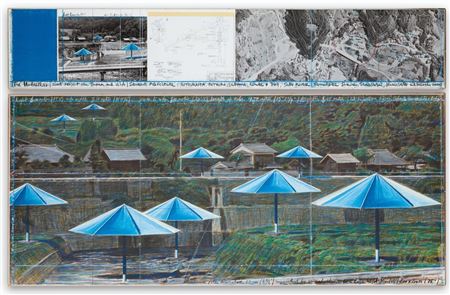
Their collaborative approach, as described on their Web site, remained constant throughout the years. After he and his wife conceived an idea for a project, Christo made drawings, scale models and other preparatory works that were sold to finance the final project. With the help of paid assistants, they then did the on-site work: wrapping buildings, trees, walls or bridges; erecting umbrellas ("The Umbrellas," 1991); spreading pink fabric around 11 islands in Biscayne Bay near Miami ("Surrounded Islands," 1983).
"We want to create works of art of joy and beauty, which we will build because we believe it will be beautiful," Jeanne-Claude said in a 2002 interview. "The only way to see it is to build it. Like every artist, every true artist, we create them for us."
Jeanne-Claude Denat de Guillebon was born on June 13, 1935, in Casablanca, where her father, a French army officer, was stationed. After attending schools in France and Switzerland, she earned a baccalaureate in Latin and philosophy in 1952 from the University of Tunis.
In addition to her husband, she is survived by their son, Cyril Christo of Santa Fe, N.M.
In 1962, Christo and Jeanne-Claude caused a sensation when, in response to the building of the Berlin Wall, they blocked the tiny Rue Visconti in Paris with a barricade of oil drums. Jeanne-Claude managed to stall the police as they closed in, arguing that the work, "Wall of Oil Barrels, Iron Curtain," should stay in place a few hours more.
Jeanne-Claude and Christo moved to New York in 1964 and embarked on grander, more theatrical projects. Nothing, it seemed, was too large to be shrouded in fabric. In the late 1960s, they wrapped the Kunsthalle in Bern, Switzerland, just one of many buildings, walls and statues to come. In 1969 they wrapped a million square feet of coastline near Sydney, Australia.
Although wrapping remained the couple's signature, they staged other environmental projects and public displays. At the Documenta exhibition in Kassel, Germany, in 1968, they erected, with the assistance of two giant cranes, an inflated cylindrical fabric "package," in appearance a bit like a stretched-out Michelin Man, that stood nearly 280 feet tall.
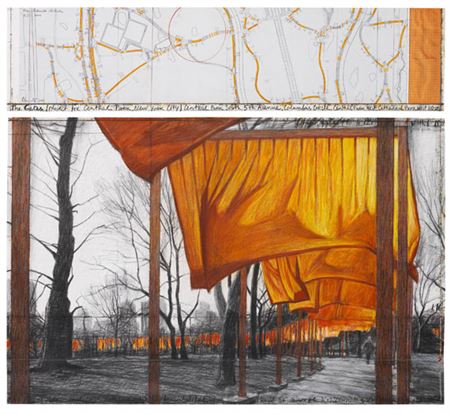
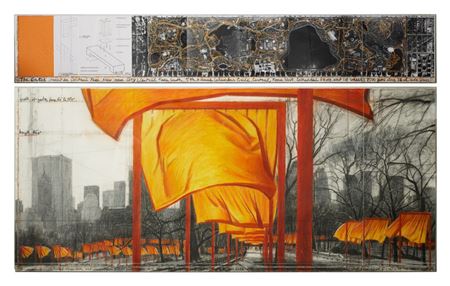
The projects became communal events, during construction and after. Millions of viewers were attracted to "The Umbrellas," installed simultaneously in 1991 in Ibaraki, Japan, and at the Tejon Ranch in Southern California. "The Gates," a series of flapping bannerlike panels installed in Central Park in 2005, also attracted more than five million viewers during the two weeks that the work lasted.
Mayor Michael R. Bloomberg, in a statement released Thursday, praised "The Gates" as "one of the most exciting public art projects ever put on anywhere in the world — and it would never have happened without Jeanne-Claude."
The couple often had to overcome stiff resistance to their projects from municipal officials and citizens worried at the possible environmental impact of their work. Some critics dismissed their work as a repetitive series of stunts devoid of intellectual content. More often than not, however, the projects, once in place, turned out to be enormously popular.
Before Jeanne-Claude's death, she and Christo were at work on two longstanding projects: "Over the River," a series of fabric panels to be suspended over the Arkansas River in Colorado, and "The Mastaba," a stack of 410,000 oil barrels configured as a mastaba, or truncated rectangular pyramid, envisioned for the United Arab Emirates.
Like all of their projects, these were intended to be temporary. Whether executed in oil drum or brightly colored fabric, the art of her and her husband, Jeanne-Claude said, expressed " the quality of love and tenderness that we human beings have for what does not last."
Source: http://www.nytimes.com/2009/11/20/arts/design/20jeanne-claude.htmlBiography from the Archives of askART
 An environmental installation artist and painter of architectural landscape drawings, Christo has become known for "wrapping" famous buildings and geographical landmarks with plastic and woven-fabric sheets. His projects, usually with the assistance of his wife and dealer Jeanne-Claude, include wrappings of the "Berne Kunsthalee" in 1968, a coastline area in Australia; the Reichstag, in Berlin; and the Pont Neuf in Paris. In California, he built a running fence 18 feet high and 24.5 miles long and in Japan and California, created a running series of 3,100 umbrellas.
In February 2005, the Christos oversaw the installation of one of their most attention-getting endeavors, The Gates, Central Park, New York, 1979-2005. Opening February 11 and lasting sixteen days, it was the biggest art project in the history of New York City. Seventy-five hundred frames, sixteen feet high, were placed at intervals along 23 miles of footpaths in the park. Suspended from the frames were orange tinted fabric banners, intended to convey a "splash of sunrise" and what Javacheff Christo described as "a visual golden river". But declining to say much about the project, the artist said: "This project is not involving talk. It's a real, physical space. It's not necessary to talk. You spend time, you experience the project". (Tribune)
Javacheff Christo was born in Gabrovo, Bulgaria, on June 13, 1935, the same day as his wife, Jeanne-Claude. He studied at the Fine Arts Academy in Sofia from 1952 to 1956, and then worked at the Burian Theatre in Prague in 1956. He did further study in Vienna in 1957, and the following year went to Paris where he began creating wrapped, packaged objects. He and his wife have lived primarily in New York City, although they travel frequently.
They do not use their last name, Javacheff, although their son Cyril took the last name of Christo. According to Bedford McIntosh, "In the past few years they have come to refer to themselves as the 'artists Christo and Jeanne-Claude,' recognizing her critical role in the projects. The titles on their more recent projects reflect this."
Funding for the site-specific works come from the sale of preparatory drawings, documents, and sculptures.
Sources include:
Matthew Baigell, Dictionary of American Art
Bedford McIntosh, Scottsdale Tribune, February 13, 2005, A17Biography from the Archives of askART
 An environmental installation artist and painter of architectural landscape drawings, Jean-Claude Christo, known as Jean-Claude, has become known for her collaborations with her husband, Javacheff Christo, in "wrapping" famous buildings and geographical landmarks with plastic and woven-fabric sheets. Their joint projects include wrappings of the "Berne Kunsthalle" in 1968, a coastline area in Australia; the Reichstag, in Berlin; and the Pont Neuf in Paris. In California, they oversaw the building of a running fence 18 feet high and 24.5 miles long and in Japan and California, designed a running series of 3,100 umbrellas.
In February 2005, the Christos oversaw the installation of one of their most attention-getting endeavors, The Gates, Central Park, New York, 1979-2005. Opening February 11 and lasting sixteen days, it was the biggest art project in the history of New York City. Seventy-five hundred frames, sixteen feet high, were placed at intervals along 23 miles of footpaths in the park. Suspended from the frames were orange tinted fabric banners, intended to convey a "splash of sunrise" and what Javacheff Christo described as "a visual golden river". But declining to say much about the project, the artist said: "This project is not involving talk. It's a real, physical space. It's not necessary to talk. You spend time, you experience the project". (Tribune)
Jeanne-Claude was born in Casablanca, Morocco on June 13, 1935, the same day as her husband. The couple have lived primarily in New York City, although they travel frequently.
They do not use their last name, Javacheff, but their son Cyril took the last name of Christo. According to Bedford McIntosh, "In the past few years they have come to refer to themselves as the 'artists Christo and Jeanne-Claude,' recognizing her critical role in the projects. The titles on their more recent projects reflect this."
Funding for the site-specific works come from the sale of preparatory drawings, documents, and sculptures.
Sources:
Matthew Baigell, Dictionary of American Art
Bedford McIntosh
Scottsdale Tribune, February 13, 2005, A17Biography from RoGallery
Christo (born Javashev Christo) is best known for producing enormous packaging projects: he wraps parks, buildings, and entire outdoor landscapes. Christo has collaborated with his wife Jeanne-Claude for over 40 years on these projects. The two earn the huge amounts of money required to execute their monumental works by executing and then selling preparatory drawings to collectors and dealers.
Believing that people should have intense and memorable experiences of art outside the institution of the museum, Christo typically creates temporary wrappings -- generally lasting several weeks -- on a vast scale. Borrowing land, structures, and spaces used and built by the public (and, therefore, already laden with a history of associations and connotations), he momentarily intervenes in the local population's daily rhythm in order to create "gentle disturbances" intended to refocus citizens' impressions. Such disturbances force each local participant/viewer to examine the way that social interaction becomes entrenched in routine and is consequently deadened.
In Christo's printed and three-dimensional work, Christo wraps an object, challenging the viewer to accurately remember the concealed object and giving it the notion of rarity because it is inaccessible. Nine documentary films were made about the projects of Christo and Jeanne-Claude. One of their most famous projects is Running Fence, which they constructed in Sonoma and Marin Counties, California.
Christo and Jeanne-Claude accept no sponsors; they pay for all their expenses for their projects with their own funds. Their work has been included in museum exhibitions in the United States, Australia, Europe and Israel, and are in the permanent collections of the Museum of Modern Art , the Whitney Museum of American Art in New York, the Tate Gallery in London, the Stedelijk Museum in Amsterdam, and the Albright-Knox Art Gallery in Buffalo.
In such installations as Wrapped Coast -- One Million Sq. Ft. (a 1969 fabric covering of Little Bay in Sydney, Australia), and Wrapped Floors, Wrapped Walk Ways (a 1971 intervention onto and into a house designed by Mies van der Rohe), traditional aesthetic criteria such as line, shape, form, and color are coupled with the immediacy of nature. Some wraps such as Valley Curtain (Rifle, Colorado, 1972), and Running Fence (California, 1976) are titans of dramatic effect, while others such as Wrapped Walk Ways (St. Louis, 1978) exude a romantic, bucolic, and elegant feeling. Regardless of effect or locale, the extensive lines of fabric running along sidewalks, across lawns, and over walls give the environments a renewed sense of intimacy. Although the sense of enclosure and specificity is temporary, it permanently alters the way people experience a given locale.
Trivia:
* Christo and Jeanne-Claude's The Gates wound their way through Central Park in 2005 in New York. The Central Park Conservancy estimated more than one million people entered the park in the event's first five days. February 2005 marked the ephemeral installation of this monumental work. First conceived in 1979 and rejected by New York City government in 1981, the project was approved by Mayor Michael Bloomberg's administration in 2003. The work of art consisted of 7503 16-foot-high vinyl gates with saffron-colored fabric panels on twenty-three miles of the Park's walkways. Seen from the buildings surrounding the Park, The Gates looked like a saffron flowing river, while those walking through them experienced the ambience of a fluid golden ceiling. Financed entirely by Christo and Jeanne-Claude through their C.V.J. Corporation, The Gates were assembled and installed by thousands of paid workers. Completed on February 12, 2005, The Gates remained in place for sixteen days, after which they were removed and the materials recycled. The work of art was free for all visitors, who continued to use Central Park during the whole process. This historic event provided a memorable and joyous experience for New Yorkers and visitors.
* Christo attended the Fine Arts Academy of Sofia and Vienna.
* Christo and Jeanne-Claude's work is in the permanent collections of the Museum of Modern Art , the Whitney Museum of American Art in New York, the Tate Gallery in London, the Stedelijk Museum in Amsterdam, and the Albright-Knox Art Gallery in Buffalo.
* Christo and Jeanne-Claude's Umbrella Project in 1991 was the most ambitious and expensive project they have ever undertaken.1340 blue six metre umbrellas were assembled and erected throughout a narrow valley in rural Japan. 7000 yellow umbrellas were similarly prepared across the Pacific in a dry expanse of Californian land. After months of gruelling process, the two countries united as the forest of umbrellas were opened simultaneously on both continents. The blue symbolised the plentitude of water in the Japanese terrain, and the yellow represented the heat of the American valley. For Christo the umbrellas were "freestanding, dynamic modules... which reflected the availability of the land in each valley, creating an invitational, inner space". The umbrellas were removed after two weeks.
*In the summer of 1995, the Reichstag building in Berlin was transformed into an immense sculptural experience by Christo and his wife Jeanne-Claude along with a team of hundreds.
*Wrapping historic structures in silvery fabric and blue cable has become a famous tradition for Christo and Jeanne-Claude: landscape projects in the USA, Japan, and Australia and urban projects such as the Pont Neuf in Paris have established them as the most extraordinary artist couple of the age.
* Their son, the poet and writer Cyril, was born in 1960.
* To keep their art pure, the couple bear all of the costs for their installations themselves. This includes paying all the workers who work on the installations. Most of the money raised is through the sales of Christo's extraordinary preparatory studies.
* As of 2006 they have completed 18 projects.
* 1985 The Pont Neuf Wrapped, Paris, 1975-1985, 40, 876 square meters of woven polyamide fabric, 13 kilometers of rope. Source: Christo And Jeanne-Claude (Taschen Basic Art)a
* 1995 Wrapped Reichstag Berlin, 1971-1995. 100,000 square meters of polypropylene fabric, 15.600 meters of rope and 200 tons of steel. It ran for two weeks and attracted five million viewers. Source: Christo And Jeanne-Claude (Taschen Basic Art)a
* Wolfgang Volz (born 1948) has been working with Christo and Jeanne-Claude since 1972. He is responsible for, among other things, the photography of the works of art. During the projects Wrapped Reichstag, Wrapped Trees and the installation The Wall, he was technical director for the realization of the works of art. This close collaboration has resulted in many books and more than 300 exhibitions in museums and galleries around the world. Wolfgang Volz and his wife and partner Sylvia Volz live and work in Dusseldorf. Source: Christo And Jeanne-Claude (Taschen Basic Art)
* Christo and Jeanne-Claude moved with their four-year-old son Cyril to New York in 1964. Source: Christo And Jeanne-Claude (Taschen Basic Art)a
Wrapping historic structures in silvery fabric and blue cable has become a famous tradition for Christo and Jeanne-Claude: landscape projects in the USA, Japan, and Australia and urban projects such as the Pont Neuf in Paris have established them as the most extraordinary artist couple of the age.
Source: Christo And Jeanne-Claude (Taschen Basic Art)aBiography from GallArt.com
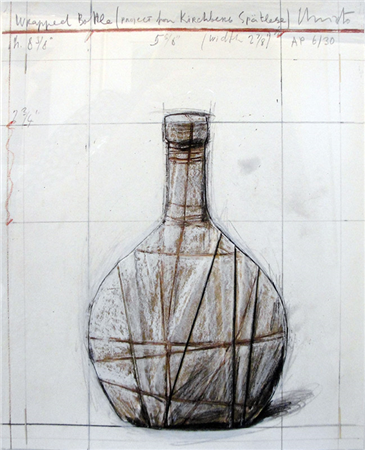 Christo (born Javashev Christo) is best known for producing enormous packaging projects: he wraps parks, buildings, and entire outdoor landscapes. Christo has collaborated with his wife Jeanne-Claude for over 40 years on these projects. The two earn the huge amounts of money required to execute their monumental works by executing and then selling preparatory drawings to collectors and dealers.
Believing that people should have intense and memorable experiences of art outside the institution of the museum, Christo typically creates temporary wrappings -- generally lasting several weeks -- on a vast scale. Borrowing land, structures, and spaces used and built by the public (and, therefore, already laden with a history of associations and connotations), he momentarily intervenes in the local population's daily rhythm in order to create "gentle disturbances" intended to refocus citizens' impressions. Such disturbances force each local participant/viewer to examine the way that social interaction becomes entrenched in routine and is consequently deadened.
In Christo's printed and three-dimensional work, Christo wraps an object, challenging the viewer to accurately remember the concealed object and giving it the notion of rarity because it is inaccessible. Nine documentary films were made about the projects of Christo and Jeanne-Claude. One of their most famous projects is Running Fence, which they constructed in Sonoma and Marin Counties, California. Christo and Jeanne-Claude accept no sponsors, they pay for all their expenses for their projects with their own funds. Their work has been included in museum exhibitions in the United States, Australia, Europe and Israel, and are in the permanent collections of the Museum of Modern Art , the Whitney Museum of American Art in New York, the Tate Gallery in London, the Stedelijk Museum in Amsterdam, and the Albright-Knox Art Gallery in Buffalo.
In such installations as Wrapped Coast -- One Million Sq. Ft. (a 1969 fabric covering of Little Bay in Sydney, Australia), and Wrapped Floors, Wrapped Walk Ways (a 1971 intervention onto and into a house designed by Mies van der Rohe), traditional aesthetic criteria such as line, shape, form, and color are coupled with the immediacy of nature. Some wraps such as Valley Curtain (Rifle, Colorado, 1972), and Running Fence (California, 1976) are titans of dramatic effect, while others such as Wrapped Walk Ways (St. Louis, 1978) exude a romantic, bucolic, and elegant feeling. Regardless of effect or locale, the extensive lines of fabric running along sidewalks, across lawns, and over walls give the environments a renewed sense of intimacy. Although the sense of enclosure and specificity is temporary, it permanently alters the way people experience a given locale.Biography from Denis Bloch Fine Art
Environmental installation artist and painter of architectural landscape drawings, Christo has become known for "wrapping" famous buildings and geographical landmarks with plastic and woven-fabric sheets. His temporary art projects, with the assistance of his wife and dealer Jeanne-Claude, typically span great distances in populated landscapes, both rural and urban. They are mostly made of colorful fabrics, created in the form of large curtains, wrapped buildings or bridges, running fences, surrounded islands or coastlines, massive umbrellas, and other assemblages.
The artists pay all expenses associated with the artworks, including planning, construction, and tear down, partly from the sale of Christo's preliminary drawings, early works from the 1950's and 1960's, and lithographs. They accept no contributions, grants or other financial assistance, preferring to make their aesthetic decisions apart from any influence financial backing might involve. A large group of paid workers is necessary to construct, dismantle and eventually recycle the artworks. Usually, there are years of planning, meetings and hearings held by governments and communities, to gain approval for their projects.
Christo (Javacheff) was born in Gabrovo, Bulgaria, on June 13, 1935, the same day and year as his Moroccan-born wife, Jeanne-Claude. He studied at the Fine Arts Academy in Sofia from 1952 to 1956, and then worked at the Burian Theatre in Prague in 1956. He did further study in Vienna in 1957 and the following year went to Paris where he began creating small wrapped, objects such as bottles, packages and barrels.
It was in Paris that he met Jeanne-Claude when her mother saw the artist's commissioned portraits at a beauty salon and invited him home to lunch. The couple has one son, Cyril, a published poet, born in 1960. In 1964 they settled in New York City and Christo gained his US citizenship.
Quote:
"People think our work is monumental because it's art, but human beings do much bigger things: they build giant airports, highways for thousands of miles, much, much bigger than what we create."
Select Museum Collections:
Art Gallery of Ontario, Canada
Detroit Institute of Arts, Michigan
The Getty Center, Los Angeles
Museum of Modern Art, New York
Tate Gallery, London
Walker Art Center, Minneapolis
Art Institute of Chicago, Illinois
Cooper-Hewitt Design Museum, NYC
National Gallery of Art, Australia
Centre Pompidou, Paris, France
Museum of Contemporary Art, Tokyo, Japan