Page loaded successfully. Showing biography for Cornelius Haly Hankins.
Cornelius Haly Hankins BIOGRAPHY
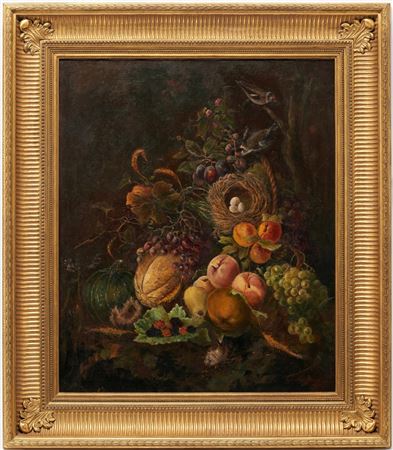
1863/64 Guntown, Mississippi - 1946 Guntown, Mississippi. Known for: Portrait likenesses of Civil War veterans, landscape and still life painting, teaching.
Cornelius Hankins, landscape, portrait and still-life painter, was born around 1864 in Guntown, Mississippi to Reverend Edward Lockee Hankins and Annie Mary McFadden. The sixth of eight children, he... Read full biography
Cornelius Hankins, landscape, portrait and still-life painter, was born around 1864 in Guntown, Mississippi to Reverend Edward Lockee Hankins and Annie Mary McFadden. The sixth of eight children, he was deaf until the age of eight as a result of smallpox. In his early twenties, he studied in... Read full biography
Cornelius Hankins, landscape, portrait and still-life painter, was born around 1864 in Guntown, Mississippi to Reverend Edward Lockee Hankins and Annie Mary McFadden. The sixth of eight children, he was deaf until the age of eight as a result of smallpox. In his early twenties, he studied in Nashville with Professor E.M. Gardner who founded the Nashville Art Association and had close ties with Watkins School of Design. While studying in Nashville, Hankins taught art at Miss Clark's Select... Read full biography
Cornelius Hankins, landscape, portrait and still-life painter, was born around 1864 in Guntown, Mississippi to Reverend Edward Lockee Hankins and Annie Mary McFadden. The sixth of eight children, he was deaf until the age of eight as a result of smallpox. In his early twenties, he studied in Nashville with Professor E.M. Gardner who founded the Nashville Art Association and had close ties with Watkins School of Design. While studying in Nashville, Hankins taught art at Miss Clark's Select School for Girls in nearby Rutherford County. In the late 1890s, he spent a few years teaching and working in Richmond, Virginia. While there, he was commissioned to paint portraits of twelve Confederate generals from photos for Lee Camp, now Battle... Read full biography
Cornelius Hankins, landscape, portrait and still-life painter, was born around 1864 in Guntown, Mississippi to Reverend Edward Lockee Hankins and Annie Mary McFadden. The sixth of eight children, he was deaf until the age of eight as a result of smallpox. In his early twenties, he studied in Nashville with Professor E.M. Gardner who founded the Nashville Art Association and had close ties with Watkins School of Design. While studying in Nashville, Hankins taught art at Miss Clark's Select School for Girls in nearby Rutherford County. In the late 1890s, he spent a few years teaching and working in Richmond, Virginia. While there, he was commissioned to paint portraits of twelve Confederate generals from photos for Lee Camp, now Battle Abbey. In 1898, he married fellow artist Sophia Maude McGhee (1875-1968) who specialized in china... Read full biography
Artist Biography
Biography page for Cornelius Haly Hankins ((1863/64 - 1946)), known for Portrait likenesses of Civil War veterans, landscape and still life painting, teaching. Showing 3 biographical entries and 0 sample artworks.
Cornelius Haly Hankins - Artist Info
About Cornelius Haly Hankins
Name variants
Cornelius Haly Hawkins
Biography from Stanford Fine Art
Cornelius Hankins was born on July 12, 1863, near Guntown, Itawamba County, Mississippi, the sixth of eight children of Reverend Edward Lockee Hankins and Annie Mary (McFadden) Hankins. He contracted smallpox as a boy after his mother cared for Confederate soldiers. As a result, he was deaf until he was eight years old and had to be tutored at home.
In 1883 Hankins spent time in Nashville studying with Professor E. M. Gardner. About this time he taught art at Mrs. Creek's (or Miss Clark's) Select School for Girls in Eagleville, Rutherford County, Tennessee. Later he studied in St. Louis with Robert Henri, leader of the Ashcan school, and with William Merritt Chase in New York.
From 1894-99 Hankins worked and taught in Richmond, Virginia, where he exhibited at the first three exhibitions of the Art Club of Richmond. In 1898 he married Sophia Maude McGehee (1875-1968), an artist who specialized in china painting, miniatures and watercolors.
In Richmond, Hankins was commissioned to paint posthumous portraits of twelve Confederate generals from photographs for Lee Camp, now called Battle Abbey. In 1901 he was commissioned by the Tennessee General Assembly to paint a full Length portrait of Robert E. Lee. About 1904, Hankins and his wife moved to Nashville.
For a time Hankins was associated with George W. Chambers of the Nashville School of Art. He painted still lifes and landscapes, especially Tennessee wheatfields. From 1910 to 1912 he was in Europe. In 1915 he returned to Richmond to paint a view of the State Capitol, but his bread-and-butter came from portraits that were painted for the Shelby Court House.
Among prominent Tennesseans he painted were Generals Cheatham and Forrest, Admiral Gleaves, Senator Bate, and Governors Albert Roberts and Benton McMillan. Although his life-size portraits are generally out of proportion, he received commissions from many states and at the time of his death nine of his portraits were hanging in the Tennessee State Capitol, six Alabama Capitol, two in the Mississippi Capitol, and one in the Louisiana State Capital.Biography from The Johnson Collection
CORNELIUS HALY HANKINS (1863/64–1946)
Cornelius Haly Hankins was a prolific portraitist who specialized in likenesses of Confederate War veterans, many of which were done posthumously from photographs. He also painted landscapes throughout the South.
Hankins was born in the midst of the Civil War either in Guntown, Lee County, or Itawamba County, Mississippi, both of which are located in the northeast part of the state. His mother nursed for Confederate soldiers, and as a result he contracted smallpox as a child and lost his hearing. For this reason he was tutored at home. In 1883 he moved to Nashville, Tennessee, and took lessons from Edwin M. Gardner who had studied at the Royal Academy of Art in Belgium. Hankins proceeded to New York where he studied with Robert Henri and William Merritt Chase.
Between 1894 and 1899 he resided in Richmond, Virginia, where he taught at the Richmond Art Club. In addition, he painted posthumous portraits of twelve Confederate generals. In 1901 he was commissioned by the Tennessee General Assembly to paint a likeness of General Robert E. Lee and subsequently he did fifteen portraits for the Shelby County courthouse in Memphis, Tennessee. By the time of his death in 1946, significant numbers of Hankins’s portraits were hung in southern state governmental buildings including the Tennessee State Capitol (nine) the Alabama State Capitol (six), the Mississippi State Capitol (two), and the Louisiana State Capitol (one).
Around 1904 Hankins returned to Nashville and in addition to portraiture he painted area scenery. These tend to be realistic and earthy-toned, often of bucolic farms, rather than dramatic panoramas. He also traveled widely and depicted landscapes in Florida and near Asheville, North Carolina, as Hankins painted still lifes, some of simple objects in the manner of his instructor Chase, while others are more complicated floral compositions.
The Johnson Collection, Spartanburg, South Carolina
thejohnsoncollection.orgBiography from Williams American Art Galleries
Cornelius Hankins, landscape, portrait and still-life painter, was born around 1864 in Guntown, Mississippi to Reverend Edward Lockee Hankins and Annie Mary McFadden. The sixth of eight children, he was deaf until the age of eight as a result of smallpox. In his early twenties, he studied in Nashville with Professor E.M. Gardner who founded the Nashville Art Association and had close ties with Watkins School of Design.
While studying in Nashville, Hankins taught art at Miss Clark's Select School for Girls in nearby Rutherford County. In the late 1890s, he spent a few years teaching and working in Richmond, Virginia. While there, he was commissioned to paint portraits of twelve Confederate generals from photos for Lee Camp, now Battle Abbey.
In 1898, he married fellow artist Sophia Maude McGhee (1875-1968) who specialized in china paintings, miniatures and watercolors. He was reacquainted with Tennessee in 1901 when the Tennessee General Assembly commissioned him to paint a portrait of Robert E. Lee. Hankins and his wife moved to Nashville in 1904. For a while he was associated with George W. Chambers of the Nashville School of Art. Beginning in 1910, he spent a couple years in Europe studying the work of prominent European artists. A few years after his return to the United States, in 1915, he returned to Richmond to paint a view of the state capitol. However, painting portraits for the Shelby Court House in Virginia provided more money.
Hankins' talent is best illustrated in his delicate bucolic landscapes and captivating still lifes. The influence of his Impressionist teacher Chase is evident in Hankins' thematic approach to his still lifes. His dark, vivid paintings exude an air of mystery reminiscent of the eighteenth century French artist Jean-Baptiste-Simeon Chardin. Hankins' careful approach and dramatic lighting adds to the mystifying atmosphere surrounding his paintings. While his still lifes best exemplify his talent, Hankins earned the most recognition and financial success from his portraits. Although his life-size portraits were often disproportional, he received numerous commissions from state governments and painted over a thousand portraits. At his death, in 1946, county courthouses and capitol buildings all over the south housed examples of his work.
Studied
With Professor E.M. Gardner, Nashville
With William M. Chase, New York School of Fine Arts
New York School of Fine Art
In Europe
Exhibited
Richmond Art Club (first three exhibitions)
Fine Arts Center at Cheekwood, 1972 (retrospective)
Nashville Artist Guild Gallery, 1980
Work
Virginia Historical Society
Tennessee State Museum
Old Capitol Museum of Mississippi History
Cheekwood Museum of Art and Botanical Garden
Tennessee State Capitol (nine portraits)
Mississippi State Capitol (two portraits)
Various county courthouses in the South
Louisiana State Capitol (one portrait)
Alabama State Capitol (six portraits)
References
_____, "Cornelius and Maude Hankins," (exhibition catalog from
Cheekwood)
_____, "Nashville Artist/Century II," (exhibition catalog from the
Nashville Artist Guild Gallery)
Falk (ed.), Who Was Who in American Art
Gerdts, Art Across America
Kelly, Landscape and Genre Painting in Tennessee, 1810-1985
Pennington, Gracious Plenty, American Still-Life Art from Southern
Collections
Wright, Artists in Virginia before 1900