Page loaded successfully. Showing biography for Daniel O'Neill.
Daniel O'Neill BIOGRAPHY
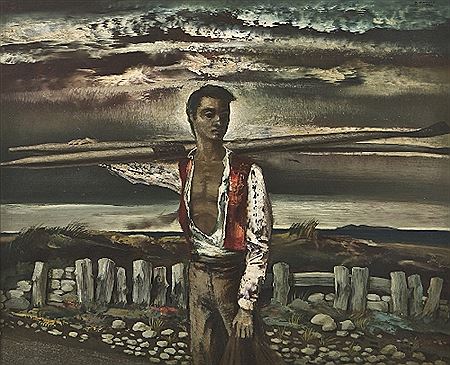
1920 Belfast, Ireland - 1974. Known for: Portrait, landscape, figure and genre painting.
Daniel O'Neill (1920-1974). Born in Belfast, the son of an electrician, Dan O'Neill began painting in the early 1940s during World War II. He worked night shifts for a while as an electrician, which... Read full biography
Daniel O'Neill (1920-1974). Born in Belfast, the son of an electrician, Dan O'Neill began painting in the early 1940s during World War II. He worked night shifts for a while as an electrician, which allowed him to paint during the day. Receiving a gallery contract from Dublin art dealer Victor... Read full biography
Daniel O'Neill (1920-1974). Born in Belfast, the son of an electrician, Dan O'Neill began painting in the early 1940s during World War II. He worked night shifts for a while as an electrician, which allowed him to paint during the day. Receiving a gallery contract from Dublin art dealer Victor Waddington in 1945, he began painting full-time. Having already exhibited in Dublin (1943) in a joint art exhibition with Gerard Dillon, at the Contemporary Painters Gallery, his first one man show was... Read full biography
Daniel O'Neill (1920-1974). Born in Belfast, the son of an electrician, Dan O'Neill began painting in the early 1940s during World War II. He worked night shifts for a while as an electrician, which allowed him to paint during the day. Receiving a gallery contract from Dublin art dealer Victor Waddington in 1945, he began painting full-time. Having already exhibited in Dublin (1943) in a joint art exhibition with Gerard Dillon, at the Contemporary Painters Gallery, his first one man show was staged at the Waddington Galleries in 1946 - where he sold nearly all of his pictures - and followed this with a collaborative show called 'Four Northern Painters', with Gerard Dillon, George Campbell and Neville Johnson. Over the next decade, O'Neill... Read full biography
Daniel O'Neill (1920-1974). Born in Belfast, the son of an electrician, Dan O'Neill began painting in the early 1940s during World War II. He worked night shifts for a while as an electrician, which allowed him to paint during the day. Receiving a gallery contract from Dublin art dealer Victor Waddington in 1945, he began painting full-time. Having already exhibited in Dublin (1943) in a joint art exhibition with Gerard Dillon, at the Contemporary Painters Gallery, his first one man show was staged at the Waddington Galleries in 1946 - where he sold nearly all of his pictures - and followed this with a collaborative show called 'Four Northern Painters', with Gerard Dillon, George Campbell and Neville Johnson. Over the next decade, O'Neill together with these three artist friends, exhibited abroad in group shows held in Los Angeles, New York and Boston, as w... Read full biography
Artist Biography
Biography page for Daniel O'Neill ((1920 - 1974)), known for Portrait, landscape, figure and genre painting. Showing 2 biographical entries and 0 sample artworks.
Daniel O'Neill - Artist Info
About Daniel O'Neill
Biography from the Archives of askART
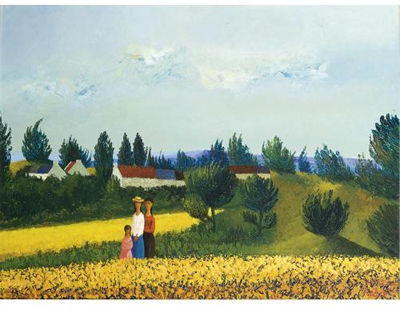 Daniel O'Neill (1920-1974)
Born in Belfast, the son of an electrician, Dan O'Neill began painting in the early 1940s during World War II. He worked night shifts for a while as an electrician, which allowed him to paint during the day. Receiving a gallery contract from Dublin art dealer Victor Waddington in 1945, he began painting full-time. Having already exhibited in Dublin (1943) in a joint art exhibition with Gerard Dillon, at the Contemporary Painters Gallery, his first one man show was staged at the Waddington Galleries in 1946 - where he sold nearly all of his pictures - and followed this with a collaborative show called 'Four Northern Painters', with Gerard Dillon, George Campbell and Neville Johnson.
Over the next decade, O'Neill together with these three artist friends, exhibited abroad in group shows held in Los Angeles, New York and Boston, as well as London and Amsterdam. Meanwhile, in 1949, he visited Paris and was influenced by Rouault, Vlaminck and Utrillo.
In 1952, a retrospective of O'Neill's artwork, staged at the Belfast Museum and Art Gallery, helped establish his creative reputation. According to O'Neill, he painted landscapes with people in them. But O'Neill was mainly interested in landscape only as a means of representing the concerns and dreams of those who lived in it.
In 1958, O'Neill moved to London. His paintings from this point on became more and more introspective, even desolate. In 1970 he returned to Ireland where more exhibitions followed, at both the McClelland Gallery and the Dawson Gallery. According to a review by Irish Times art critic Desmond MacAvock, O'Neill had always shown the greatest consistency of manner, style and subject matter of the Belfast school of contemporary Irish painting.
O'Neill died in 1974. His artworks appear in many collections including the Ulster Museum, Queen's University, Belfast and the Hugh Lane Municipal Gallery of Art, Dublin.
Daniel O'Neill's paintings include: ?Place du Tertre; The Blue Skirt; Knockalla Hills, Donegal; Western Landscape; Birth; The Artist's Studio; Belfast after the Riot; Bride and Groom; The Clown; Corn; Cottages, Connemara; December in Donegal; Figure in a Landscape, Donegal; Figures in a Landscape; The First Born; Girl with a Red Bow; Girl with Blossoms; Girl with Doves; Kathleen; Mountain Road, County Kerry; The Pearl Necklace; The Pose; Studio Interior; Sunday Afternoon; Landscape With Trees; Interior With Figure.
Source:
Online Encyclopedia of Irish and World Art
http://www.visual-arts-cork.com/irish-artists/daniel-oneill.htmBiography from Adam's (James Adam & Sons Ltd.)
Daniel O’Neill was, predominantly, a self-taught artist. In most circumstances, the lack of a formal education is seen as a trial to overcome but, here, it can be viewed as a blessing. Devoid of an academic formula, O’Neill’s works are instead laced with emotion. Each painting is wondrously applied to tell a story, their often enigmatic portrayals allowing for the story to twist and change alongside its viewer.
Born to a working-class Catholic family in Northern Ireland, just as the South was struggling into independence, O’Neill’s life was peppered with hardship. Sectarianism and war followed him throughout his brief fifty-four years and O’Neill fell to alcoholism and adultery as a pacifier. As such, many of his works are fuelled by a melodic melancholy that captivates its viewer. Our emotions slow to match its steady hum and we become a receptacle for everything that the artist wishes to convey.
During the 1950s and 60s, O’Neill made a habit of visiting Donegal to paint, in particular focussing on the area around Rathmullan. The subsequent Donegal landscapes are bereft of figures and, thus, O’Neill relies on colour to capture emotion. Thinning his oil paints to create softer glazes, O’Neill builds up his image to form a deep and complex artwork.
As a post-war romanticist, O’Neill never strove for dogged realism and starkly rejected the well-loved styles of Irish landscapists, Paul Henry, Frank McKelvey and James Humbert Craig. For O’Neill, his landscapes and figural works go hand in hand, each one boldly representing far more than a quick glance might lead us to believe.