Page loaded successfully. Showing biography for David Tindle.
David Tindle BIOGRAPHY
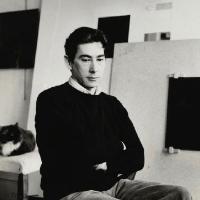
Born 1932 Huddersfield, West Yorkshire, England. Known for: Painting images through window frames, landcapes , interiors, marines, still life, figure.
The images I paint are of things that I know or can remember best. I try to place them in an order that expresses the feelings I have about them. It is not a question of painting them as... Read full biography
The images I paint are of things that I know or can remember best. I try to place them in an order that expresses the feelings I have about them. It is not a question of painting them as realistically as I can, but to get the right tonality, so that memory and presence are very close. David Tindle,... Read full biography
The images I paint are of things that I know or can remember best. I try to place them in an order that expresses the feelings I have about them. It is not a question of painting them as realistically as I can, but to get the right tonality, so that memory and presence are very close. David Tindle, 1985. David Tindle RA is among the most renowned British figurative painters of his generation. Born in Huddersfield in April 1932, he held his first exhibition in London at only nineteen years old,... Read full biography
The images I paint are of things that I know or can remember best. I try to place them in an order that expresses the feelings I have about them. It is not a question of painting them as realistically as I can, but to get the right tonality, so that memory and presence are very close. David Tindle, 1985. David Tindle RA is among the most renowned British figurative painters of his generation. Born in Huddersfield in April 1932, he held his first exhibition in London at only nineteen years old, and from that point, his career and reputation quite rapidly developed. In London, Tindle befriended a circle of artists that included Francis Bacon, John Craxton, Lucian Freud, John Minton and Keith Vaughan. All were older than him, and very much... Read full biography
The images I paint are of things that I know or can remember best. I try to place them in an order that expresses the feelings I have about them. It is not a question of painting them as realistically as I can, but to get the right tonality, so that memory and presence are very close. David Tindle, 1985. David Tindle RA is among the most renowned British figurative painters of his generation. Born in Huddersfield in April 1932, he held his first exhibition in London at only nineteen years old, and from that point, his career and reputation quite rapidly developed. In London, Tindle befriended a circle of artists that included Francis Bacon, John Craxton, Lucian Freud, John Minton and Keith Vaughan. All were older than him, and very much established. The example they provided, as serious and committed painters, proved important to Tindle's own sense of himself as an a... Read full biography
Artist Biography
Biography page for David Tindle ((Born 1932)), known for Painting images through window frames, landcapes , interiors, marines, still life, figure. Showing 3 biographical entries and 0 sample artworks.
David Tindle - Artist Info
About David Tindle
Biography from the Archives of askART
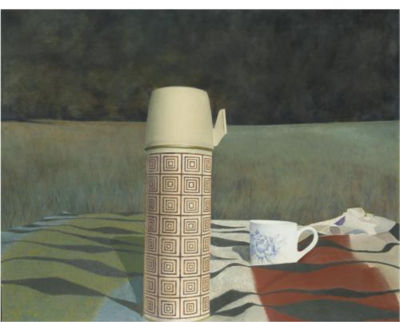 The images I paint are of things that I know or can remember best. I try to place them in an order that expresses the feelings I have about them. It is not a question of painting them as realistically as I can, but to get the right tonality, so that memory and presence are very close. David Tindle, 1985
David Tindle RA is among the most renowned British figurative painters of his generation. Born in Huddersfield in April 1932, he held his first exhibition in London at only nineteen years old, and from that point, his career and reputation quite rapidly developed. In London, Tindle befriended a circle of artists that included Francis Bacon, John Craxton, Lucian Freud, John Minton and Keith Vaughan.
All were older than him, and very much established. The example they provided, as serious and committed painters, proved important to Tindle's own sense of himself as an artist. Several of his peers - Bacon, Freud and Minton certainly - influenced his work technically and stylistically, as can be seen in Tindle's paintings from the 1950s and 1960s.
For the first two decades of the Artist's career, his painting was in transition, as he moved gradually towards a more crisp articulation of form coupled with a more restrained handling of paint. Then, in the early 1970s, he began to use the painstaking technique of traditional egg tempera, in paintings that were noticeably more detailed than his previous work in oils.
Among the earliest of Tindle's tempera paintings is a portrait of his son, John (1973), though the Artist went on to produce further portraits, landscapes and still life paintings in the medium. These are often intensely detailed, and the products of many hours intensive work.
Certain subjects and motifs recur in Tindle's work: windows, doorways, mirrors and screens, forming pictures within pictures. They provide a subtle theatricality, one that 'toys with the idea of realism' as the Artist has stated.
Amongst Tindle' s most eminent portrait commissions was to paint the actor Dirk Bogarde for the National Portrait Gallery in 1985, for which Bogarde sat over several days at his house in the South of France.
The changes in Tindle's personal life have over the years been reflected in his work. He has married three times, and has nine children - and has lived variously in England, France and Italy, where he currently resides. Depictions of domestic settings and gardens form what amo
Tindle has lived in Tuscany for the past two decades, a move that followed an eight-year period in France. The light in Italy has affected his colour, for it is he says more luminous, and at times becomes tinged with red, yellow or blue, in ways one only notices gradually over time. The change in his palette is particularly apparent in paintings of the local architecture, in which walls and rooftops are often seen framed within the studio window. There is also a difference in treatment evident in many of these works, containing as they do areas painted in softly nuanced layered washes combined with built-up layers of small marks.
In more recent years the work has often taken on a different kind of autobiographical narrative, in which an underlying sense of the surreal, subtly evident since early on in the Artist's work, has become more explicit. The imagery is often dreamlike, symbol-laden and allegorical, as he comes to terms with age and with memories and thoughts of past and present relationships.
With thanks to Ian Massey.
Source:
Jenna Burlingham Fine Art, 2021Biography from Chiswick Auctions
Christopher Fry, was a key figure in the revival of poetic drama in Britain, standing alongside T.S. Eliot. His most celebrated work, The Lady’s Not for Burning (1948), became a landmark of postwar theater, captivating audiences with its lyrical brilliance and wit. Originally a schoolteacher, he transitioned to theater, founding the Tunbridge Wells Repertory Players before earning commissions for religious plays that cemented his reputation. While the rise of prose realism in the mid-1950s shifted theatrical trends, Fry’s talent and adaptability led him to Hollywood, where he played a significant role in rewriting Ben Hur (1959). Undeterred by changing tastes, he continued writing into his nineties, always maintaining his passion for poetic drama. With warmth, intelligence, and a deep love for language, Fry made a lasting impact on theater and film, leaving behind a legacy that extends well beyond his unintended association with Margaret Thatcher’s famous remark, “The lady’s not for turning.Biography from Lyon & Turnbull
Born in Huddersfield in 1932, David Tindle studied at Coventry School of Art, and after teaching at the Royal College of Art was appointed Ruskin Master of Drawing at Oxford University from 1985 to 1987. He was elected to the Royal Academy in 1979.
His work is included in collections such as the Tate Gallery, National Portrait Gallery, and the Royal Collection. Always more traditional in execution than that of many of his contemporaries, in the early 1970's Tindle's work underwent a profound evolution.
Having retreated to Italy, where he studied the antique technique of tempera painting, in 1972, Tindle emerged renewed as an artist, and a master of the medium. Preparing the paint and small panels upon which he now works himself, Tindle's works are meticulous in detail, and contemplative in mood, recalling the influence of Romantic artists such as Samuel Palmer.