Page loaded successfully. Showing biography for Edward Henry Corbould.
Edward Henry Corbould BIOGRAPHY
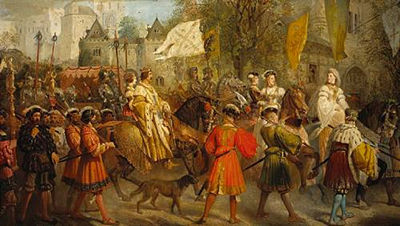
1815 London, England - 1905 London, England. Known for: Figure, genre, landscape.
Edward Henry Corbould, born in London on December 5, 1815, was a painter, illustrator and sculptor who concentrated primarily on watercolours of literary and historical subjects, which he exhibited... Read full biography
Edward Henry Corbould, born in London on December 5, 1815, was a painter, illustrator and sculptor who concentrated primarily on watercolours of literary and historical subjects, which he exhibited with the New Water-Colour Society from 1837 until 1898. His careful, highly coloured and unmodelled... Read full biography
Edward Henry Corbould, born in London on December 5, 1815, was a painter, illustrator and sculptor who concentrated primarily on watercolours of literary and historical subjects, which he exhibited with the New Water-Colour Society from 1837 until 1898. His careful, highly coloured and unmodelled style, compensated for by direct and simple lighting of figures, was well suited to dramatizing such subjects as the Canterbury Pilgrims Assembled at the Old Tabard Inn (1870), Canterbury Pilgrims... Read full biography
Edward Henry Corbould, born in London on December 5, 1815, was a painter, illustrator and sculptor who concentrated primarily on watercolours of literary and historical subjects, which he exhibited with the New Water-Colour Society from 1837 until 1898. His careful, highly coloured and unmodelled style, compensated for by direct and simple lighting of figures, was well suited to dramatizing such subjects as the Canterbury Pilgrims Assembled at the Old Tabard Inn (1870), Canterbury Pilgrims Enroute to Canterbury (April 1873, private collection), and the prize-winning Plague of London for the competition to decorate the New Palace of Westminster (lithograph, 1849; London, British Museum). Edward Henry Corbould was a son of Henry Corbould and... Read full biography
Edward Henry Corbould, born in London on December 5, 1815, was a painter, illustrator and sculptor who concentrated primarily on watercolours of literary and historical subjects, which he exhibited with the New Water-Colour Society from 1837 until 1898. His careful, highly coloured and unmodelled style, compensated for by direct and simple lighting of figures, was well suited to dramatizing such subjects as the Canterbury Pilgrims Assembled at the Old Tabard Inn (1870), Canterbury Pilgrims Enroute to Canterbury (April 1873, private collection), and the prize-winning Plague of London for the competition to decorate the New Palace of Westminster (lithograph, 1849; London, British Museum). Edward Henry Corbould was a son of Henry Corbould and a pupil of Henry Sass (1788-1844). He studied at the Royal Academy of London where he showed more wide-... Read full biography
Artist Biography
Biography page for Edward Henry Corbould ((1815 - 1905)), known for Figure, genre, landscape. Showing 1 biographical entries and 0 sample artworks.
Edward Henry Corbould - Artist Info
About Edward Henry Corbould
Biography from The Cambridge Art Gallery
Edward Henry Corbould, born in London on December 5, 1815, was a painter, illustrator and sculptor who concentrated primarily on watercolours of literary and historical subjects, which he exhibited with the New Water-Colour Society from 1837 until 1898. His careful, highly coloured and unmodelled style, compensated for by direct and simple lighting of figures, was well suited to dramatizing such subjects as the Canterbury Pilgrims Assembled at the Old Tabard Inn (1870), Canterbury Pilgrims Enroute to Canterbury (April 1873, private collection), and the prize-winning Plague of London for the competition to decorate the New Palace of Westminster (lithograph, 1849; London, British Museum).
Edward Henry Corbould was a son of Henry Corbould and a pupil of Henry Sass (1788-1844). He studied at the Royal Academy of London where he showed more wide-ranging interests than his father or uncle, George James Corbould.
He worked in watercolour and briefly in sculpture, winning Society of Arts gold medals for Fall of Phaeton, watercolour, 1834, and St George and the Dragon, sculpture, also exhibited at the Royal Academy in 1835. Both works are untraced.
In addition, he designed monumental figures for an unexecuted London County Council sculpture project for Blackfriars Bridge, 1889.
He died in London on January 15, 1905.